In this article
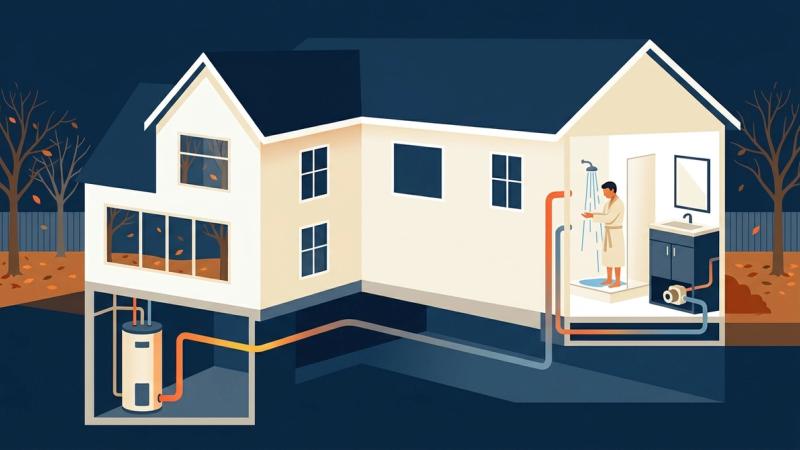
If hot water takes forever to reach your faucet, the cause is usually not a weak water heater. It is the cold water already sitting in the pipe between the heater and the tap, which has to drain out before hot water arrives. In big houses with long pipe runs, like many homes in Alpine, NJ, that wait can be long, and it gets worse in November when pipes in cold crawlspaces and garages lose heat faster.
Why hot water takes so long to reach the faucet
Building-science writers at GreenBuildingAdvisor point to the same root cause: the volume of water in the pipes. Two things drive that volume:
- Pipe length. A primary bath at the far end of a large house can be a long run from a basement heater.
- Pipe diameter. Wider pipe holds more water per foot, so a large trunk line takes longer to purge.
Low-flow fixtures push that water out more slowly, and in cold spaces, water left from your last use cools faster.
How long is too long?
There is no single normal number; it depends on your layout. What matters is change. If a fixture that used to heat quickly is now slow, or the water never gets fully hot, suspect a valve, the heater or the piping rather than distance.
Five-minute checks before you call anyone
- One fixture or all of them? If only one tap is slow, focus there. If every tap is slow, look at the heater or the main hot line.
- Is the shutoff valve under the fixture fully open? A partly closed stop valve cuts flow and stretches the wait. If it is stuck or weeping, our sink and faucet service can replace it.
- Is the heater set correctly? A setting that was turned down makes water feel lukewarm, which can pass for a long wait. Don't raise it high enough to risk scalding.
- Is the showerhead or aerator clogged? Mineral buildup lowers flow. Unscrew the aerator and rinse it.
- Are hot pipes insulated in cold spaces? Foam insulation on exposed hot lines in the basement, crawlspace and garage keeps the water warmer between uses.
Fixes for a long hot water wait
Recirculation with a dedicated return line
Some larger homes already have a third pipe looping from the far fixtures back to the heater. A pump keeps hot water moving through it. If you have a return line and no working pump, this is often the simplest fix.
Under-sink pump using the cold line
Without a return line, a pump and valve at the farthest fixture send cooled water back to the heater through the cold pipe, with no walls opened. The trade-off: the cold tap at that fixture may run warm for a moment.
Timer or on-demand control
A pump that runs all day loses heat constantly through the pipe walls. A timer limits running to mornings and evenings. On-demand hot water recirculation, triggered by a push button or motion sensor, runs only a short cycle before you use the fixture. For most homes, controlled operation is the better balance.
Point-of-use heater or a relocated heater
If one distant bathroom or kitchen is the problem, a small point-of-use heater near it can serve it directly. If the whole house is slow because the heater sits at one end, moving it or adding a second unit may make more sense, especially when the current heater is near the end of its life. Our water heater repair and installation team can size and place the right unit.
Is a recirculation pump worth it?
It depends on house size. A pump uses some electricity, and a warm loop loses heat, so the heater works more. In exchange, you stop running cold water down the drain while you wait. In a small house with short runs, that may not justify the cost; in a large home where every shower starts with a long wait, it often does. A timer or on-demand control and pipe insulation cut the energy side. Alpine's water comes from Veolia New Jersey, per the NJ DEP water supply plan, and if your home is on septic, waiting water also ends up in the tank.
Tankless heaters and recirculation
Many tankless units need a minimum flow to fire, so a standard pump may not trigger them reliably or may cause short cycling. Some models have built-in recirculation; others need a specific setup. See our tankless water heater service for options, or our guide to tankless heaters in winter if the water is also not hot enough.
When you need a licensed plumber
- Adding or repairing a return line
- Installing check valves so hot and cold water don't mix
- Tying a pump into the water heater
- Relocating or replacing a heater, including any gas line work
These jobs involve pressure, temperature and often gas, and our licensed technicians handle them across Bergen County.
Frequently asked questions
Why does my shower take so long to heat up when the kitchen is fine?
The shower is likely farther from the heater or fed by a longer, wider pipe. Also confirm its valves are fully open and the showerhead isn't clogged.
Does a recirculation pump work with a tankless water heater?
It can, but the setup must match the unit. Some models include recirculation; others need a compatible pump and controls to avoid short cycling.
Will a recirculation pump make my cold water warm?
Only with a system that uses the cold line as the return. A dedicated return line avoids that.
Need Plumbing Service in Alpine, NJ?
Call Heights Plumbing, Heating & Cooling at (201) 245-7772 or schedule online today!
Schedule Service