In this article
A tankless water heater not hot enough once November arrives usually comes down to physics. The water entering your house is colder, so the heater must raise it more degrees, and it can only do that for fewer gallons per minute. In Princeton, hard water scale often makes it worse. The fix may be a setting change, a flush, a repair or a larger unit.
Why a tankless water heater is not hot enough in winter
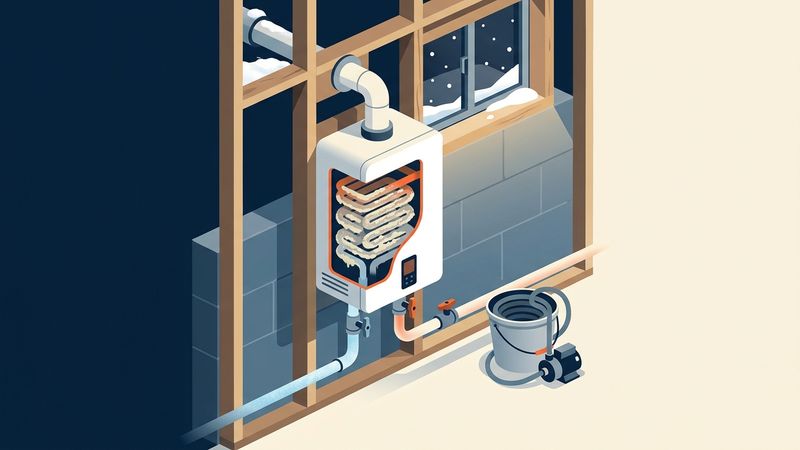
A tankless heater warms water as it flows through, and its burner has a maximum output. The number of degrees it must add is the temperature rise. In summer the rise is small, so the unit keeps up with a shower plus a sink. In winter the rise is bigger, so at full fire it delivers a smaller flow at your set temperature. Ask for more and the water comes out lukewarm.
The U.S. Department of Energy's guidance on gas-fired tankless water heaters says sizing should be based on peak flow and the required temperature rise, which depends on your local winter cold-water temperature. A unit sized tightly or for warmer water is the one that falls short in winter.
Does Princeton's supply water really get colder?
Some manufacturers call colder winter groundwater a myth, and for a deep private well that is close to true. Princeton is different. NJ American Water's Raritan System water quality report, which covers ZIP codes 08540 through 08544 and 08550, lists intakes on the Raritan River, the Millstone River and the Delaware & Raritan Canal, plus about 98 wells. Rivers and canals get colder in winter, so much of the water reaching Princeton homes arrives at your heater colder than it did in August.
How Princeton's hard water cuts tankless output
The same report lists hardness of 90 to 222 mg/L, or about 5 to 13 grains per gallon. When hard water is heated, calcium and magnesium settle out as scale inside the heat exchanger. Scale insulates the metal from the water, so less of the burner's heat reaches your shower. A heater that barely keeps up with winter demand falls behind once scale builds.
How often to flush, and can you do it yourself?
Rinnai, for example, recommends flushing at least once a year with 4 gallons of undiluted white vinegar and never chemical solutions. With water at the harder end of Princeton's range, treat once a year as a minimum. Handy homeowners can flush a unit that already has isolation valves, following the manual. If there are no service valves or you are unsure of the shutdown steps, have it done professionally. Our tankless maintenance guide covers flushing in more detail.
What you can safely check first
- Temperature setting. Confirm the controller or remote panel has not been turned down.
- Simultaneous use. Run one shower alone. If it is hot by itself but lukewarm when the dishwasher or another shower runs, you are past the unit's winter capacity.
- Inlet filter screen. A clogged screen on the cold inlet restricts flow and causes erratic heating. Shut off the water before removing it.
- Error codes. Note any code on the display and look it up in the manual. Codes often point to ignition, flame or venting faults.
- Outdoor vent. Make sure the vent and air intake are not blocked by snow, ice, leaves or nests. The DOE notes vents in cold climates should sit above the snow line.
Hot, then cold, then hot again
This "cold water sandwich" happens when you shut the tap briefly and turn it back on. Hot water left in the pipe comes out first, then a slug of cold water passes through while the burner relights. Tankless units also need a minimum flow to fire; Rinnai lists about 0.4 to 0.6 gallons per minute. A barely open faucet or a shower valve pulling very little hot water can drop below that and make the burner cycle on and off.
Flush, repair, add a softener or resize?
- Flush if the heater was fine in past winters and has not been descaled in a year or more.
- Add treatment if scale keeps returning between flushes. A water softener reduces the minerals that coat the heat exchanger.
- Resize or add a second unit if a clean, properly working heater still cannot handle normal winter use. No flush fixes a capacity problem.
- Repair if the problem appeared suddenly, the unit shows error codes, or it struggles with one fixture running.
When to call a licensed pro
Gas supply problems, venting changes, heat exchanger damage and faulty temperature or flow sensors need a licensed technician. An undersized gas line can starve a tankless burner and may call for gas line work. If you smell gas, leave the house and call your gas utility. For diagnosis, descaling and sizing, see our tankless water heater repair and installation service.
Frequently asked questions
Why is my tankless water heater hot in summer but lukewarm in November?
Colder incoming water means the heater must add more degrees, so it delivers fewer gallons per minute at your set temperature. Scale from hard water can reduce output further.
How hard is Princeton's water?
NJ American Water reports 90 to 222 mg/L for the Raritan System serving Princeton, about 5 to 13 grains per gallon. That is enough to build scale in a tankless heat exchanger over time.
Is my tankless unit too small for winter?
If it is clean, free of error codes and still cannot keep up with your usual winter use, it was likely sized for warmer water. A larger unit or a second heater may be the right fix.
Need Plumbing Service in Princeton, NJ?
Call Heights Plumbing, Heating & Cooling at (201) 245-7772 or schedule online today!
Schedule Service