In this article
A heat pump blowing cold air in winter is often doing exactly what it should. When the outdoor coil frosts up, the system runs a short defrost cycle, and the vents may feel cool until it finishes. If the air stays cold for long stretches, the outdoor unit stays caked in ice, or the house keeps falling behind the thermostat, something is wrong.
Normal or broken? Sorting what you see
Normal: a defrost cycle
Below freezing, frost builds on the outdoor coil and the system clears it on its own, according to a U.S. Department of Energy and CEE homeowner guide. Typical signs:
- The outdoor fan stops while the unit keeps running.
- A whoosh as the refrigerant flow switches direction.
- Steam rising from the unit. That is melting frost, not smoke.
- Water dripping from the base.
- Cooler air at the vents briefly, then normal heat returns.
On ducted systems, backup heat may come on during defrost; ductless indoor units may give off some cool air. Both are normal.
Check this: cold air with no clear pattern
Cool air that comes and goes without steam or a fan pause, rooms slowly losing ground, or an aux heat light that is on most of the time point to settings, airflow or a developing fault.
Call now
- Cold air nonstop, with the outdoor unit off or running without heating.
- The coil stays iced solid for hours, or the ice keeps building.
- Grinding, loud buzzing, a burning smell, or a breaker that trips again after one reset.
For no heat on a freezing night, our emergency HVAC service has live answering 24/7.
Why heat pump air feels cooler than furnace air
A furnace burns fuel and delivers hot air in short bursts. A heat pump moves heat from the outdoor air and delivers warm, not hot, air over longer run times. That air is warmer than the room but cooler than your skin, so it can feel like a draft. If the house holds the setpoint, the system is working.
What really causes a heat pump to blow cold air
- Wrong thermostat mode. Cool mode, or the fan set to on instead of auto, circulates unheated air between cycles.
- Dirty filter or poor airflow. Restricted airflow weakens heat delivery and can trip safety controls.
- Bad reversing valve. If this valve sticks, the unit can keep cooling when it should heat.
- Low refrigerant or a leak. Less refrigerant moves less heat and can cause icing. Refrigerant isn't used up, so a low charge means a leak.
- Failed defrost controls. A bad defrost board or sensor lets the coil ice over.
- Failed backup heat strips. Expect cold air during defrost and no help on the coldest days.
What you can safely check
- Thermostat: heat mode, setpoint above room temperature, fan on auto, fresh batteries if it uses them.
- Air filter: replace it if it looks dirty.
- Vents and returns: open supply registers and clear furniture and rugs off return grilles.
- Breakers: reset a tripped indoor or outdoor unit breaker once; if it trips again, leave it off and call.
- Outdoor unit: if you can reach it safely, clear snow and debris and keep the drain area open so meltwater can't pool and refreeze.
Don't chip or scrape ice off the coil; the fins and tubing damage easily. Don't open panels or try to add refrigerant.
Aux heat vs. emergency heat
Aux heat is automatic. The system adds backup heat, often electric strips in the air handler, during defrost or when the heat pump alone can't keep up. Brief use is normal. If it's on nearly all the time, even in mild weather, the heat pump likely isn't doing its share.
Emergency heat is a manual setting that shuts off the outdoor unit and heats with backup only. Use it when the outdoor unit has failed or is iced solid and you're waiting for service. Electric strip heat costs much more to run than the heat pump, which is why bills jump. Treat it as a stopgap.
Roof, balcony and deck units in Edgewater
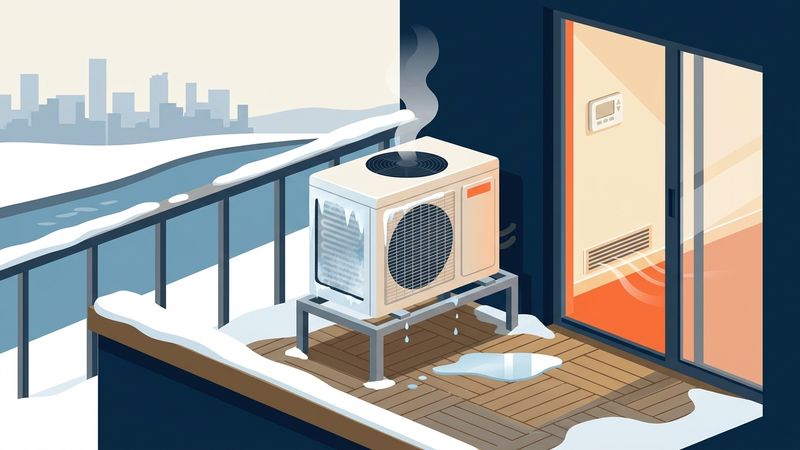
Many townhomes and condos along the river in Edgewater have the outdoor unit on a roof, balcony or deck. That changes a few things:
- Access: don't climb onto a snowy or icy roof. Leave it for a technician, and check whether your association controls roof access.
- Wind: exposed spots can drift snow against the coil.
- Drainage: meltwater that pools or runs across a deck can refreeze, blocking the base and creating a slip hazard. A technician can judge whether the stand and drain path suit the spot.
We also service residential rooftop HVAC units with the same challenges.
Repair, replace or call today
Thermostat faults, defrost boards, sensors and backup heat strips are usually straightforward repairs. A reversing valve or refrigerant leak is bigger work, and on an older unit it's worth comparing repair and replacement side by side; our heat pump services cover both with upfront pricing. If you replace, ENERGY STAR's heat pump page has a rebate finder for utility incentives. Call the same day for no heat in freezing weather, ice that won't clear, repeat breaker trips or a burning smell.
Frequently asked questions
Is it normal for my heat pump to steam outside?
Yes. During defrost, steam is frost melting off the coil, usually with the outdoor fan stopped. Smoke or a burning smell is not normal.
Should I switch to emergency heat if the air feels cool?
Only if the outdoor unit has failed or stays iced over. Otherwise leave it in heat mode, since emergency heat costs much more to run.
Why is my aux heat on all the time?
The heat pump may not be keeping up because of low refrigerant, poor airflow, a defrost problem or a setting issue. Have a licensed technician check it.
Need Heating Service in Edgewater, NJ?
Call Heights Plumbing, Heating & Cooling at (201) 245-7772 or schedule online today!
Schedule Service