In this article
- Getting a mini split approved in a Fort Lee condo or co-op
- Where the outdoor unit can go, and when a mini-split won't work
- Swapping a through-wall, PTAC or window unit for a mini-split
- Can a mini-split heat through a New Jersey winter?
- What to check yourself, and what needs a licensed pro
- Rebates and tax credits: how to check what applies now
- Frequently asked questions
If you're weighing a mini split Fort Lee NJ condos, co-ops and two-family homes are usually good candidates. It is one of the cleanest ways to retire window units and worn-out through-wall ACs. The hard part is rarely the equipment. It is where the outdoor unit goes, how the lines get outside, and what your board will approve. October is a smart time to start. Approvals take time, and a heat pump mini-split can also heat your home on cool fall and spring days.
Getting a mini split approved in a Fort Lee condo or co-op
Most associations and co-op boards in Fort Lee treat a mini-split as an alteration, so expect to file an application before work starts. Boards commonly want to see:
- Condenser location: balcony, terrace, roof or wall bracket, shown on a sketch or marked-up photo.
- Line set route: how the refrigerant lines, drain and power reach the outside.
- Noise: the manufacturer's sound ratings.
- Condensate drainage: where indoor-unit water goes, so it never drips on a neighbor.
- Electrical: a dedicated circuit your unit's service can support.
- Installer credentials: a licensed, insured contractor, often with a certificate of insurance naming the building.
Ask the managing agent for the alteration agreement. It lists what to submit and any approved condenser spots. A two-family home has no board, but you still need a permit, and you should agree on condenser and line locations with any co-owner or tenant.
Where the outdoor unit can go, and when a mini-split won't work
Balcony or terrace
The easiest setup. The condenser sits on a low stand or wall bracket, and the lines run a short distance through the wall behind the indoor unit.
Exterior wall only
A wall bracket can work in a two-family or low-rise building if a technician can reach it safely. Many high-rises prohibit equipment on the facade, so check first.
No outside space
Some buildings allow condensers on the roof or in a mechanical area with longer line sets, within the equipment's maximum line length. A mini-split is not practical when there is no approved condenser spot, no realistic line route, or the board says no. A newer through-wall heat pump unit is often the fallback.
Swapping a through-wall, PTAC or window unit for a mini-split
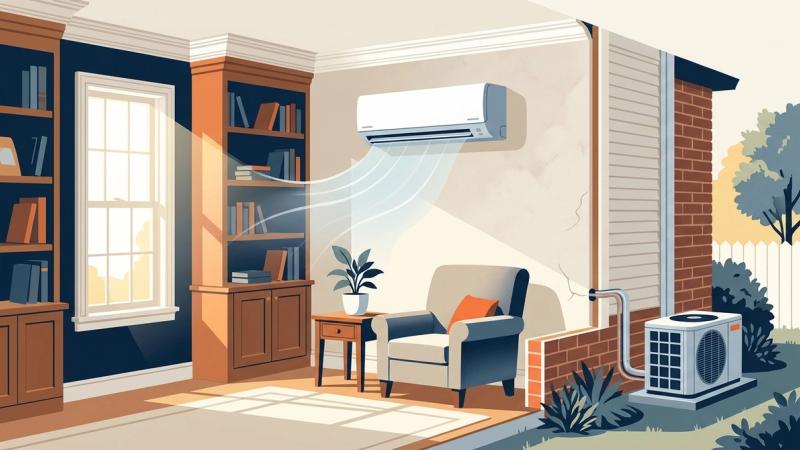
ENERGY STAR describes ductless heat pumps as a replacement for window units for cooling and an alternative to radiator or baseboard heat. A through-wall unit or PTAC packs the compressor into a box in your wall. A mini-split moves the compressor outside and connects to a slim indoor head through a small hole, which usually means a quieter room and a tighter wall.
- Window units: remove the unit and the window goes back to normal.
- Through-wall sleeves: the lines may pass through the old sleeve with an insulated, weatherproof panel closing the rest. Otherwise the sleeve is sealed and the lines use a new small hole. Some co-ops require the sleeve to stay so it can be restored later.
Single-zone or multi-zone?
One outdoor unit can run several indoor heads, which helps when your building allows only one condenser spot. Separate single-zone systems give each room independent operation and backup. Either way, each head should be sized to its room. Our ductless mini-split installation service starts with that room-by-room sizing.
Can a mini-split heat through a New Jersey winter?
A heat pump's outdoor unit pulls heat from outside air even when it is cold. The NJ DEP notes the technology now keeps buildings comfortable year-round, including New Jersey's colder months. "Cold climate" models are designed to keep delivering useful heat at low outdoor temperatures; compare their published heating capacity at 5°F, not just the headline rating.
In co-ops with building heat, a mini-split handles cooling and covers fall and spring before the boiler runs. In a two-family with its own boiler, it can supplement or, if sized for it, become the main heat.
What to check yourself, and what needs a licensed pro
Before requesting a quote, you can safely:
- Open the panel door, without removing the cover, and note open breaker slots and the main breaker's amperage.
- Pick likely spots for indoor heads on exterior walls, clear of curtains and tall furniture.
- Get your building's alteration rules and photograph the sleeve, window and balcony.
Leave load calculations, refrigerant handling, brazing and vacuum testing, the new circuit, permits and board paperwork to a licensed contractor. For whole-home options beyond ductless, see our air conditioning installation and replacement page.
Rebates and tax credits: how to check what applies now
The NJ DEP confirms New Jersey utilities offer incentives for air source heat pumps. Programs change, so check the DEP page and your utility, such as PSE&G, before you buy. Don't count on a federal tax credit for a new install; that credit covered improvements made through December 31, 2025. You can also review our financing options.
Frequently asked questions
Will a mini-split be quieter than my through-wall unit?
Usually, yes. The compressor sits outside, so the indoor head mostly makes fan noise.
Can one outdoor unit cool and heat my whole condo?
Often, yes. A multi-zone system connects several sized indoor heads to one condenser.
What happens to the hole when the through-wall unit comes out?
Either the lines pass through the sleeve with an insulated panel closing the rest, or the opening is sealed and the lines take a new small hole. Your building's rules decide which.
Need Air Conditioning Service in Fort Lee, NJ?
Call Heights Plumbing, Heating & Cooling at (201) 245-7772 or schedule online today!
Schedule Service