In this article
- Is it normal for a sump pump to run in winter?
- Why your sump pump is running constantly: telling the causes apart
- What you can safely check yourself
- How to keep the sump pump discharge line from freezing
- Can the sump pump drain into the house sewer?
- Repair or replace the pump?
- When you need a licensed plumber
- Frequently asked questions
A sump pump running constantly once the weather turns cold usually points to one of three things: a frozen or blocked discharge line, a stuck float switch, or a failed check valve. Some extra running after snowmelt or a thaw is normal. A pump that never stops, or cycles every minute on a dry day, is fighting a problem. Here's how to tell which one you have, what you can safely check in your Franklin home, and how to winter-proof the line before the first hard freeze.
Is it normal for a sump pump to run in winter?
Yes, within limits. After snowmelt or a thaw, groundwater rises and the pump may run often for a day or two. Franklin's hilly lots and lower ground in the Wallkill valley can send meltwater toward foundations. What isn't normal: running with no water coming in, running nonstop with nothing leaving outside, or rapid on-off cycling.
Why your sump pump is running constantly: telling the causes apart
Watch one full cycle, then check the end of the discharge line outside.
Pump runs, but no water leaves outside: blocked or frozen line
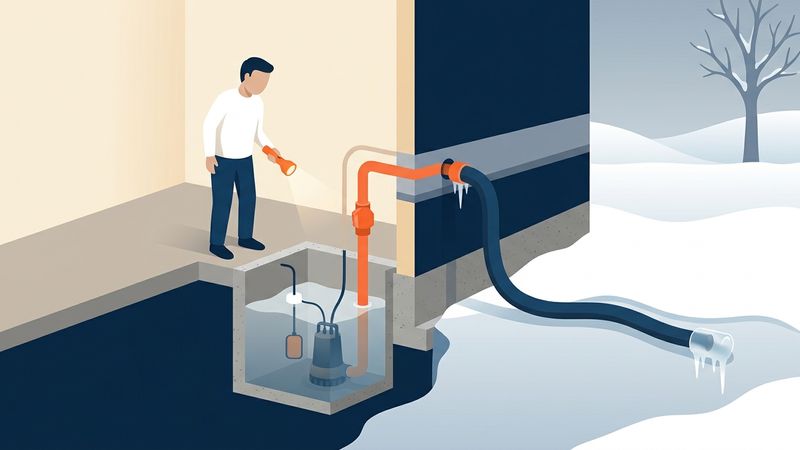
If the motor runs, the pit barely drops and nothing comes out of the outlet, the line is blocked. In cold weather that's usually ice, especially in a flex hose lying on the ground or a section of pipe that sags and holds water. Debris, a crushed hose or a snow-buried outlet can do the same thing.
Pit refills right after the pump shuts off: failed check valve
The check valve keeps pumped water from falling back into the pit. If you hear water rush back down and the pit refills as soon as the pump stops, the valve is stuck open or worn. The pump moves the same water over and over, so it keeps turning on and off.
Pump runs with an empty pit: stuck float switch
If the pit is low or dry and the pump keeps running, the float switch is stuck on. Floats catch on the pit wall, the power cord or debris, and some switches simply fail.
What you can safely check yourself
- Unplug the pump first before reaching into the pit.
- Gently free a float that's hung up on a cord, the liner or debris.
- Walk the discharge line for ice at the outlet, a kinked or crushed hose, or a sagging section holding water.
- Listen after the pump stops for water running back down the pipe.
- Make sure the outlet isn't buried under snow or a plow pile.
If the discharge line is frozen
Turn the pump off. Running it against an ice plug gives the water nowhere to go and can overheat the motor. Thaw gently: bring a removable flex hose indoors, or warm an exposed section with warm (not boiling) water or a hair dryer. Never use an open flame. If the pit is rising and you can't clear the line, call a plumber.
How to keep the sump pump discharge line from freezing
Do this in November, before the first hard freeze.
- Slope it to drain. The pipe should fall steadily away from the house so no water sits in it. Sags freeze first.
- Remove the flex hose or extension. Corrugated and lay-flat hoses hold water. Take them off for winter or replace them with a sloped rigid line.
- Bury permanent lines below frost depth. A plumber can confirm the right depth for your yard.
- Add a freeze-relief or overflow fitting near the house so water can escape if the line downstream freezes.
- Check it after the first hard freeze to confirm water is leaving the outlet.
It pairs well with winterizing your outdoor faucets.
Can the sump pump drain into the house sewer?
Usually not. Some New Jersey towns prohibit sump pump connections to the sanitary sewer because groundwater burdens the system. Franklin Borough's code covers both sewer use and storm sewers, so before rerouting any discharge, ask the Franklin Borough Water & Sewer Department at 973-827-7060 what's allowed at your property.
Repair or replace the pump?
Repair when the pump is sound and the trouble is a part or the piping: a stuck float switch, a worn check valve, or a frozen or poorly sloped line.
Replace when the motor hums but won't move water, runs hot, trips the breaker, is noisy or corroded, or has run dry or against ice long enough to damage it. A pump that can't keep up during melts may also be undersized.
Battery backup for winter outages
Winter storms can cut power just as snowmelt fills the pit. A battery backup pump keeps water moving during an outage; our battery backup care guide covers keeping one ready.
When you need a licensed plumber
- The line is frozen underground or out of reach.
- The check valve, float switch or piping needs replacing or rerouting.
- The line needs to be buried or re-sloped.
- The pump trips breakers, hums without pumping or can't keep up.
Our background-checked, licensed technicians handle sump pump repair and replacement across Franklin and Sussex County, with upfront pricing.
Frequently asked questions
Why does my sump pump run when the pit is empty?
The float switch is almost always stuck on or has failed. Unplug the pump, check that the float moves freely, and replace the switch if it still won't shut off.
Should I take off the flex hose before winter?
Yes. Flexible extensions trap water and freeze quickly, so remove them before the first hard freeze or replace them with a sloped rigid line.
Is it safe to keep running the pump with a frozen line?
No. Turn it off, thaw the line gently, and call a plumber if the pit fills faster than you can clear the ice.
Need Plumbing Service in Franklin, NJ?
Call Heights Plumbing, Heating & Cooling at (201) 245-7772 or schedule online today!
Schedule Service