In this article
If your furnace smells like burning the first time you turn the heat on, it is usually dust that settled on the burners and heat exchanger over the summer and is now cooking off. That smell should be strongest in the first cycle and noticeably weaker each time the furnace runs afterward. If the smell is sharp, like hot plastic, wires, oil or rotten eggs, or it isn't fading, you are dealing with something other than dust.
How long should a furnace burning smell last?
You will see different answers online, from a few minutes to a few hours. Here is a simpler rule: a dust smell should fade over the first few heating cycles and get weaker each time. Open a window and let the furnace run. If the smell is about as strong after several hours of running, comes back at full strength the next day, or gets stronger, it is not just dust. Shut the furnace off at the thermostat and have it checked.
Why a new furnace smells like chemicals
A newly installed furnace often gives off a chemical or burning odor for its first few runs. Manufacturing oils and protective coatings on the burner and heat exchanger burn off once the metal gets hot. Ventilate and let it run. Like dust, it should fade steadily. If it doesn't, call the company that did your furnace installation.
What each furnace smell points to
- Dusty or slightly burnt: dust burn-off. Keep running with a window open, and watch that it fades.
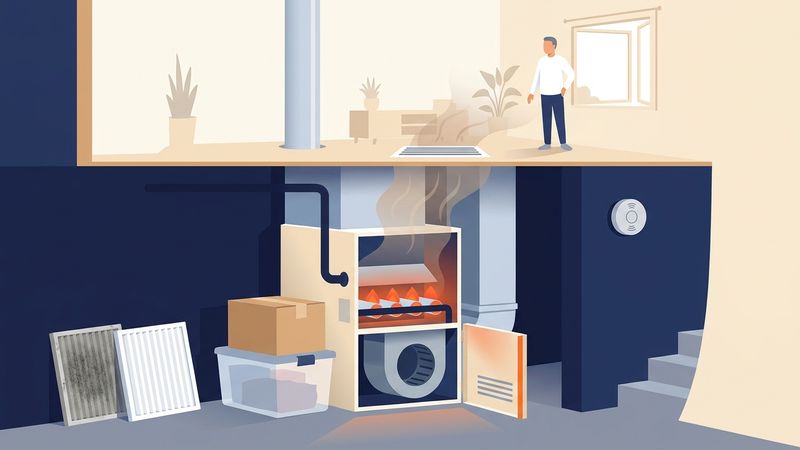
- Burning plastic or rubber: something touching a hot surface, like an item stored against the furnace, a toy or wrapper dropped into a floor register, or a plastic part melting inside. Shut it off and look for the source.
- Electrical, hot wires or a fishy odor: an overheating blower motor, a failing capacitor, or damaged wiring or insulation. Shut it off at the thermostat and the furnace power switch, and call.
- Musty, burning hair or dead animal: often a rodent nest in the blower compartment or ductwork. Mice move indoors in the fall. Shut it off and call.
- Oil or smoke (oil furnaces): a faint whiff at startup can happen, but a lingering oil or smoky smell points to a leaking fitting, a burner problem or a venting issue. Shut it off and call.
- Rotten eggs or sulfur: possible natural gas leak. Leave the house now (steps below).
Rotten egg smell: what to do right now
Gas utilities add a sulfur odor to natural gas so leaks can be noticed. If you smell it:
- Get everyone out of the house. Don't switch lights, appliances or the thermostat on or off, and don't use a phone indoors.
- Move well away from the building. PSE&G, for example, advises moving at least 350 feet away.
- From outside, call your gas utility's emergency line (it's on your bill) or 911.
- Don't go back in until the utility says it's safe. Then have the furnace inspected before you use it.
Also remember that carbon monoxide has no smell. A burning odor is not a CO warning, and the absence of one doesn't mean you're safe. Keep working CO alarms near sleeping areas and the furnace.
Can a dirty filter cause a burning smell?
Yes, indirectly. A clogged filter starves the furnace of airflow, so the heat exchanger runs hotter and the blower motor works harder. That can produce a hot, burnt smell and cause the furnace to shut itself off on its high-limit safety. A very dusty system also has more dust to burn off. Check the filter first. It's the easiest fix.
What you can check safely, and what needs a licensed tech
Safe homeowner checks
- Replace or inspect the air filter.
- Move anything stored near the furnace: boxes, laundry, paint cans, cleaning products, plastic bins.
- Look into floor registers and return grilles for dropped items.
- Make sure supply vents and returns are open and unblocked.
Leave these to a licensed technician
- Wiring, the control board and electrical connections
- The blower motor and capacitor (see our guide to blower motor noises, smells and other signs)
- The heat exchanger, which should be inspected if there's any concern about cracks (read how a cracked heat exchanger is verified)
- Rodent nests inside the cabinet or ducts
- Gas valves, oil burners, nozzles and the flue
On an oil furnace, don't keep pressing the reset button if it smells smoky or won't stay lit. Our oil burner reset rules explain why.
Does an annual tune-up prevent burning smells?
It prevents most of them. A tune-up cleans out the dust that causes first-start odors and catches worn parts before they overheat. The CPSC urges a yearly professional inspection of fuel-burning appliances, including checking flues and vents for blockages and loose connections. A typical furnace repair and maintenance visit covers the burners, ignition, heat exchanger, blower motor and wiring, filter, flue and venting, and a combustion and CO check. For homeowners in Montgomery, scheduling it in early fall means the first cold night isn't also the first time anyone has looked at the furnace this year.
Frequently asked questions
Is it normal for my heater to smell like burning dust?
Yes, at the first startup of the season. It should fade over the first few cycles. If it doesn't, have the furnace checked.
Is a burning plastic or electrical smell dangerous?
It can be. Turn the furnace off at the thermostat and the power switch. Remove anything melting near it, and call a technician if the source isn't obvious.
The smell won't go away after a few hours. Should I turn the furnace off?
Yes. Shut it off and call for service. A smell that isn't fading points to something other than dust. If it smells like rotten eggs, leave the house and call your gas utility or 911.
Need Heating Service in Montgomery, NJ?
Call Heights Plumbing, Heating & Cooling at (201) 245-7772 or schedule online today!
Schedule Service