In this article
- Why the fan runs but the air comes out cold
- What you can check without going on the roof
- How to reset a rooftop HVAC unit, and when not to
- Rooftop unit not heating: gas pack or heat pump?
- Snow, ice and wind on a flat roof
- Should you go up on the roof?
- Repair or replace an older rooftop unit
- When it's an emergency
- Frequently asked questions
A rooftop unit not heating usually comes down to one of three things: the thermostat isn't calling for heat correctly, a safety switch has shut the burner down, or a heat pump is defrosting or has a real fault. You can rule out the first from inside the house. Almost everything else is a job for a technician on the roof.
Why the fan runs but the air comes out cold
On a gas-and-electric rooftop unit, or gas pack, the blower and burner work separately. With the thermostat fan set to "on," the blower runs between heating cycles and you feel cool air. If the fan is on "auto" and the air is still cold, the burner isn't lighting or is lighting and shutting off, and the control board may keep the blower running to cool the unit. On a heat pump unit, cool air can be a normal defrost cycle or a refrigerant or control problem.
What you can check without going on the roof
- Thermostat. Set it to Heat, a few degrees above room temperature. Replace the batteries if the display is dim.
- Fan setting. Set it to "auto."
- Breakers. Reset a tripped HVAC breaker once. If it trips again, leave it off and call.
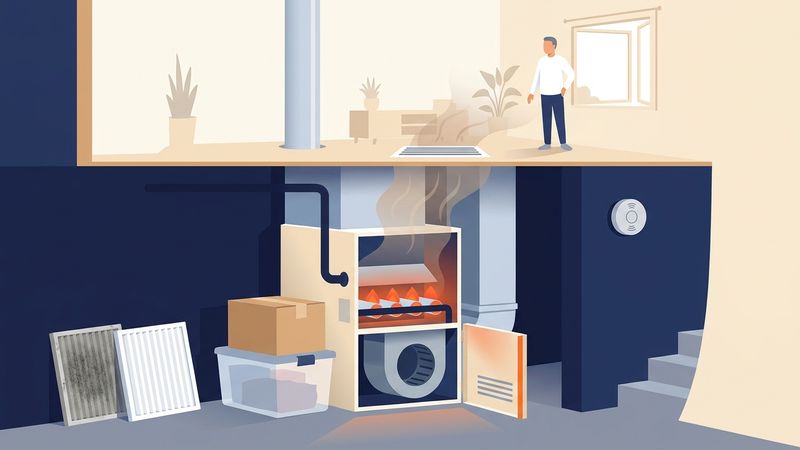
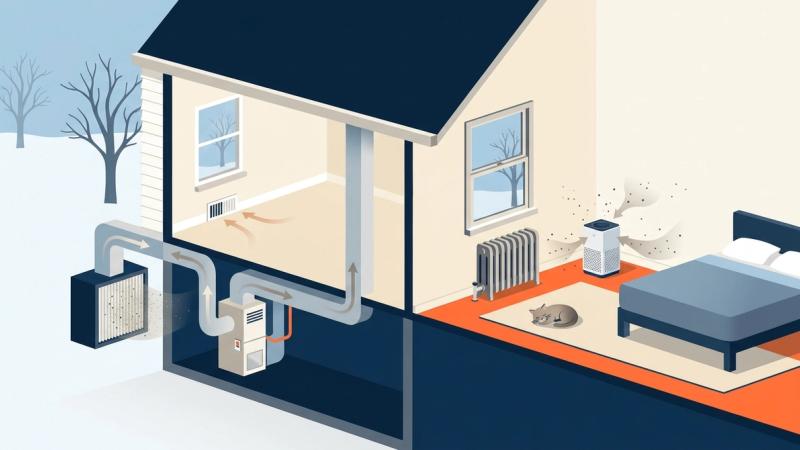
- Filter. In many attached homes it sits behind a ceiling or hallway return grille. A clogged filter can overheat a gas unit and trip its high-limit switch.
- Error codes. Write down any fault alert your thermostat shows.
How to reset a rooftop HVAC unit, and when not to
Turning the thermostat off for five minutes, or cycling the unit's breaker, restarts the control board and can clear a lockout. Try it once. Rooftop units also have safety switches: a high-limit switch opens when the heat exchanger runs too hot, and a flame rollout switch opens when flame escapes the burner area.
One trip right after you replace a badly clogged filter can be a one-off. A switch that keeps tripping signals restricted airflow, a blocked flue, a failing inducer motor or a damaged heat exchanger. Resetting it again and again just repeats an unsafe condition.
Rooftop unit not heating: gas pack or heat pump?
Gas-and-electric units
A normal start goes: inducer fan, ignitor glow or spark, gas valve opens, flame lights, flame sensor proves it, blower comes on. Where it stops points to the part:
- Inducer runs, no ignitor click or glow: pressure switch, blocked flue or ignitor.
- Ignitor glows, no flame: gas valve or gas supply.
- Flame lights, then drops out in seconds: often a dirty flame sensor.
- Runs a while, then shuts off with the blower going: high-limit switch, usually airflow.
- Nothing happens: control board, transformer or power.
Each is confirmed with meters at the unit, so it's roof work. Our guide on what the timing tells you when a furnace ignites then shuts off applies to gas packs too.
Heat pump units
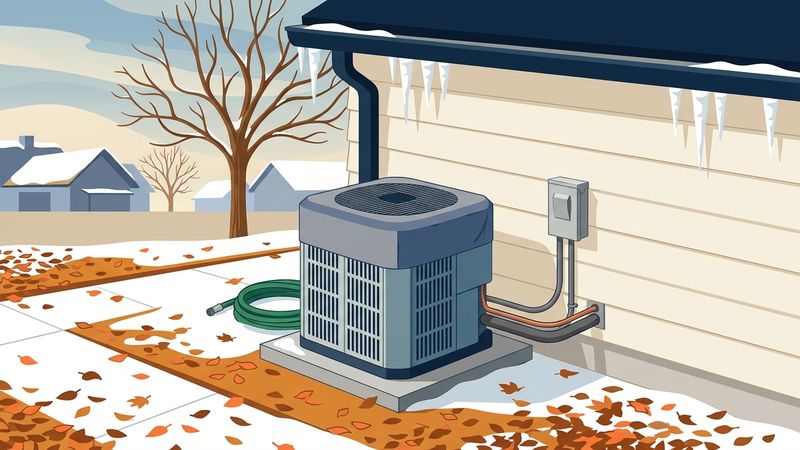
In cold, damp weather a heat pump reverses to melt frost off its outdoor coil, and you may feel cooler air for several minutes. Long stretches of cold air or a coil encased in ice mean a fault; see heat pump blowing cold air in winter: defrost vs. a real fault.
Snow, ice and wind on a flat roof
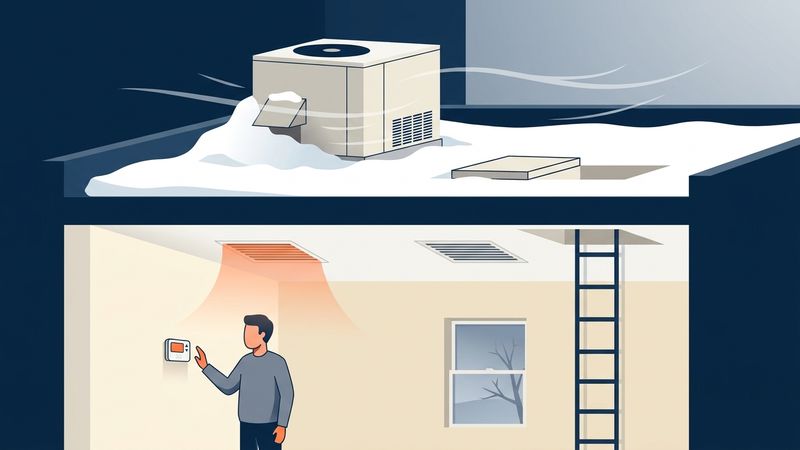
Flat roofs collect drifting snow, and wind piles it against the unit. Snow and ice can cover a gas unit's flue hood or combustion air intake, tripping the pressure switch or disrupting combustion, or bury a heat pump's coil. Manufacturers' instructions require the clearances around the unit and flue to stay clear. After a November storm, the problem may be what's packed around the unit, not what's inside it.
Should you go up on the roof?
Usually no. A flat roof is slippery in winter, the unit holds high voltage and gas, and many hatches are reached by ladder. In condos and attached homes the roof is often common property, so the association or building management must approve access for you and the technician. Find out who holds the hatch key before you need it. We coordinate roof access with owners and building managers in Guttenberg before the visit.
Repair or replace an older rooftop unit
Ignitors, flame sensors, limit switches and control boards are routine repairs at almost any age. Major parts are harder calls: the heat exchanger, a heat pump compressor, or repeated failures on the same unit. Trade publication ACHR News notes that a heat exchanger failure on a unit around 12 to 15 years old usually means replacing the whole unit. A cracked heat exchanger can let combustion gases into the airstream, so don't keep running it; see how to verify a cracked heat exchanger. The U.S. Department of Energy notes that regular maintenance extends the life of a heating system. Our residential rooftop HVAC unit service covers repair, maintenance and replacement.
When it's an emergency
- You smell gas: leave the home, then call your gas utility or 911 from outside.
- Your carbon monoxide alarm sounds: get everyone outside and call 911. New Jersey sets carbon monoxide detection requirements for homes; keep yours working.
- No heat during a freeze: call for emergency HVAC service.
Frequently asked questions
Why does my gas pack fan run but there's no heat?
Either the thermostat fan is set to "on" or the burner isn't lighting or staying lit. With the fan on "auto," the usual suspects are the ignitor, flame sensor, gas valve, a pressure or limit switch, or the control board.
Is my rooftop heat pump blowing cold air because it's defrosting?
Short periods of cooler air in cold, damp weather are normal. Long stretches of cold air or heavy ice on the coil point to a fault.
Can snow on the roof shut down my rooftop unit?
Yes. Snow or ice blocking the flue, air intake or coil can trip safety controls, and clearing it safely is a job for a technician.
Need Heating Service in Guttenberg, NJ?
Call Heights Plumbing, Heating & Cooling at (201) 245-7772 or schedule online today!
Schedule Service