In this article
A mini split for older home cooling and heating is usually the cleanest option for a house with radiators or baseboard and no ductwork. Before you pick a brand, an installer should check four things: whether your electrical panel can carry the load, where the line set and drain can run through plaster or brick, where the outdoor unit can sit, and how many indoor heads each room needs. That matters in Hackensack, where more than a third of the housing was built from the 1940s through the 1960s and roughly 15% before 1939.
Why a ductless system fits radiator and baseboard homes
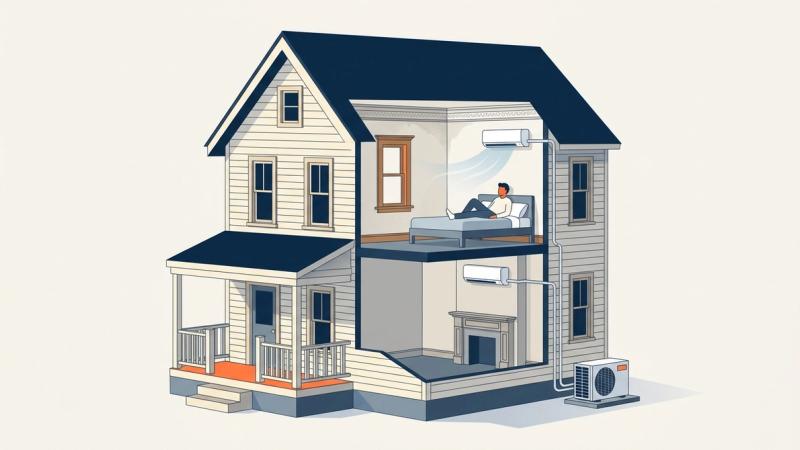
Homes heated by a boiler never needed ducts, so there's nowhere to hide central AC without opening walls and ceilings. ENERGY STAR describes mini-splits as an alternative to radiator or baseboard heating and a replacement for window units, with no ductwork needed, and notes they avoid duct losses that can account for more than 30% of a home's energy use for space conditioning.
Retrofitting ducts into a plaster-and-lath house means soffits, lost closet space, plaster repair and long attic runs. A ductless system needs only a small wall penetration per indoor head.
Pre-install checklist for a mini split in an older home
Electrical panel: new circuit or panel upgrade?
Each outdoor unit typically needs its own 240-volt circuit and an outdoor disconnect. With a 100- to 200-amp service and open slots, that's often just a new circuit. A panel upgrade becomes likely with:
- A 60-amp service or an old fuse box
- A full panel with no room for a double-pole breaker
- Existing loads (electric range, dryer, other AC) that leave too little capacity
- Signs of heat damage, corrosion or brittle wiring
A load calculation, not a guess, decides which side you fall on.
Line set, drain and outdoor unit on plaster, brick and tight lots
On plaster walls, we mount heads on exterior walls where possible so the line set goes straight out, or route it through a closet or down to the basement. On brick or block, we core-drill, sleeve and seal the hole, then run the line set in a paintable cover down the outside wall.
The condensate drain needs a steady downhill path; heads on interior walls usually need a small condensate pump. Don't let drains empty onto walkways or driveways, where they can freeze.
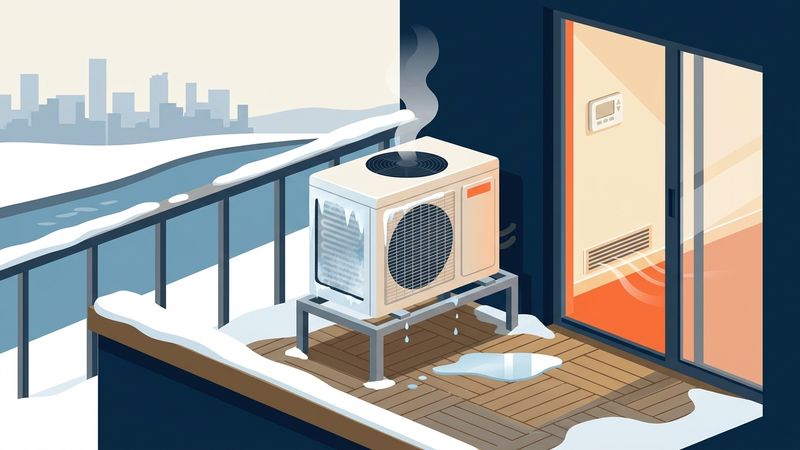
On narrow Hackensack lots, the outdoor unit often goes on a wall bracket or raised stand in the side yard, above snow and away from a neighbor's windows. Check city setback rules before committing to a spot.
Two-family houses
Each unit is normally its own system, wired to that unit's panel so each household controls and pays for its own comfort. Routing upstairs line sets without crossing the downstairs unit takes planning, and both outdoor units need room on the same lot.
Sizing: how many heads you need
Room-by-room load calculations (Manual J) matter more than the brand. An oversized head short-cycles and leaves rooms clammy; an undersized one never catches up. A chopped-up older layout with closed bedrooms often needs a head per room, and a hot top-floor bedroom under the roof may need more capacity than a larger shaded room downstairs.
Heating in October and through a New Jersey winter
A mini-split is a heat pump, so it heats as well as cools. In October, when nights are chilly but it's early to fire up the boiler, it takes the chill off a room quickly. Cold-climate models keep heating through a New Jersey winter, though capacity drops as temperatures fall, so check a model's low-temperature rating.
Should you keep the boiler? In most older homes, yes. Many owners use the mini-split for shoulder seasons and milder days and let the boiler carry the coldest stretches, which also gives you backup heat. If you have electric baseboard instead, ENERGY STAR reports certified mini-splits use up to 60% less energy than standard electric radiators.
What you can check yourself
- Panel amperage: look for the rating on the main breaker or the panel label.
- Open breaker slots: count empty spaces in the panel. Don't remove the cover.
- Outdoor spots: note wall areas with room for a unit, away from windows, downspouts and walkways.
- Problem rooms: list which rooms run hot in summer or cold in winter.
What needs a licensed pro
Handling refrigerant requires EPA certification; brazing, charging and leak testing aren't DIY jobs. New circuits and panel work need a licensed electrician and typically a permit. Sizing isn't legally restricted, but it's where most problem installs go wrong. Our ductless mini-split installation team handles the load calculation, electrical and refrigerant work together for homeowners throughout Hackensack.
Afterward, clean the washable filters (see our filter guidance) and schedule HVAC maintenance to clean coils and check drains.
Incentives
Hackensack is in PSE&G territory, and heat pump programs change often, so check PSE&G's current offerings before you buy. We also offer financing options.
Frequently asked questions
Will a mini-split replace my radiators?
It can, but most older homes keep the boiler for the coldest weather and use the mini-split for cooling and milder heating days.
Do I need a panel upgrade for a mini-split?
Not always. Many 100- to 200-amp panels with open slots just need a new circuit, while 60-amp services, fuse boxes and full panels often need an upgrade.
Can a mini-split go on a brick house?
Yes. The installer core-drills and seals the wall, then runs the line set in a cover down the exterior to the outdoor unit.
Need Air Conditioning Service in Hackensack, NJ?
Call Heights Plumbing, Heating & Cooling at (201) 245-7772 or schedule online today!
Schedule Service