In this article
Room over garage cold while the rest of the house is comfortable? Usually one of two things is happening: not enough warm air reaches the room, or the room loses heat faster than the system can replace it. Its duct is often the longest run from the furnace and passes through an unheated garage ceiling, and its floor sits over a space near outdoor temperature. Measure first, then choose the fix.
Why the room over your garage is cold
A long or undersized duct run
Rooms over garages are often finished after the heating system was laid out. The supply duct may be the longest run in the house, with several turns, or too small for the room. Less air arrives, and it has cooled on the way.
Leaky or uninsulated duct in the garage ceiling
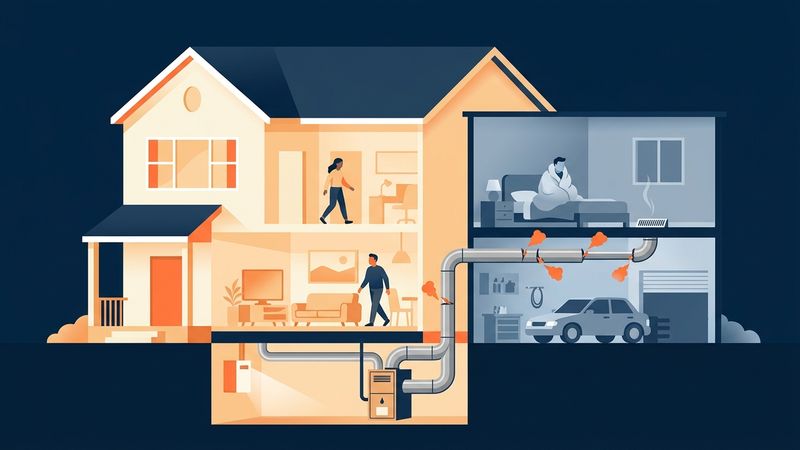
Gaps in a duct passing through the garage blow heated air into a cold space, and bare metal sheds heat. ENERGY STAR notes that in typical homes about 20 to 30 percent of the air moving through the duct system is lost to leaks, holes and poorly installed ducts (ENERGY STAR duct sealing flyer). A garage run is where that loss hurts most.
No return path
If the room has no return grille and the door stays shut, the room pressurizes and the register blows weakly even when the duct is fine.
A cold floor and knee walls
Thin or gapped insulation in the floor over the garage or in knee walls can keep the room cold even with good airflow.
Ducts or insulation? How to tell
Let the heat run a full cycle, then check:
- Airflow at the register. Hold a hand or tissue at the register and compare with another upstairs bedroom. Weaker or cooler air points to the duct.
- The floor. If airflow is strong and warm but the floor feels much colder than the walls, suspect insulation.
- The filter. A clogged filter cuts airflow everywhere, and the farthest room feels it first. Our guide to the best MERV rating for home filters covers what your system can handle.
- Dampers. A small lever on the duct near the furnace or in the garage ceiling that sits across the duct means the damper is partly or fully closed.
- The door. If the room warms with the door open but not closed, suspect a missing return path.
Many garage rooms have some of both problems.
What you can safely fix yourself
- Open dampers feeding the room and set the register louvers fully open.
- Move furniture, rugs and curtains away from the register and any return grille.
- Replace a dirty furnace filter.
- Seal duct joints you can easily reach in the garage with mastic or metal foil tape. ENERGY STAR says never to use duct tape because it doesn't last.
Where to stop: don't open the garage ceiling, move or resize ducts, or work near the furnace or water heater vent. Closing registers elsewhere to push air upstairs can cut total airflow and strain the system.
Is a duct leak in the garage a safety issue?
It can be. Garages hold car exhaust, fuel and solvent fumes, and sometimes a furnace or water heater. A leaky return duct or open joint there can pull that air into the system and spread it through the house. ENERGY STAR also notes that in homes with fuel-burning furnaces or water heaters, duct sealing should include a check that combustion gases vent properly. If you smell exhaust or fumes when the heat runs, have the system inspected promptly and keep carbon monoxide alarms working. More warning signs are in our article on leaky ductwork signs in heating season.
How a pro fixes a cold bonus room over the garage
A proper diagnosis measures airflow at the room, checks duct size and routing, and looks at system pressure before recommending work. The usual options:
- Seal and insulate. Mastic on seams and connections, then duct insulation on the garage run, as ENERGY STAR recommends for ducts in garages.
- Balance the system. After sealing, ENERGY STAR advises having a professional confirm the system is balanced so each room gets its share.
- Upsize or reroute the run. A larger duct, a shorter path or a dedicated branch delivers the volume the room needs.
- Add a return. A return grille or transfer path lets air flow back so the supply register can do its job.
In North Jersey, November is the time to deal with this: long furnace cycles expose a weak run quickly, and work is easier to schedule before the coldest weeks. In East Hanover, our background-checked, licensed technicians, backed by engineers on staff, handle ductwork repair and installation with upfront pricing before work begins.
When more ductwork isn't the answer
If the register delivers strong, warm air and the room still won't hold heat, more airflow won't fix it. The cause is usually missing or poorly installed floor insulation, air leaks at the rim joist, or uninsulated knee walls, and that calls for insulation work. We'll tell you plainly when that's the case. If the room's heat loss is very different from the rest of the house, a separate zone or a ductless mini-split can give it its own control.
Frequently asked questions
Why is the room over my garage colder than the rest of the house?
It usually sits at the end of a long duct run through a cold garage ceiling, over unheated space. Leaks, undersized ducts, no return path or thin insulation make it worse.
Can I seal the ducts in my garage with duct tape?
No. Use mastic or metal foil tape on joints you can reach; ENERGY STAR advises against duct tape because it doesn't hold up.
Is a leaky duct in the garage dangerous?
It can pull exhaust and fumes into your home's air, so have it inspected if you notice odors when the heat runs. Keep carbon monoxide alarms working.
Need Indoor Air Quality Service in East Hanover, NJ?
Call Heights Plumbing, Heating & Cooling at (201) 245-7772 or schedule online today!
Schedule Service