In this article
A furnace blower not working the first time you turn on the heat in October usually comes down to one of two things. It may be a simple setup issue, such as a thermostat setting, a switch flipped off, a filter left in since AC season or an unlatched blower door. Or a part that sat idle all summer failed on the first call for heat, most often the capacitor or the motor. What you see narrows it down fast.
Safe checks to do before you call
- Thermostat. PSE&G recommends making sure the thermostat is set to Heat and turned up. Set it a few degrees above room temperature with the fan on Auto (runs only during heating), not On (runs constantly). Replace weak batteries.
- Power. Check the breaker and the service switch near the furnace, which looks like a light switch and is easy to bump off.
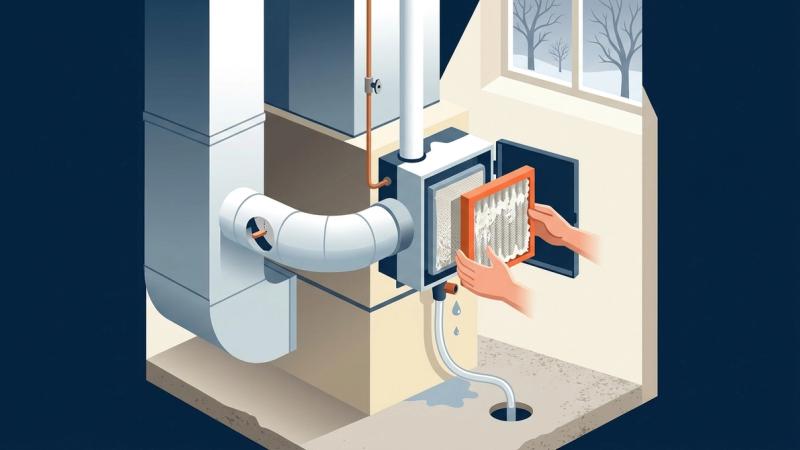
- Filter. Replace a filter left in since cooling season. A clogged filter strains the furnace and cuts airflow, and ENERGY STAR notes a dirty filter can damage equipment and lead to early failure.
- Blower door. The lower panel presses a safety switch. If it isn't fully seated, nothing runs. Push it firmly into place.
- Status light. Count the LED flashes through the blower door window, compare them with the chart on the panel, and write the code down for your technician.
Also make sure the outdoor intake and exhaust pipes aren't blocked by leaves or nests. PSE&G warns that blocked exhaust pipes can cause carbon monoxide buildup. If your CO alarm sounds, get everyone out and call 911.
Furnace blower not working: what each symptom means
The fan is completely dead
If the checks pass and you hear nothing, the cause may be a failed motor, a bad relay or control board, a blown board fuse or a tripped limit switch. Sorting that out means testing live voltage with panels off, which is a technician's job.
The motor hums but doesn't spin
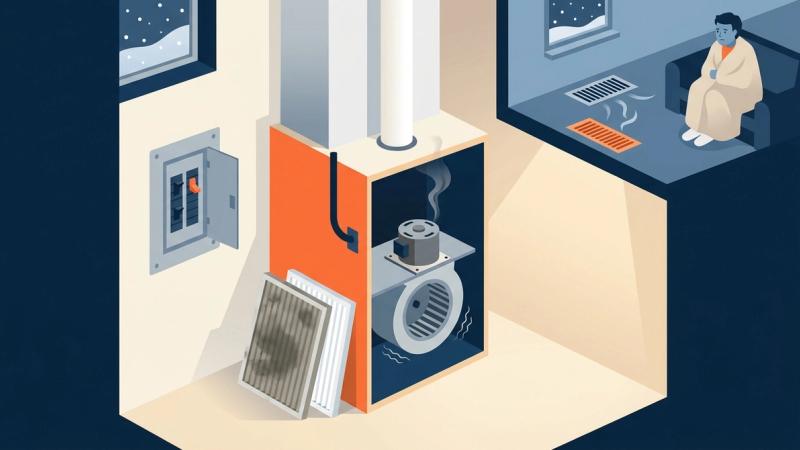
On older motors this is the classic sign of a failed run capacitor; seized bearings can also cause it. Other bad capacitor signs include slow starts or a bulging, leaking case. Capacitors hold a charge even with the power off and can deliver a serious shock. A humming motor will overheat, so shut the furnace off and call.
The fan won't shut off
Confirm the fan is set to Auto. If it still runs, likely causes are a stuck relay on the control board, a thermostat wiring fault, or a limit switch holding the fan on because the furnace is overheating.
The fan cycles off before the heat finishes
This is often overheating: a dirty filter, closed registers or a dusty blower wheel trips the high limit and shuts the burners down. A motor cutting out on its own thermal protection does the same. If a new filter and open registers don't fix it, have it checked.
The fan runs but the air is cold
This usually isn't the blower. Manufacturer guides note that if the blower comes on but the furnace won't ignite, the problem lies elsewhere, such as the igniter, flame sensor, gas valve or pressure switch. Confirm the furnace's gas valve is open, then call rather than resetting repeatedly.
First-startup burning smell: normal or not?
A light, dusty smell at first startup is normal. It's summer dust burning off the burners and heat exchanger, and it fades as the system runs. Shut the furnace off if you smell hot plastic or wiring, see smoke, or the odor keeps getting stronger. If you smell rotten eggs, leave and call your gas utility from outside.
PSC vs. ECM blower motors
PSC motors are the older single-speed type. They rely on a run capacitor, and their failures (capacitor, bearings, windings) are fairly straightforward to diagnose.
ECM (variable-speed) motors have a built-in electronic module and no separate run capacitor. A fault can be in the motor, the module or the signals from the furnace board, and replacements often must be matched or programmed to your model. Guessing can mean buying expensive parts that don't fix anything.
Repair the blower motor or replace the furnace?
- The furnace's age and repair history
- Whether other parts, like the heat exchanger, inducer or control board, are also wearing out
- How the repair cost compares with a new furnace
- Comfort problems or high bills you'd like to fix anyway
A capacitor or PSC motor on a reasonably young furnace is usually worth repairing. An ECM failure on an aging furnace with other problems is a good time to consider furnace installation and replacement. Many older homes in Fair Lawn have basement or attic furnaces that have been in place for decades. We give upfront pricing on both options so you can compare.
When to call a licensed technician
Call for furnace repair and maintenance if the motor hums, the breaker trips again, you smell burning wiring, or the fix means opening panels beyond the blower door. For no heat in freezing weather or a CO alarm, use our 24/7 emergency HVAC service. Our background-checked, licensed technicians work out of our Fair Lawn office, with engineers on staff for tougher diagnoses.
Frequently asked questions
Why won't my furnace blower come on the first time I turn on the heat?
Usually it's the thermostat setting, a service switch or breaker that's off, a clogged filter or an unlatched blower door. If those check out, a capacitor, motor or control board that failed after sitting idle is likely.
Can I replace a blower capacitor myself?
We don't recommend it. Capacitors store a dangerous charge even with the power off, the replacement must match the correct rating, and a technician can confirm the capacitor is really the problem.
Need Heating Service in Fair Lawn, NJ?
Call Heights Plumbing, Heating & Cooling at (201) 245-7772 or schedule online today!
Schedule Service