In this article
- Whole house humidifier not working? Start with this checklist
- Furnace humidifier not getting water
- Water flows but the house is still dry
- Humidifier leaking at the furnace or running nonstop
- What you can do yourself vs. what needs a licensed pro
- Repair or replace your humidifier?
- Frequently asked questions
A whole house humidifier not working when you turn the heat back on in November usually comes down to a summer setting: a closed water valve, a bypass damper left shut, or a humidistat turned down. A mineral-crusted water panel is the next most common culprit. Work through the checks below in order to tell a simple fix from a job for a licensed technician.
Whole house humidifier not working? Start with this checklist
Confirm the basics before chasing a specific symptom. Bryant's whole-home humidifier troubleshooting guide follows a similar order.
- Water valve fully open. Many homeowners close the small supply valve in spring. Open it all the way.
- Bypass damper in the winter position. On a bypass humidifier, the round duct linking the unit to the furnace ductwork has a damper lever. It's closed for summer; open it for heating season or little air moves through the pad.
- Humidistat set for the season. If it's off or at the lowest setting, the unit never calls for water.
- Power on. Confirm the furnace switch is on and any plug-in transformer or fan-powered unit has power.
- Clean water panel. A hard, white, scaled pad can't absorb water.
- Furnace blower running. Most bypass and fan-powered units only humidify while the blower runs.
Furnace humidifier not getting water
Turn the humidistat well above the current humidity and wait for the furnace to run. You should hear the solenoid valve click and water trickle through the unit to the drain.
Common causes
- Supply or saddle valve closed or only partly open
- Clogged supply line, strainer or small feed orifice, often from mineral buildup
- Humidifier solenoid valve not opening
If the solenoid doesn't click when you set the humidistat to high, stop there. It runs on 24-volt control wiring tied into the furnace, so a technician should test it with a multimeter to find whether the solenoid, humidistat or wiring failed, then replace it if needed. Clearing a clogged orifice means opening a pressurized water connection, which is also pro work.
Water flows but the house is still dry
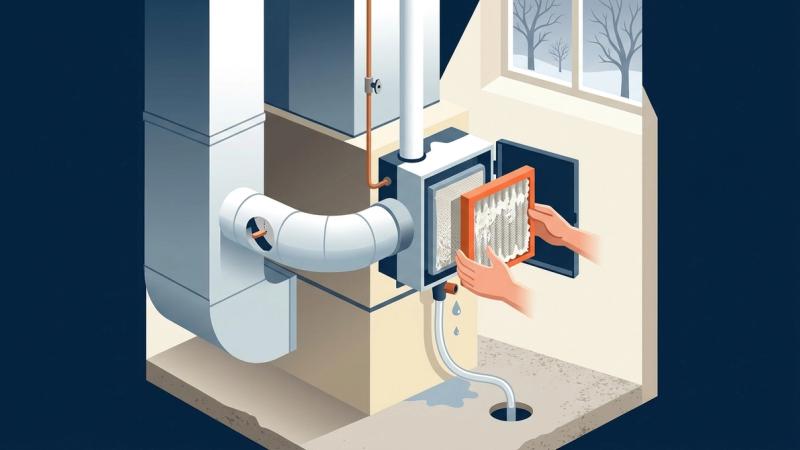
- Scaled water panel. Water runs over a hardened pad instead of soaking in, so little evaporates. American Standard's homeowner humidifier checks say to turn off power and water, remove the pad and look for mineral buildup; if it feels hard, clean or replace it. Humidifier water panel replacement is the most common seasonal fix.
- Closed bypass damper. The summer setting chokes airflow through the unit.
- Limited blower run time. On mild days the furnace runs less, so the humidifier adds less moisture.
- Setting too low. The unit shuts off before the house feels comfortable.
What setting should I use?
Aim for 30% to 50% relative humidity, staying toward the low end during cold snaps. Setting it too high in winter causes condensation on windows and walls, which can lead to mold and structural damage. If windows fog or drip, turn it down. Our guide to winter indoor humidity targets covers this in more detail.
Humidifier leaking at the furnace or running nonstop
- Clogged drain line or tray: scale and debris back up and overflow.
- Solenoid stuck open: water flows even with no call for humidity.
- Loose or failed fitting: at the saddle valve, compression nut or feed tube.
Shut off the humidifier's water valve and call a pro. Water dripping onto a furnace cabinet or into ductwork can corrode metal and damage controls. A unit that runs constantly points to a stuck solenoid, a humidistat set too high, or a failed sensor or control.
What you can do yourself vs. what needs a licensed pro
Safe homeowner checks
- Open the water valve and set the damper for winter
- Adjust the humidistat
- Confirm power and that the furnace is running
- Replace the water panel with power and water turned off
Call a technician for
- 24-volt wiring or control problems
- Solenoid testing or replacement
- Plumbing connections and clogged feed lines
- Humidistat, sensor or control board faults
- A dead fan motor on a fan-powered unit
- Any leak near the furnace
Repair or replace your humidifier?
Most failures come down to one part: a pad, a solenoid, a clogged orifice or a humidistat. Those are worth repairing. Replacement makes more sense when the housing is cracked or corroded, parts are hard to find, or the unit never kept up even when it worked. That's also the time to reconsider the type; our comparison of bypass, fan-powered and steam humidifiers explains the trade-offs. A control that reads outdoor temperature and lowers the setpoint in cold weather can also help limit window condensation.
A note for older Roselle homes
Many houses in Roselle date to before World War II, and plenty heat with radiators or baseboard rather than a furnace. A whole-house humidifier needs forced-air ductwork to deliver moisture, so homes with hydronic heat and no ducts usually aren't candidates. If you're not sure what your house can support, our Roselle heating and indoor air quality team can look at your system and give you upfront pricing before any work begins. Our whole-home humidifier services page covers repair, replacement and installation.
Frequently asked questions
Why did my whole-house humidifier stop working when I turned the heat back on?
Usually the water valve was closed, the bypass damper was left in its summer position, or the humidistat was turned down. A scaled water panel is the next most likely cause.
Can I test the solenoid valve myself?
You can listen for a click with the humidistat set to high. If there's no click, have a technician test it with a multimeter, since the circuit ties into the furnace's control wiring.
Should I keep running it if it's dripping near the furnace?
No. Close the humidifier's water valve and have the leak checked before water damages the furnace or ductwork.
Need Indoor Air Quality Service in Roselle, NJ?
Call Heights Plumbing, Heating & Cooling at (201) 245-7772 or schedule online today!
Schedule Service