In this article
- Step one: test your well for PFAS
- Near Route 31 or Rymon Road: the free EPA option
- Outside the study area or under the limit: should you filter anyway?
- Choosing a whole house PFAS filter or an under-sink unit
- What goes before the carbon, and why it matters
- Keeping it working: maintenance and retesting
- Frequently asked questions
For most homes, the right PFAS well water filter is granular activated carbon installed where water enters the house, sized to your flow and protected by the right pretreatment. In Washington Township, though, the first step isn't shopping. It's testing, because some homes near the Route 31 sludge site may qualify for a system installed by EPA at no cost.
Step one: test your well for PFAS
Buying a filter without lab results is guesswork. Order a PFAS analysis from a laboratory certified by the NJ Department of Environmental Protection. NJDEP also recommends yearly testing for coliform bacteria, nitrate and pH, and its treatment guidance advises testing for other parameters before choosing equipment, since they can make treatment less effective or void the warranty. For filter planning, ask the lab to include hardness, iron, manganese, pH and sediment along with PFAS.
Selling or buying a home
New Jersey's Private Well Testing Act requires a well test by a certified lab when a home with a private well is sold, and PFAS is part of that testing. If you bought recently, find those results first. They're a useful starting point, but not a substitute for a current test.
Near Route 31 or Rymon Road: the free EPA option
The Route 31 Sludge Disposal Site sits mostly in Washington Township, and EPA suspects textile-mill sludge as the PFAS source. According to EPA's site profile, the agency began providing bottled water in December 2024, and as of April 2026 had installed more than 180 point of entry treatment (POET) systems free of charge at homes whose results were above EPA limits.
Eligibility depends on being inside EPA's study area and having sampling results above those limits. If you're nearby and haven't been contacted, check the township's well water contamination updates or contact EPA before you buy anything.
Outside the study area or under the limit: should you filter anyway?
That's a judgment call based on your own numbers. If PFAS was detected below the federal limit, some households choose to treat drinking and cooking water anyway, especially with an infant or pregnancy in the home. If nothing was detected, retest on a regular schedule instead of buying equipment. If results are above the limit and you're outside EPA's area, treatment is up to you.
Waiting for public water
Public water extensions take time, and no timeline should be assumed. If your water is above the limit, treat it now. Ask the township about planned extensions; if one comes, you'll need a new water service line to connect.
Choosing a whole house PFAS filter or an under-sink unit
EPA advises choosing filters certified to NSF/ANSI 53 (carbon) or NSF/ANSI 58 (reverse osmosis) specifically for PFAS reduction, and confirming the listing in the certifier's online directory rather than trusting the packaging.
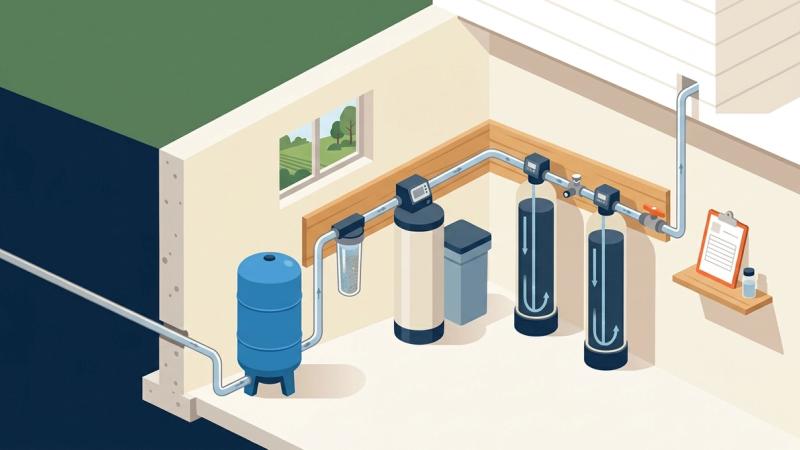
- Whole-house granular activated carbon (POET): Treats every tap in the house. It's the approach NJDEP lists for PFAS and the type EPA installs. It needs proper sizing for your household's flow and a professional installation.
- Reverse osmosis under the sink: Treats one faucet for drinking and cooking. It's smaller and simpler to set up, but it produces wastewater, needs its own membrane and prefilter changes, and leaves the rest of the house untreated.
Households with above-limit results often choose whole-house carbon. Those with low detections often start with RO at the kitchen sink.
What goes before the carbon, and why it matters
Carbon removes PFAS by trapping it on the surface of the granules. Iron, manganese, hardness minerals and sediment can coat those surfaces or clog the bed, so the carbon loses pressure and lets PFAS through sooner than expected. A typical sequence, adjusted to your test results:
- Sediment filter
- pH correction (acid neutralizer), if your water is acidic
- Iron and manganese removal, if present
- Water softener, if hardness is high
- Granular activated carbon for PFAS
- UV disinfection, if bacteria are a concern
Keeping it working: maintenance and retesting
What you can safely check yourself
- Keep lab reports and filter installation and change dates in one folder.
- Watch for a noticeable pressure drop, which can signal a clogged prefilter or fouled carbon.
- Change cartridge-style sediment prefilters on the manufacturer's schedule.
What needs a licensed pro
Sizing the system, installing tanks and the bypass valve, connecting at the well-side plumbing near the pressure tank, and replacing carbon media are jobs for a licensed plumber. Many whole-house carbon systems use two tanks in series with a sample port between them, so a lab can catch PFAS reaching the first tank before it reaches your taps.
When to retest
Test treated water soon after installation to confirm the system works, then on the schedule your installer sets based on water use and starting levels. Change the carbon when testing shows PFAS breaking through or when the media reaches its rated capacity, whichever comes first, and retest after every change. Our water filtration team sizes, installs and services PFAS systems across Warren County.
Frequently asked questions
Does my PFAS lab need NJ certification?
Yes. Use an NJDEP-certified laboratory so results are reliable and acceptable for a home sale under the Private Well Testing Act.
Will EPA install a free system at my Washington Township home?
Only if your home is in EPA's Route 31 study area and your results are above EPA limits. Contact EPA or check township updates before buying a system.
Can hard water ruin a PFAS carbon filter?
Yes. Hardness, iron and sediment can foul the carbon and shorten its life, which is why pretreatment goes ahead of it.
How do I know my carbon filter still removes PFAS?
Only a lab test of treated water can tell you. Pressure and taste won't reveal PFAS breakthrough.
Need Plumbing Service in Washington Township, NJ?
Call Heights Plumbing, Heating & Cooling at (201) 245-7772 or schedule online today!
Schedule Service