In this article
- The service line vs. the pipes inside your house
- Water line replacement signs to watch for
- How to identify lead, galvanized or copper at the basement wall
- Pre-1986 homes, lead letters and the 2031 deadline
- Who replaces the line: the city program or a plumber
- Old galvanized pipes inside after the service line is done
- Why October is a good time to check
- Frequently asked questions
The most common water line replacement signs are low pressure at every fixture at once, rusty or brown water, a soggy spot between the curb and your foundation, and a water meter that moves when nothing is running. In Hoboken, homes built before 1986 may also have lead service lines, which New Jersey requires to be replaced by 2031. Here's how to tell what you have and who handles the fix.
The service line vs. the pipes inside your house
The service line is the pipe that carries water from the main under the street, past a curb shutoff, and through your basement wall to the meter. Everything past the meter is interior plumbing. Under the NJDEP lead service line replacement requirements, a line may be owned by the utility, the property owner, or both, so ask your water provider where your responsibility starts before any digging.
Water line replacement signs to watch for
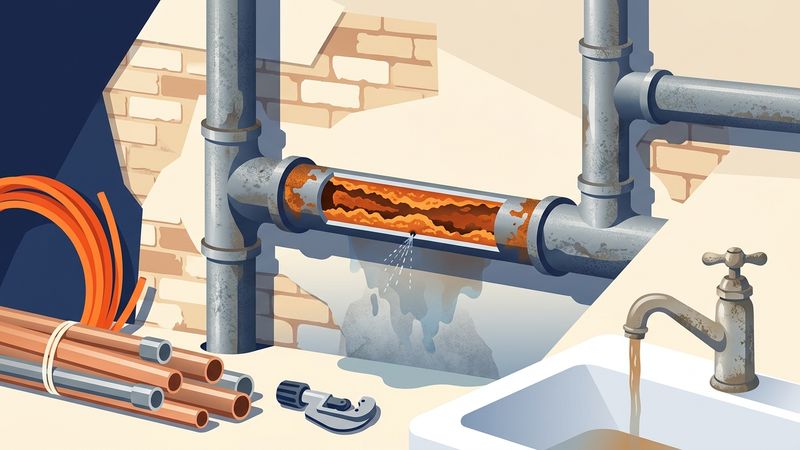
- Low pressure everywhere at once. One weak faucet usually means a clogged aerator or bad valve. Weak flow at every tap points to the service line or main shutoff, since galvanized lines narrow as they corrode inside.
- Rusty or brown water. Discoloration at every tap can come from a corroding galvanized line, or from work on city mains, some more than 100 years old. Note whether it clears and whether neighbors see it too.
- A wet spot or puddle between the curb and the foundation that stays damp in dry weather.
- The meter moves when nothing is on. Shut off every fixture, confirm no toilet or ice maker is filling, and watch the leak indicator for several minutes. Movement means water is escaping, in the service line or inside the house.
- A higher water bill with no change in how you use water.
How to identify lead, galvanized or copper at the basement wall
Find where the pipe comes through the front wall, just before the meter. Lightly scratch a small spot with a coin or key, then hold a refrigerator magnet against it.
- Lead: dull gray and soft. The scratch turns shiny silver easily, a magnet won't stick, and there's often a rounded, bulb-shaped joint at the meter.
- Galvanized steel: gray and hard. The scratch shows only slightly lighter metal, a magnet sticks firmly, and joints are threaded.
- Copper: the scratch shows a penny color, and a magnet won't stick.
- Plastic: white, black or blue, with no metal underneath.
Never file or cut a pipe, and wash your hands afterward. The visible section may differ from what's buried under the sidewalk, which is why many lines are listed as "unknown." You can report what you find through the survey on Hoboken's water service line inventory page.
Pre-1986 homes, lead letters and the 2031 deadline
My house was built before 1986. Should I worry?
It's worth checking. The City says there are no lead mains in Hoboken, but service lines at properties built before 1986 may contain lead. State law (P.L.2021 c.183) and a city ordinance require lead lines to be replaced by 2031, and the EPA lists lead service lines, along with brass fixtures, among the most common sources of lead in drinking water.
I got a "lead or unknown service line" letter
Water systems must send these notices for lead lines and lines whose material isn't confirmed. An "unknown" notice doesn't mean lead was found. Check the pipe, complete the city survey and follow the notice's steps. For added protection meanwhile, a water filtration system certified for lead reduction is one option.
Renting, or own a rental?
Landlords must share and post these notices and cooperate with replacement work. Tenants can get a free lead test.
Who replaces the line: the city program or a plumber
Hoboken's program, run with Veolia, replaces lead and galvanized service lines as city contractors reach each street, and the City or Veolia contacts owners when work is scheduled. You don't need to hire a private plumber for that. Partial replacement of a lead line isn't allowed: both the utility and owner sides must be replaced, along with any lead gooseneck, the short connector at the main.
A licensed plumber is the right call when:
- Your line is copper or plastic and is leaking or losing pressure. That's a standard water line repair or replacement, and a spot repair may be possible.
- The meter shows water moving but you can't find the source. Leak detection separates a service line leak from a hidden one indoors.
- Your line is listed as unknown and you want a firm answer. Our Hoboken plumbing technicians can identify the material.
Old galvanized pipes inside after the service line is done
A new service line brings full flow to the meter and stops there. Many older Hoboken rowhouses still have galvanized supply pipes inside the walls that keep restricting pressure and shedding rust. If pressure stays weak or water runs brown after replacement, repiping the house is the next step.
Why October is a good time to check
Fall gives you time to find a leak or confirm your pipe material before the ground freezes and excavation gets harder, and to protect exposed basement piping before the first cold snap.
Frequently asked questions
Can I replace only part of my service line?
Not if it's lead. New Jersey doesn't allow partial lead line replacement. For a leaking copper line, a section repair may be an option.
Do I need to hire a plumber to replace a lead line in Hoboken?
Usually not. The City and Veolia contact owners when contractors reach their street. A plumber helps with non-lead repairs, unknown lines and interior piping.
Need Plumbing Service in Hoboken, NJ?
Call Heights Plumbing, Heating & Cooling at (201) 245-7772 or schedule online today!
Schedule Service