In this article
- Physical signs you need water line replacement
- What an SMCMUA "unknown" or "galvanized" notice means
- A safe check you can do at the meter
- Service line or whole-house repiping?
- Repair or replace, and how it's done
- Who pays in Morristown, and should you wait?
- Is October a good time to replace the line?
- Frequently asked questions
The clearest signs you need water line replacement are weak pressure throughout the house, rusty water at every tap, wet or sunken spots in the yard, a higher bill, and a meter that moves with everything shut off. In Morristown, there's a second trigger: a letter from the Southeast Morris County MUA (SMCMUA) saying your service line is "unknown" or galvanized.
Physical signs you need water line replacement
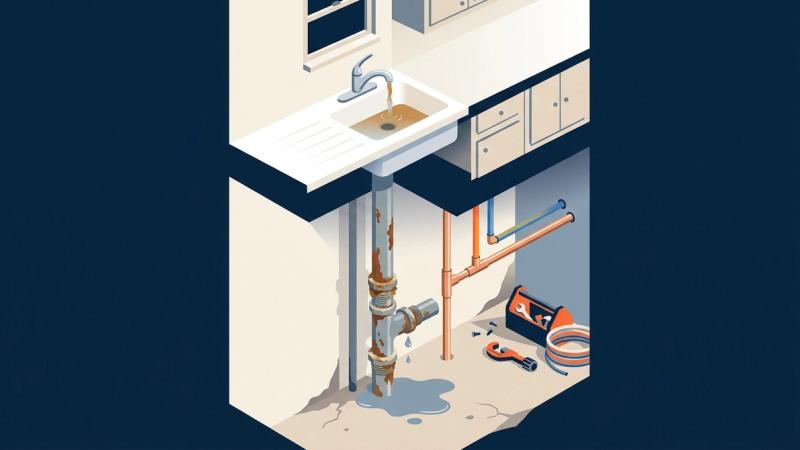
The service line runs from the street main into your basement, so when it fails, symptoms show up everywhere at once.
- Low water pressure in the whole house. Every fixture weak, especially with two running, points to a corroded or leaking line. One weak fixture usually means a local problem.
- Rusty water at every tap. Galvanized steel rusts from the inside. If only the hot water is discolored, check the water heater first.
- Wet, soft or sunken spots between the street and the house, especially in dry weather.
- A higher bill with no change in how you use water.
- A moving meter. Shut off every tap and water-using appliance and watch the meter for 15 to 30 minutes. Movement means water is escaping somewhere.
The last three point to a leak. Professional leak detection can locate it before anyone digs.
What an SMCMUA "unknown" or "galvanized" notice means
New Jersey's 2021 Lead Service Line Replacement Law requires water systems to identify and replace lead service lines within 10 years. According to the NJDEP, systems must notify customers whose lines are lead or unknown, and the notice says which category applies.
- Unknown: the utility hasn't confirmed the material. It doesn't mean the line is lead.
- Galvanized requiring replacement: the line is recorded as galvanized steel and is on the replacement list.
Why a galvanized line counts as a lead line
SMCMUA's sample notice explains that under NJ law, a "lead service line" includes lead goosenecks, pigtails and galvanized lines. Galvanized pipe connected to a lead gooseneck can collect lead in its internal corrosion. SMCMUA's service line lookup shows what's on file for your address and lets you report what you find.
A safe check you can do at the meter
Find the pipe where it comes through the foundation wall, before the meter. Gently scratch a small spot with a coin or key, then hold a strong magnet to it.
- Lead: dull gray and soft; the scratch shows shiny silver; a magnet won't stick.
- Galvanized steel: gray and hard; a magnet sticks; often has threaded fittings.
- Copper: the scratch shows a penny color; a magnet won't stick.
- Plastic: white, blue or black; clearly not metal.
Don't file, sand or cut the pipe, force a stuck valve, touch the meter seals or dig at the curb stop. Wash your hands afterward. The visible section may not match what's buried: copper in the basement can still connect to a lead gooseneck at the main.
Service line or whole-house repiping?
A bad service line doesn't mean the inside plumbing is bad. But if your basement pipes are threaded gray steel and you notice weak pressure upstairs or rust at certain fixtures, the interior is likely galvanized too. Planning the service line and whole-house repiping together keeps a new line from feeding old, restricted pipe.
Repair or replace, and how it's done
A spot repair can be enough when the line is copper or plastic in good shape and the leak has one clear cause, such as a failed fitting or digging damage. Replacement makes more sense when the line is lead or galvanized, has leaked more than once, or restricts pressure throughout the house.
Trench vs. trenchless
Open-trench replacement digs along the line's path. Trenchless methods pull or bore a new line between small access pits, which can spare driveways, walks and mature trees. Depth, soil and obstacles decide which fits; our water line repair and installation team can assess your property.
Who pays in Morristown, and should you wait?
This hasn't been settled. Morristown Green reported in December 2025 that private utilities must pay for replacements but public ones like SMCMUA don't, that SMCMUA did not plan to cover homeowners' costs, and that the mayors of Morristown, Morris Township, Morris Plains and Hanover objected. The article cited $7,000 to $12,000 per home and a July 2031 deadline. SMCMUA sent program letters in spring 2026, the towns still disagreed in April, and the July 2026 board meeting discussed budget impact and possible funding sources.
Call SMCMUA at (973) 326-6880 and ask what its program offers, which part of the line it considers yours, and whether replacing now affects future assistance. If the line isn't leaking, waiting for answers is reasonable. If it's leaking or pressure is failing, waiting usually makes things worse.
Why you have to coordinate with SMCMUA first
NJDEP advises anyone replacing a line on their own to contact the water system first. The utility controls the curb stop and meter, must update its inventory, and may need to replace its portion so new pipe isn't joined to old.
Is October a good time to replace the line?
For many homes, yes. The ground is still workable before frost makes digging harder, the lawn has time to settle, and you avoid an emergency break in January. Allow time for utility coordination and permits. If you wait, take steps to protect your pipes from freezing this winter.
Frequently asked questions
Does an "unknown" notice mean my water has lead in it?
No. It means the utility hasn't confirmed your line's material. The meter check and SMCMUA's lookup tool are good first steps.
Can I replace my side of the line without the utility?
NJDEP says to contact your water system first. Call SMCMUA before scheduling work so the meter, curb stop and records are handled correctly.
Will a new service line fix low pressure?
If a corroded or leaking service line is the cause, it typically helps throughout the house. Galvanized interior pipes can still restrict flow until they're replaced.
Need Plumbing Service in Morristown, NJ?
Call Heights Plumbing, Heating & Cooling at (201) 245-7772 or schedule online today!
Schedule Service