In this article
- Why October matters for Paramus basements
- How a sump pump battery backup works and how long it lasts
- Step-by-step October test for your battery backup sump pump
- Upkeep you can safely do yourself
- AGM vs wet cell: which battery to use
- What the alarm and warning lights mean
- Battery, backup or primary pump: what needs replacing
- When you need a licensed pro
- Frequently asked questions
A sump pump battery backup keeps water leaving your pit when a storm cuts the power and your main electric pump stops. October is the time to test it. Fall rain soaks the ground, and nor'easters bring more water along with outages. Here's a simple routine to test the system, keep it in shape and tell whether the battery, charger, backup pump or primary pump is the real problem.
Why October matters for Paramus basements
Fall storms hit saturated ground, so more water reaches your sump pit and the pump runs more often. The same storms bring down power lines. AP, reporting via PBS, covered a powerful nor'easter around September 26–28, 2026 that caused flooding and power outages in New Jersey and New York. Leaders in both states declared states of emergency, and PSE&G sent out more than 2,500 crew members. PSE&G's outage guidance notes that electric sump pumps will not run during an outage. In Paramus homes, the battery backup is the only thing pumping until power returns.
How a sump pump battery backup works and how long it lasts
What happens when the power goes out
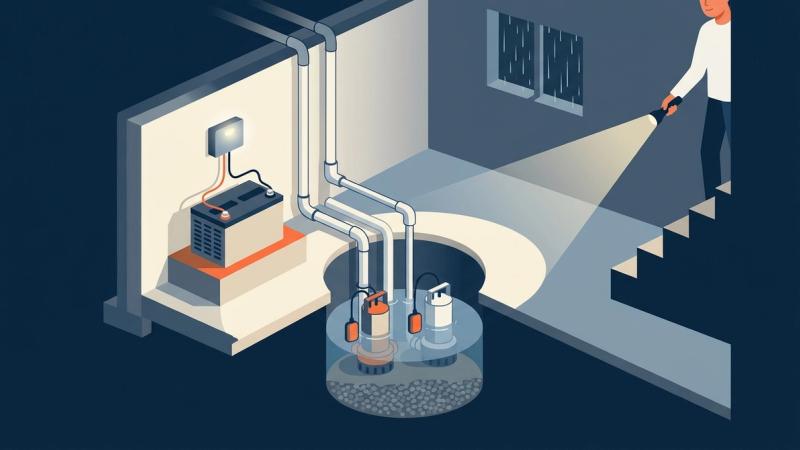
Your primary pump stops. A separate backup pump in the pit has its own float, set a little higher. When water rises past the primary's normal level, that float lifts and the backup runs off a battery that a charger keeps topped up while you have power.
Battery life in years
Backup batteries age even when they're rarely used. Roughly three to five years is the commonly cited range. Heat, deep discharges and skipped maintenance shorten it, so follow your unit's manual.
Runtime during an outage
Runtime depends on battery capacity, the pump's power draw and how often it cycles. One manufacturer's rated runtime assumes the pump runs at a 10% duty cycle. In a heavy storm with a fast-filling pit, the pump runs far more often, so real runtime can be much shorter.
Step-by-step October test for your battery backup sump pump
- Check the charger. With power on, the indicator should show normal or charged. Fix any fault or low-battery warning before testing.
- Unplug the primary pump. If it uses a piggyback float plug, unplug the whole assembly. Keep cords and hands dry.
- Fill the pit slowly with a bucket or hose until water rises past the primary's normal turn-on point.
- Watch the backup start. The float should lift freely, the pump should start promptly, water should flow out the discharge line and the "on battery" light or alarm should come on.
- Watch it shut off. Water flowing back into the pit points to a check valve problem.
- Restore power. Plug the primary back in, run one more fill to confirm it starts, and check that the charger lights return to normal over the next day.
A test button is handy, but it doesn't prove the float works the way a real fill does.
Upkeep you can safely do yourself
- Wet-cell water level: Top up with distilled water as the manual directs, wearing gloves and eye protection.
- Terminals: Clean white or green corrosion and keep connections tight.
- Charger indicator: Glance at it whenever you're in the basement.
- Float clearance: Make sure neither float catches on the pit wall, a cord or the other pump.
- Ventilation: Wet cells can vent gas while charging, so keep the battery box vented and away from sparks.
AGM vs wet cell: which battery to use
AGM batteries are sealed and need no watering. Wet-cell (flooded) batteries need water checks and ventilation. Use the type your system's manufacturer specifies, since some chargers are designed for one type. A higher amp-hour rating runs longer, but only if your charger supports that capacity.
What the alarm and warning lights mean
Labels vary, but most systems signal running on battery, low battery, a charger or power fault, battery replacement needed, or high water. An alarm while the power is on usually means the backup is running because the primary pump isn't keeping up. Check your manual for exact codes.
Battery, backup or primary pump: what needs replacing
- Battery won't hold a charge or is past its service life: Replace just the battery.
- Fresh battery but the charger still shows a fault: The charger or control unit is likely the problem.
- Good battery and charger but the pump hums or won't start: The backup pump or its float has failed, and replacing the backup unit often makes sense.
- Water flows back after the pump stops: The check valve is failing.
- Backup runs while the power is on: The primary pump is failing, its float is stuck, or it's undersized for your pit.
When you need a licensed pro
Call a pro if a pump won't start after basic checks, a check valve needs replacing, the discharge line leaks, freezes or backs up, or you want to add a backup pump to an existing pit. Questions about outlets, circuits or GFCI trips belong with a pro too. Our licensed technicians handle sump pump repair and replacement across Bergen County. If you see dampness without a clear source, leak detection can rule out plumbing leaks, or you can request service online.
Frequently asked questions
How long does a sump pump backup battery last?
Usually about three to five years. A single charge during an outage depends on battery size and how often the pump runs, and heavy storms drain it faster than rated figures suggest.
How do I test a battery backup sump pump?
Unplug the primary pump, fill the pit and confirm the backup starts, pumps out and shuts off. Then plug the primary back in and check the charger lights.
Should I use an AGM or wet cell sump pump battery?
AGM is sealed and lower-maintenance, while wet cells need watering and ventilation. Use the type and size your system's manufacturer specifies.
Need Plumbing Service in Paramus, NJ?
Call Heights Plumbing, Heating & Cooling at (201) 245-7772 or schedule online today!
Schedule Service