In this article
If your central air struggled through the summer, it often makes sense to replace AC in fall rather than wait for the first hot week of May. In Jefferson, October and November bring mild weather and no cooling demand, which leaves time to make a careful decision instead of an emergency one. A new system can be installed and started up in cool weather, then confirmed with a short check once spring warms up.
Why October and November work well in Jefferson
After the cooling season, a few weeks without AC goes unnoticed, so you can compare options, handle permits and plan around your heating system without pressure.
- No comfort cost to downtime. Removing a condenser in late October does not leave anyone sweating.
- Time to size it properly. Rushed summer swaps tend to copy the old unit's size. Fall gives room for a real load calculation.
- Workable outdoor conditions. Setting a pad, running a line set and wiring a disconnect is easier before frozen ground.
- Homes that need a closer look. Lake cottages around Lake Hopatcong and Lake Shawnee often have tight crawlspaces, small attics or later additions. Original systems in the newer Oak Ridge subdivisions may be reaching replacement age. Older homes may have ductwork never sized for central air.
We install and replace systems throughout Jefferson, NJ and the rest of Morris County.
Should I replace my AC in the fall or repair it?
ENERGY STAR lists several signs it may be time to replace a central air conditioner or heat pump:
- The system is more than 10 years old.
- It needs frequent repairs and your energy bills keep rising.
- The house feels humid even when the AC is running.
- You see excess dust, which can point to leaky ducts.
What you can check yourself
- Model plate and age. The data plate on the outdoor unit lists the model and serial number. Many manufacturers encode the build date in the serial.
- The filter. A clogged filter can make a healthy system look sick. If yours is overdue, replace the AC filter before judging the equipment.
- Repair records. Gather invoices. Repeated refrigerant top-offs or a string of part failures tell a clear story.
- This summer's bills. Compare them with past summers.
Repair this fall, replace this fall, or wait
- Repair when the system is fairly young, the problem is a single part, and cooling was otherwise solid. Our AC repair and maintenance team can tell you what failed and why.
- Replace this fall when the unit is past 10 years, has a recurring leak or a failed compressor or coil, or the house never stayed comfortable.
- Wait until spring only if the system still works and you accept that a failure during the spring rush leaves less room to plan.
What a cool-weather installation involves
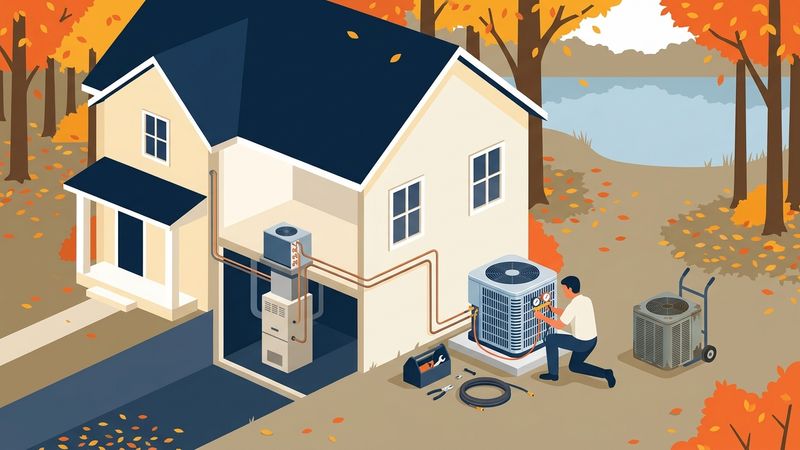
A proper air conditioning installation and replacement follows the same steps in October as in June:
- Load sizing based on the house, its insulation, windows and layout, not just the old unit's label.
- A matched indoor coil and outdoor unit, so the system performs as designed.
- Refrigerant work: recovering the old charge, pressure testing and evacuating the lines, then charging. This takes specialized equipment and certification.
- Electrical work for the disconnect, breaker and wiring.
- Permits and inspection, handled by the contractor.
Can it be charged and tested when it's cold out?
Yes. A licensed installer follows the equipment manufacturer's charging procedure for the conditions on installation day, then starts the system and confirms it runs correctly. Because a cool fall day does not put a real cooling load on the system, we recommend a spring check before the first hot spell to verify performance under actual summer conditions.
R-454B and why the indoor coil matters
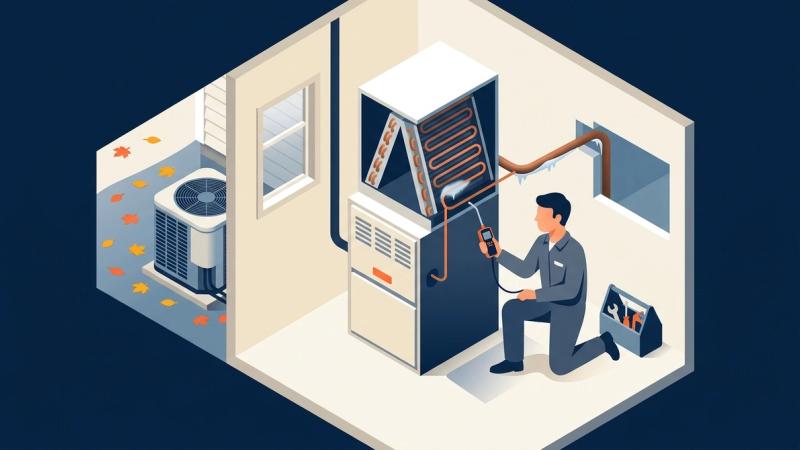
New residential air conditioners have been moving away from R-410A toward newer refrigerants such as R-454B. If you replace this fall, expect your new system to use one of these. Equipment is designed around its specific refrigerant, so the outdoor unit and the indoor evaporator coil should be a matched set. In most replacements that means a new coil too. Learn more about R-454B installation and our evaporator coil services.
AC alone, or a heat pump?
Fall is the best time to ask this, while your furnace or boiler is still running reliably. A heat pump cools in summer and can also heat in spring and fall. In a gas or oil home, it can be paired with the existing furnace, which takes over on the coldest days. Our engineers can tell you whether your ductwork, electrical service and heating system make that a good fit.
Does Jefferson Township require a permit?
Jefferson Township's building permit application guidelines list air conditioning systems under the Mechanical Subcode application, and the Electrical Subcode application, which is sealed by a licensed contractor, also lists AC systems. A licensed installer files these and schedules inspections. Heights holds NJ Lic. #197400 and #1221100.
Frequently asked questions
Is fall a good time to replace central air, or should I wait until spring?
Fall is usually better if your system is old or failing: no cooling demand, more time to plan, and a system ready before the spring rush.
How is a new AC tested if we don't need cooling until May?
The installer starts it and verifies operation on installation day. A follow-up check in spring confirms it performs correctly under a real cooling load.
Does the indoor coil need replacing with an R-454B system?
In most cases, yes. The indoor coil and outdoor unit should be matched and designed for the same refrigerant.
My AC is over 10 years old but still works. Should I replace it?
Age alone is not a reason to rip out a working system, but past 10 years ENERGY STAR suggests considering replacement, especially with rising bills, humidity problems or frequent repairs.
Need Air Conditioning Service in Jefferson, NJ?
Call Heights Plumbing, Heating & Cooling at (201) 245-7772 or schedule online today!
Schedule Service