In this article
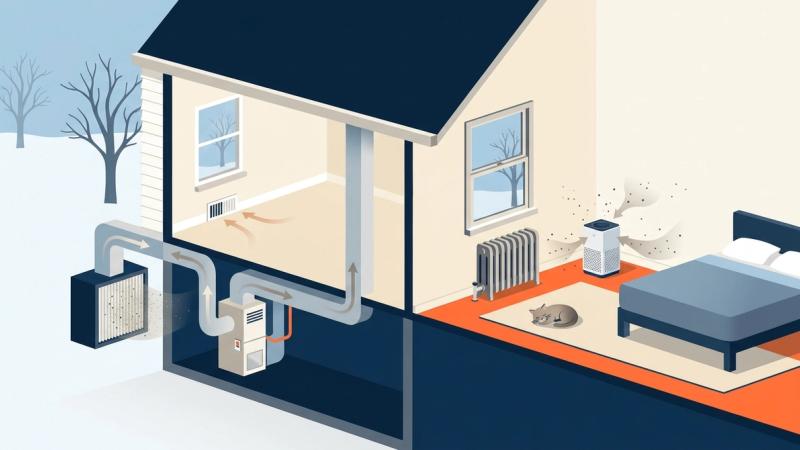
A whole house air purifier is worth it if you have a forced-air furnace or air handler with ductwork and your household deals with allergies, asthma, pet dander, dust or fine particles from traffic and smoke. It only cleans air while the system's blower is running, so fan settings matter. In boiler homes with radiators and no ducts, a properly sized portable HEPA unit in the rooms you use most is usually the better choice.
Why this matters more in November
Once the heat comes on, windows stay shut and the same indoor air recirculates for months. Dust, dander and particles from cooking, candles and traffic stay inside instead of venting out. In Perth Amboy, where much of the housing stock is older, many homeowners notice more dust and stuffiness once heating season starts. Our guide on why houses get dustier in winter covers the other causes.
Whole house air purifier vs portable: how they differ
According to the EPA's guide to air cleaners in the home, a portable cleaner treats a single room, while a filter or cleaner in central HVAC can treat the whole home. The EPA also notes that no air cleaner removes every pollutant.
The catch with central units is runtime. HVAC filters only clean air while the blower runs, and the EPA notes systems usually run less than 25% of the time in heating and cooling seasons. Setting the thermostat fan to "on" or "circulate" adds filtration time, along with fan run time and electricity use.
- Whole-house: covers every room on the duct system with little daily effort, but depends on fan runtime and on whether the system can handle added airflow resistance.
- Portable: works in any home, including those without ducts, and runs independently of the heating system, but only cleans the room it's in. The EPA recommends sizing portables by CADR (clean air delivery rate) and placing them where vulnerable people spend time, such as bedrooms.
Types of air cleaners and what each one removes
Deep media cabinet filters
A 4- to 5-inch pleated filter in a cabinet on the furnace return. The EPA's technical summary notes MERV 13 and higher filters can greatly reduce airborne particles like dust, pollen, dander and smoke. They don't remove gases or odors. For more on ratings, see whether your system can handle a MERV 13 filter.
Electronic air cleaners
These charge particles and collect them on plates you wash. They capture fine particles well while the plates are clean, but performance drops as they load up. They need electrical power, and some can produce ozone as a byproduct, so look for a model tested for low ozone emissions. The EPA points to lists kept by CARB and AHAM.
UV lamps
UV lights for HVAC are usually aimed at the cooling coil or airstream to limit mold and bacterial growth on surfaces. They don't capture dust, pollen or dander, so alone they won't do much for particle-driven allergies.
Activated carbon
Carbon adsorbs some odors and gases. Thin carbon layers on standard filters have limited capacity, and carbon doesn't capture particles unless paired with a particle filter.
What to avoid: ozone generators
Some products deliberately produce ozone and are marketed as air cleaners. The EPA advises against using ozone generators in occupied spaces and notes that it does not certify air cleaners, so "EPA approved" claims are a red flag.
Can your system take a whole-home unit?
What you can check yourself
- Filter slot: Is it a thin 1-inch slot, or a deeper cabinet already?
- Current rating: The MERV rating is usually printed on the filter frame.
- Fan setting: Is the thermostat fan set to auto, on or circulate?
- Return air: Count the return grilles and note their size. A single small return often means limited airflow.
- Warning signs: A filter that bows, whistling grilles, or rooms that heat poorly.
When you need a licensed pro
The EPA's technical summary says in-duct cleaners must match the system's allowable pressure drop. A denser filter adds resistance, and too much can reduce airflow and strain the equipment. A technician should measure static pressure before recommending a unit, install the cabinet, run power for an electronic cleaner, and resize or seal ducts if needed. Our ductwork repair and installation team handles return upgrades when a system is undersized.
Boiler and radiator homes with no ducts
Many older homes in Perth Amboy are heated by boilers and radiators, so there is no duct system for a whole-home unit. Your options:
- Portable HEPA units sized by CADR for each room, starting with bedrooms and the main living area.
- Existing central AC ducts: If you have a ducted air handler for cooling, a filter upgrade there helps only when that fan runs, which is rare in winter unless you set it to circulate.
- Adding ductwork is a bigger project that usually makes sense only as part of a planned cooling or renovation job.
Our air cleaners, purifiers and filtration service covers whole-home installs and options for homes without ducts.
Frequently asked questions
Does a whole-house air purifier work when the heat isn't running?
No. It only cleans air while the blower runs, so setting the fan to "on" or "circulate" increases filtration time.
Do UV lights help allergies?
Not much on their own. UV lamps target microbial growth on coils and surfaces but don't capture pollen, dust or dander particles.
Are ionizers and ozone purifiers safe?
The EPA advises against ozone generators in occupied spaces. If you choose an electronic or ionizing cleaner, pick one tested for low ozone on the CARB or AHAM lists.
Is a whole-house or portable unit better?
With ducted forced-air heat, a properly installed whole-house unit covers more of the home. With radiators, or for a single bedroom, a correctly sized portable is the practical choice.
Need Indoor Air Quality Service in Perth Amboy, NJ?
Call Heights Plumbing, Heating & Cooling at (201) 245-7772 or schedule online today!
Schedule Service