In this article
- What indoor humidity to aim for in winter
- How the three whole house humidifier types work
- Matching the humidifier to your heating system
- Water use, drain lines and hard water
- Why windows fog and how to adjust the setting as it gets colder
- What you can check yourself, and when to call a pro
- Whole-house or portable?
- Frequently asked questions
There are three main whole house humidifier types: bypass, fan-powered and steam. A bypass unit is the simplest and works well with a gas furnace's hot supply air. A fan-powered unit adds its own fan for more output without a bypass duct. A steam unit makes its own vapor, which makes it the strongest choice for heat pump homes. If you heat with radiators and have no ducts, none of the three can serve the whole house. Here is how to choose before the heating season.
What indoor humidity to aim for in winter
The EPA advises keeping indoor humidity below 60%, ideally between 30% and 50%, and notes that a humidity meter can measure it. A digital hygrometer in a main living area tells you where you stand.
- Too dry: static shocks, dry skin and sinuses, gaps between floorboards, loose furniture joints.
- Too damp: fog or frost on the inside of windows, musty smells, mold spots on outside-wall corners or closets.
How the three whole house humidifier types work
Bypass humidifiers
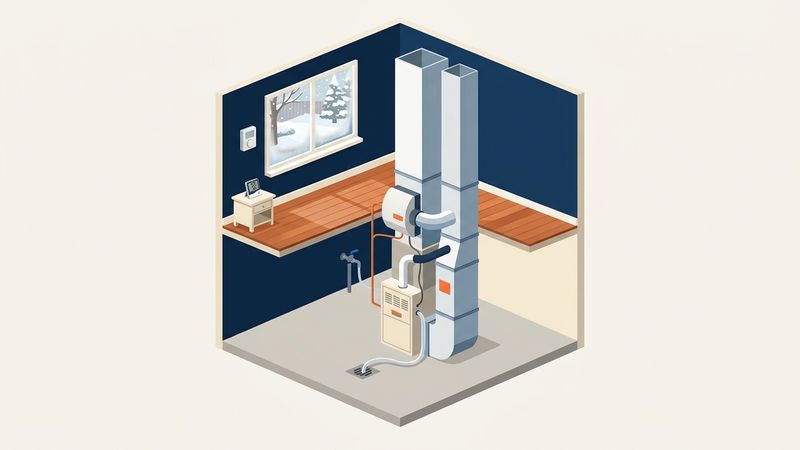
A bypass unit mounts on the ductwork and uses the HVAC blower to push warm air through a wet water panel, with a small bypass duct linking the supply and return sides. It runs only when there is a heat call and the blower is moving air. It needs a water line, a drain and low-voltage wiring.
Fan-powered humidifiers
A fan-powered unit has its own fan blowing across the water panel, so it needs no bypass duct. Bryant rates some models at up to 18 gallons of vapor a day. It still runs with the heating system and needs water, a drain and power for the fan.
Steam humidifiers
A steam unit uses electrodes to boil water in a canister and injects the vapor into the ductwork. Because it makes its own heat, it does not depend on warm supply air. It needs water, a drain and a dedicated electrical circuit.
Matching the humidifier to your heating system
- Gas or oil furnace: Hot supply air means strong evaporation. A bypass unit usually does the job; choose fan-powered if there is no room for a bypass duct or you need more output.
- Heat pump: Heat pumps deliver cooler supply air, and trade reporting notes this cuts what a bypass unit can deliver, while steam gives better results with less water waste. Steam is generally the right call for newer heat-pump houses.
- Boiler with radiators, no ducts: Whole-house humidifiers need ducts to distribute moisture, so room humidifiers are the practical answer. If you add a ducted system later, plan the humidifier then.
That last point matters in Madison, where the historical society's plaque program recognizes houses built as far back as 1730, and older homes often have radiator heat or attic ducts used only for cooling. Our Madison service team can tell you whether your ductwork can carry a humidifier or needs duct repair or modification first.
Water use, drain lines and hard water
Bypass and fan-powered units are evaporative: water that does not evaporate off the panel goes down the drain. That flushes minerals but uses more water than steam. Every type needs a drain line to a floor drain or condensate pump. Hard water scales up water panels and steam canisters, so replace them on the schedule in your owner's manual, or sooner if you see crusting.
Why windows fog and how to adjust the setting as it gets colder
Window glass is the coldest surface in the room. The colder it gets outside, the less humidity it takes for moisture to condense on the glass, so a setting that is fine at 40°F can fog windows at 10°F. As outdoor temperatures drop, lower the setting until the fogging stops. Some controls use an outdoor sensor to adjust automatically, which is worth asking about on a new install.
What you can check yourself, and when to call a pro
Homeowner checks
- Compare a hygrometer reading with the humidistat setting.
- Inspect the water panel and replace it if crusted with scale.
- On a bypass unit, open the damper for winter and close it for summer.
- Confirm the water supply valve to the humidifier is open.
- Check that the drain line flows and is not kinked or clogged.
Jobs for a licensed pro
- Cutting into ductwork for the unit or bypass duct.
- Running water supply and drain plumbing.
- Wiring the humidifier and humidistat to the furnace or air handler.
- Installing the dedicated circuit a steam unit requires.
October is a good time to install, before the heat runs daily. You can request service online or read about our whole-home humidifier installation.
Whole-house or portable?
A portable unit is enough if you need humidity in only one or two rooms, rent your home, or have no ducts. Portables need daily refilling and regular cleaning. A whole-house unit is plumbed in, runs from one control and covers every room the ducts reach.
Frequently asked questions
Is a whole house humidifier worth it?
If you have ducted heat and your hygrometer reads below 30% for much of the winter, it usually is, because it holds a steady level in every room without refilling. With radiators and no ducts, room units are the better fit.
What humidifier setting should I use in winter?
Stay within the EPA's 30% to 50% range and lower the setting as it gets colder outside. If windows fog or frost on the inside, turn it down.
Can I put a bypass humidifier on a heat pump?
You can, but the cooler supply air limits how much moisture it adds. A steam unit is generally the better match.
Need Indoor Air Quality Service in Madison, NJ?
Call Heights Plumbing, Heating & Cooling at (201) 245-7772 or schedule online today!
Schedule Service