In this article
- Will a mini-split work with plaster walls and a boiler?
- Mini-split vs. window units, small-duct and attic central air
- Single zone vs. multi zone: how many heads does your house need?
- Where the line set, drain and outdoor unit go on a historic house
- Can it heat, or replace the boiler entirely?
- Why plan a ductless AC install in October, not June
- What you can check vs. what needs a licensed pro
- Frequently asked questions
Ductless AC for older homes is usually the cleanest way to add real air conditioning to a 1900s–1930s house with plaster walls and radiator heat, and you can keep your boiler. A mini-split runs small refrigerant lines through a wall instead of ductwork, which suits the Colonials and Tudors common in Ridgewood. Fall is the best time to plan it. You can walk the house, check your panel and schedule the work before the summer rush.
Will a mini-split work with plaster walls and a boiler?
Yes. The U.S. Department of Energy notes that mini-splits are a common retrofit for homes with non-ducted heat such as hot-water (hydronic) systems. ENERGY STAR says mini-split heat pumps can work alongside radiator or baseboard heat. Your boiler and radiators stay as they are, and the mini-split runs on its own controls.
Plaster and lath or masonry takes more care than drywall. Each indoor head needs one wall penetration for the line set, wiring and drain, cored cleanly and sealed. Ductwork would need long openings in the plaster instead.
Mini-split vs. window units, small-duct and attic central air
- Window units: These are the cheapest up front, but they're noisy, block the window and come out every fall. DOE notes a mini-split can cost about twice as much.
- High-velocity small-duct systems: An attic or basement air handler feeds small flexible tubes to round outlets in each room. They're less visible, but the tubing still has to be fished through closets and plaster.
- Central air in the attic: This hides the equipment but needs new ductwork through finished space, and DOE says duct losses can account for more than 30% of air conditioning energy use. Compare our central air installation and replacement options if you're weighing this route.
- Ductless mini-split: There are no duct losses, you get room-by-room control, and heat pump models also heat. The trade-offs are a visible wall unit in each zone and a higher upfront cost than a central system, not counting ductwork.
Single zone vs. multi zone: how many heads does your house need?
Single zone
One outdoor unit feeds one indoor head. This is the best choice when one room is the problem, such as a hot third-floor bedroom, finished attic or home office.
Multi zone
One outdoor unit feeds several heads. A typical older Colonial gets a head in each main bedroom plus one or two downstairs. An open first floor may need just one, while Tudors with small, chopped-up rooms may need more. Installing two separate systems, one per floor, means a single failure won't leave the whole house without cooling.
DOE stresses that each indoor unit must be sized and placed correctly. An oversized head in a small bedroom short-cycles and leaves the room clammy, so a room-by-room load calculation beats a square-footage guess.
Where the line set, drain and outdoor unit go on a historic house
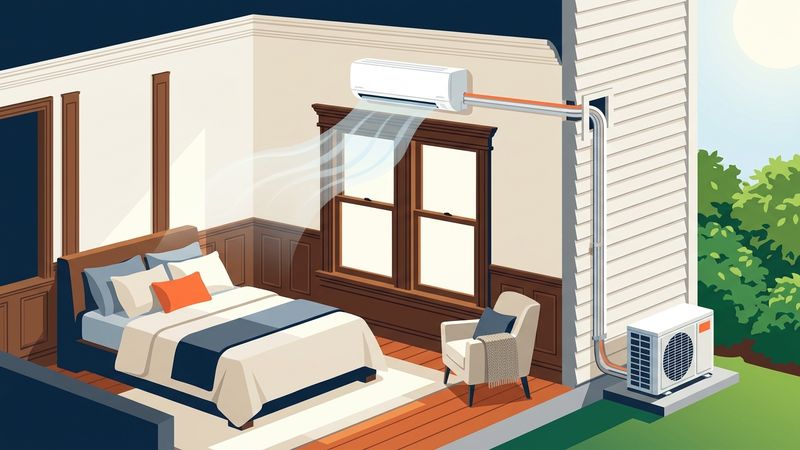
- Indoor heads: Mount these high on an exterior wall, clear of curtains. A spot above a radiator is fine.
- Line sets: Run them on a side or rear wall inside a paintable line-hide cover matched to the trim, or route them up through stacked closets and the attic.
- Condensate drain: This drains by gravity to a downspout or a discreet exterior spot. Where gravity won't work, a small condensate pump handles it.
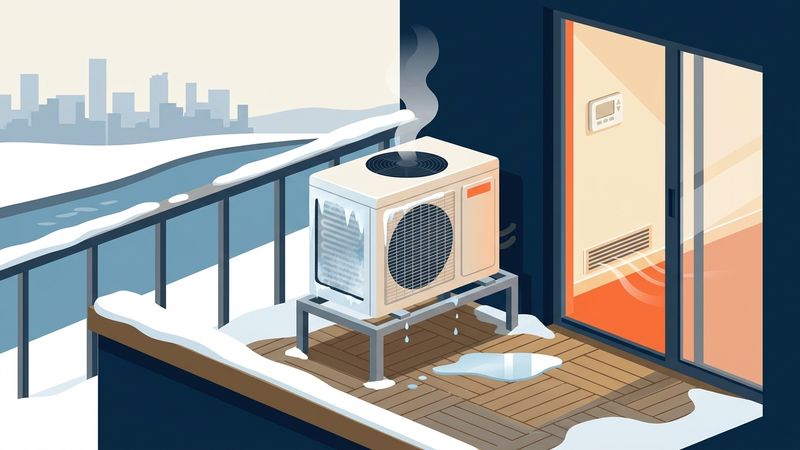
- Outdoor unit: Set it on a pad or wall bracket in the side or back yard, away from the street facade. It needs airflow clearance and should sit above drifting snow.
If your home is in or near a historic district, ask the Village of Ridgewood before work starts. Find out whether exterior equipment or line covers need review and what permits apply.
Can it heat, or replace the boiler entirely?
Heat pump mini-splits handle chilly October and April days without firing the boiler. Replacing the boiler for a full North Jersey winter is a bigger decision. ENERGY STAR advises asking your contractor for a cold-climate certified unit suited to your home. Many owners keep the boiler as primary or backup heat.
Why plan a ductless AC install in October, not June
- Scheduling is easier before the spring and summer rush.
- You can use heat mode right away and try the system through the winter.
- Any adjustments happen long before you need cooling.
- Mild weather makes exterior work and outdoor-unit placement easier.
What you can check vs. what needs a licensed pro
Homeowner checks
- Open your electrical panel door, without removing the cover, and note any empty breaker spaces.
- Mark the hottest rooms and the exterior walls where a head could mount.
- Look for closets that stack floor to floor, which can hide line runs.
- Pick a side or rear yard spot for the outdoor unit.
Licensed pro work
Leave sizing, refrigerant handling and dedicated electrical circuits to licensed professionals. Our background-checked technicians and engineers on staff handle complete ductless mini-split installation for homes across Ridgewood. For rebates, check with your electric utility and New Jersey's Clean Energy Program for current offers.
Frequently asked questions
Do I have to remove my radiators to add a mini-split?
No. The mini-split runs independently of your boiler, and the radiators stay in place.
How do I maintain a mini-split once it's in?
Rinse the indoor filters regularly and keep leaves and snow clear of the outdoor unit. Schedule periodic HVAC maintenance and tune-ups to clean the coils and drains.
I already have an old central system upstairs. Should I add ductless or replace it?
It depends on the age and refrigerant of the existing system. Our guide to the R22 phaseout for Ridgewood homeowners helps you weigh repair against replacement.
Need Air Conditioning Service in Ridgewood, NJ?
Call Heights Plumbing, Heating & Cooling at (201) 245-7772 or schedule online today!
Schedule Service