In this article
Most North Jersey homeowners don't need to winterize AC condenser units the way they would a boat or a swimming pool. Lennox points out that modern air conditioners are designed to live and operate outdoors and typically don't require winterization. What a proper fall shutdown does do is keep the unit clean and dry through the cold months. It also gives you a chance to catch damage from this summer while there's still plenty of time to fix it. In Fort Lee, the warm season runs about 3.5 months, from June 1 to September 16, so October is the natural time to look your outdoor unit over.
Winterize AC condenser myths: what actually helps
Should you cover it?
Skip the full, tight wrap. A cover that goes all the way to the ground traps moisture against the coil and cabinet. That can lead to rust and frozen coils, and it gives mice a sheltered place to nest. If you want some protection, use a top-only cover: a breathable piece or a sheet of plywood weighted down on the top grille, with the sides left open so air can move. Around Fort Lee, a top cover is mostly useful for keeping leaves and acorns from the Palisades trees from dropping through the fan opening. Take it off before the unit runs again in spring.
First, make sure it isn't a heat pump
A heat pump looks almost identical to an air conditioner, but it heats your home all winter. Never cover a heat pump or shut off its power for the season. Signs you have one:
- The data plate on the side of the unit lists it as a heat pump.
- Your thermostat has an "emergency heat" or "auxiliary heat" setting.
- The outdoor unit runs on cold days and sometimes gives off steam while it defrosts.
- You have no furnace or boiler, or the furnace only serves as backup.
Most ductless systems are heat pumps too. If your home uses ductless mini-splits like many in Fort Lee, leave the outdoor units powered and uncovered.
Power: the disconnect, the breaker and the crankcase heater
For a cooling-only condenser, turning off the outdoor disconnect (the small box on the wall next to the unit) or its breaker is optional. It keeps the AC from starting on a stray warm day while it's covered or packed with debris. Also set your thermostat so cooling can't be called.
Many compressors have a crankcase heater that keeps the oil warm while the unit sits. If you cut the power for winter, that heater goes off too. In spring, restore power well before you call for cooling, and check your owner's manual for how long the manufacturer recommends waiting. Then remove any cover, clear the area and start the system.
AC condenser fall maintenance you can do yourself
- Cut the power at the disconnect and set the thermostat to off before you touch the unit.
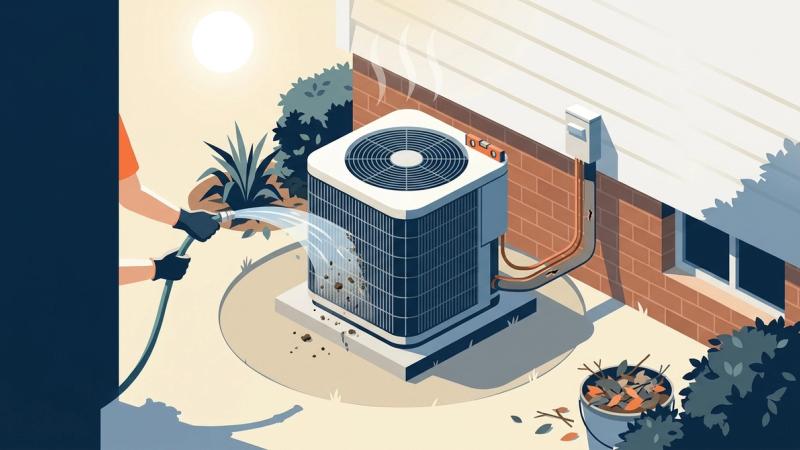
- Clear debris. Carrier advises removing debris, tall grass and leaves within 2-3 feet of the unit.
- Trim plants back so shrubs and vines don't crowd the coil.
- Rinse the coil gently with a garden hose, never a power washer, which can flatten the fins.
- Check that the unit sits level on its pad or wall brackets.
This step matters. ENERGY STAR notes that dirty coils reduce the system's ability to cool your home and make it run longer, which raises energy costs and shortens equipment life.
Fort Lee setups need extra care
- Rooftops: leaves collect against parapets and around the base. Only go up if you have safe, proper access. Otherwise, have it checked with our residential rooftop HVAC service.
- Balconies: keep stored furniture, planters and grills away from the coil.
- Tight townhouse lots: fences, walls and neighboring units cut airflow, so keep whatever clearance you have free of clutter.
Summer warning signs that mean a repair now
Think back to July and August. Any of these points to a problem worth fixing this fall:
- Weak cooling or long run times on hot afternoons
- Short cycling, where the unit turns on and off every few minutes
- Noises such as grinding, buzzing, rattling or a fan that labors
- Ice on the refrigerant lines or the coil
- Oily spots on line fittings or the base, a common sign of a refrigerant leak
- Bent fins across large sections of the coil
- A unit that isn't level because of a sinking pad or loose brackets
Anything involving refrigerant, electrical parts or a struggling compressor needs a licensed technician. Don't open the electrical panel or tamper with line fittings. Our background-checked, licensed techs handle AC condenser repair and installation, with engineers on staff and upfront pricing before work begins.
Why fall is a good time to repair or replace a condenser
ENERGY STAR notes that contractors get busy once summer and winter come. In fall you can schedule on your timeline, compare repair and replacement options without a heat wave forcing the decision, and have new equipment in place long before June. Keep the full cooling check for spring, ideally during a seasonal HVAC tune-up, when a tech can test the system under real load.
Frequently asked questions
Should I cover my AC unit in winter?
A top-only, breathable cover is fine for a cooling-only unit. Avoid full wraps, which trap moisture, and never cover a heat pump.
Should I turn off the AC breaker for winter?
It's optional for a cooling-only condenser. If you do, restore power well ahead of the first cooling day so the crankcase heater can warm the compressor. Check your manual for the recommended time.
Can I replace an AC condenser in the fall?
Yes. Fall usually brings easier scheduling, and the new unit is ready before summer. A cooling performance check during your spring tune-up confirms everything runs right.
Need Air Conditioning Service in Fort Lee, NJ?
Call Heights Plumbing, Heating & Cooling at (201) 245-7772 or schedule online today!
Schedule Service