In this article
The best time to prepare AC for summer is right after one ends, while you still remember which afternoons the house never cooled down. If your system fell behind this year, the weak spot is usually in the outdoor condenser: a dirty coil, a tired capacitor, a slowing fan motor, a pitted contactor or the wrong refrigerant charge. Finding those problems in October gives you months to repair or replace calmly, instead of waiting in line during next year's first heat wave.
Why your AC falls behind on the hottest days
In June 2025, New Jersey saw 100+ degrees for three consecutive days, with Newark hitting 103°. On days like that, even a healthy system runs nearly nonstop, and the house may drift a few degrees above the setting by late afternoon. That is normal strain: most systems are sized for typical summer peaks, not record heat.
What is not normal:
- The house keeps getting warmer through the day and never recovers after sunset.
- Air from the vents feels barely cool, or the outdoor unit cycles off and on repeatedly.
- The condenser fan stops while the unit hums or buzzes.
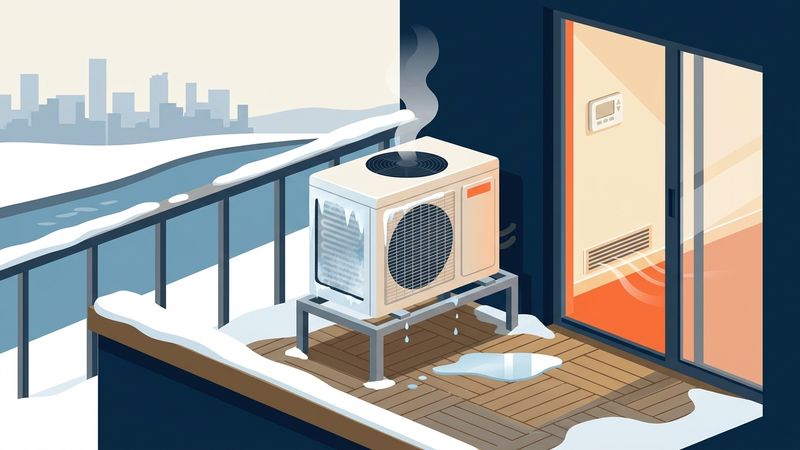
- Breakers trip, or you see ice on the copper lines.
Those point to a component that is failing, and heat is just what exposed it.
What you can safely check and clean yourself
Clean the condenser coil the gentle way
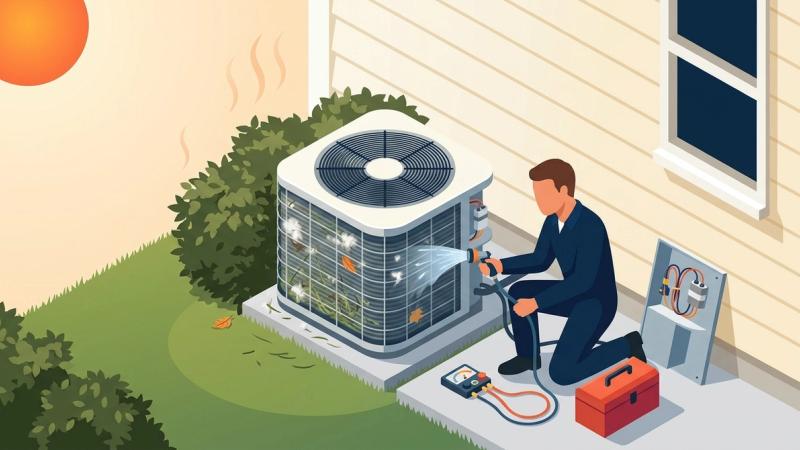
ENERGY STAR notes that dirty condenser and evaporator coils reduce the system's ability to cool and make it run longer, raising energy costs and shortening equipment life. To clean the outdoor coil:
- Turn off power at the breaker and at the outdoor disconnect box.
- Pull leaves, grass clippings and cottonwood fluff off the outside of the fins by hand or with a soft brush.
- Rinse with a garden hose at normal pressure. Bryant specifically advises using a garden hose rather than a pressure washer, which can flatten the thin aluminum fins.
- Let the unit dry completely before restoring power.
While you are outside, look for bent fins, oily spots on the coil or lines (a possible leak sign) and damaged insulation on the large suction line. Indoors, swap in a fresh filter.
Give the condenser room to breathe
A condenser pulls air in through its sides and pushes heat out the top. Crowd it, and it breathes its own hot exhaust. There is no single clearance number for every unit; check your model's installation manual (search the model number from the data plate). Common problems in tight Hackensack side yards include:
- Fences and walls built close to the unit after it was installed.
- Shrubs that grew into the coil over the summer. Trim them back now.
- Decks and overhangs that trap discharge air above the fan.
- Dryer vents blowing warm, lint-filled air at the coil, which clogs fins and adds heat.
If the unit has no room where it sits, relocating it is worth discussing while the weather is mild.
Capacitors, fan motors and contactors: what fails under peak load
Heat is hard on electrical parts. Capacitors give the compressor and fan motor their starting boost, and they weaken with age and heat. A fan motor that already runs warm can overheat when cooling a coil in 100° air. Contactors, the switch that turns the condenser on, get pitted from years of cycling and can stick or fail to close.
If your condenser hums but the fan won't spin, Carrier notes the unit likely has power but can't start, often because of a failed capacitor or a failing motor. Turn the system off at the thermostat and call for service; letting it keep trying can overheat the compressor, the most expensive part in the unit. Don't poke the fan blades or open the electrical panel, since capacitors can hold a dangerous charge even with power off.
What a pro checks before summer that you can't
A professional AC tune-up covers what requires gauges, meters and a license:
- Refrigerant charge. Too much or too little refrigerant makes the system less efficient. Some national guides suggest simply adding more if it's low. That's wrong: refrigerant isn't used up, so low charge means a leak that needs finding and repairing.
- Capacitor readings against rated values, so a weak one is replaced before it quits on a hot day.
- Contactor condition and wiring connections.
- Fan motor amperage and bearings.
- Coil condition beyond what a hose can reach, plus the indoor coil and drainage.
Repair or replace the condenser?
Capacitors, contactors, fan motors and small leak repairs are normally straightforward fixes. Replacement makes more sense when the compressor has failed, the coil is corroded or leaking in several places, or repairs keep stacking up on an aging system. If yours still uses R-22, the math changes; our R-22 repair-or-replace guide walks through it. Our AC condenser repair and installation team gives upfront pricing on both options, with engineers on staff to help weigh them.
Frequently asked questions
When should I book AC service to prepare for summer?
The off-season and early spring are best. Scheduling is easier, and if a replacement is needed you have time to plan instead of deciding during a heat wave.
Can I just add refrigerant if my AC is low?
No. Low refrigerant means there is a leak, and topping off without fixing it only delays the next failure.
Should I shut off my AC if the condenser fan isn't spinning?
Yes. Turn it off at the thermostat and call a licensed technician, since running without the fan can overheat the compressor.
Is it safe to pressure wash my AC condenser?
No. Use a garden hose with the power off; a pressure washer can bend the fins and reduce airflow.
Need Air Conditioning Service in Hackensack, NJ?
Call Heights Plumbing, Heating & Cooling at (201) 245-7772 or schedule online today!
Schedule Service