In this article
- Does an attic air handler need anything before winter if it only cools?
- Cold air from ceiling vents in winter
- AC condensate line in the attic: freezing and dry traps
- Checking the attic air handler drain pan safely
- Mice, dust and filters: what you can check yourself
- Repair, seal and insulate, or replace the air handler?
- Frequently asked questions
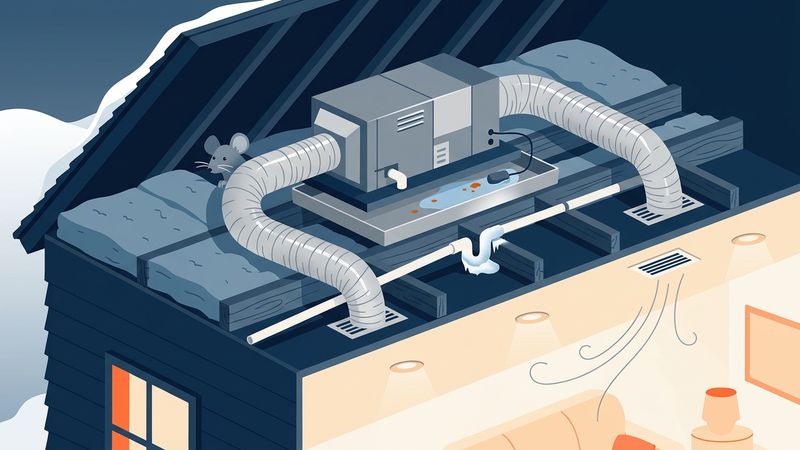
An air handler in attic winter conditions still needs attention, even when your boiler or furnace does all the heating. In many Hunterdon County homes, the AC's indoor unit sits in an unheated attic, where it can cause ceiling drafts, frozen or dried-out drain lines, water in the drain pan and mouse damage. A short November check keeps those problems from becoming a ceiling stain in February or a dead system in June.
Does an attic air handler need anything before winter if it only cools?
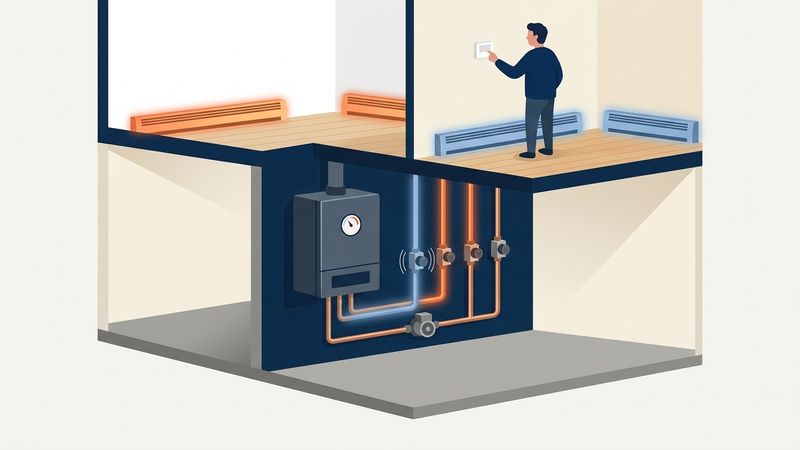
Yes, but not much. First, confirm what you have. If a hot water pipe from your boiler runs to a coil inside the attic unit, you have a hydro-air system. That air handler is part of your heating and needs heating-season service, not a shutdown.
If it truly only cools, you have three goals for the winter: keep cold attic air out of the house, keep water out of the drain system and keep mice out of the cabinet. Turn cooling off at the thermostat and set the fan to auto so the blower doesn't push cold duct air into your rooms.
Cold air from ceiling vents in winter
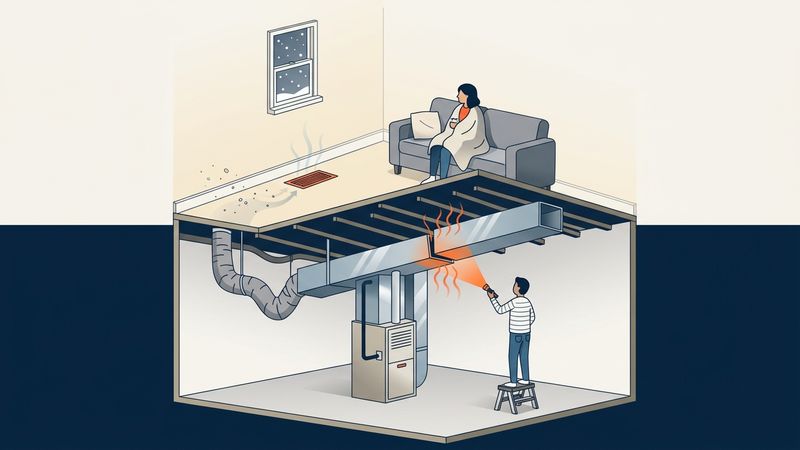
Ducts in an unheated attic sit near outdoor temperature. Cold air is heavy, so it sinks through the ducts and out the ceiling registers. Leaky joints and poorly sealed duct boots let attic air in too. Warm, moist room air can also rise into the cold ducts and condense, leaving drips or stains around registers. ENERGY STAR notes that ducts serving a central AC system are often big energy wasters, and that sealing and insulating them improves efficiency.
Should I close or cover the vents?
On a cooling-only system, closing the register dampers or covering the ceiling vents for the winter is reasonable. It cuts drafts and limits moist air getting into the ducts. Remove the covers before you run the AC. The lasting fix is to seal and insulate the ducts and boots.
AC condensate line in the attic: freezing and dry traps
The coil makes water all summer, and a condensate line carries it away. The DOE's Building America program shows these lines running through unconditioned attics and explains why they should be insulated.
Water left in the trap can freeze, crack a fitting or block the line. You won't find out until spring, when water backs up into the pan. A dried-out trap lets the blower pull air in through the drain, which can keep water from draining properly. Having the line cleared and the trap checked at spring startup prevents both.
Checking the attic air handler drain pan safely
A secondary drain pan under the unit catches water if the primary drain clogs. It usually has its own drain line or a float switch that shuts the system off. DOE guidance recommends checking for a secondary pan and drain line on cooling systems. To check yours:
- Step only on joists or solid decking, and bring a flashlight.
- Look in the pan for standing water, rust, debris or droppings.
- Find the float switch, a small sensor on the pan edge or drain. If it looks raised or sits in water, don't just empty the pan and move on.
- Trace the secondary drain to its outlet, often above a window or at a soffit.
Water in the pan in November means something is wrong: a roof leak, condensation from house air, or a primary drain clogged since summer. A rusted pan is a common repair, but repeated water calls for a technician. Never cut power just to silence a tripped float switch.
Mice, dust and filters: what you can check yourself
You can safely check the filter and replace it if it is dirty, look for droppings, chewed duct insulation or nesting near the unit, and seal visible gaps in attic vents and screens. Wear gloves, and don't sweep or vacuum droppings dry.
Leave to a technician: opening the cabinet, cleaning the blower and the evaporator coil, repairing chewed wiring or ductwork, clearing drains and testing the float switch. Our air handler services cover all of these.
Repair, seal and insulate, or replace the air handler?
A single problem, such as a cracked drain fitting or a rusted secondary pan, is usually a repair. Drafts and condensation point to sealing and insulating the ducts. These signs suggest the air handler itself is near the end of its life:
- A grinding, squealing or rattling blower.
- Rust through the cabinet or pan, or water showing up again and again.
- Weak airflow that continues after the filter and ducts are fixed.
- A coil built for R-22 that no longer matches modern condensers. See our page on R-22 replacement and R-454B installation.
Why to match replacement with the outdoor condenser
The indoor coil and outdoor condenser are designed to work as a pair on the same refrigerant, so replacing one without the other can leave you with a mismatched system. Late fall is a good time to plan a coordinated AC installation or replacement, including whether to move the unit out of the attic. For the outdoor side, see our guide to winterizing the AC condenser.
Heights serves Clinton Township with engineers on staff, licensed technicians and upfront pricing.
Frequently asked questions
Should I turn off power to my attic air handler for the winter?
If it only cools, turning off its service switch is fine, as long as you switch it back on in spring. If your boiler feeds a heating coil in that unit, leave the power on.
Is water in the attic drain pan in winter normal?
No. It points to a roof leak, condensation from house air or a clogged drain, and it should be checked before it damages the ceiling.
Need Air Conditioning Service in Clinton Township, NJ?
Call Heights Plumbing, Heating & Cooling at (201) 245-7772 or schedule online today!
Schedule Service