
In this article
- Do furnaces and boilers really need yearly maintenance?
- When to schedule heating maintenance in North Jersey
- Fall furnace maintenance and boiler checks you can do yourself
- What a professional tune-up should cover
- Burning smell the first time the heat comes on
- Stop and call now: these can't wait for a tune-up
- When a tune-up becomes a repair-or-replace conversation
- Frequently asked questions
Fall furnace maintenance comes down to a few simple checks you can do yourself plus a professional tune-up before the first cold snap. The same goes for boilers, which heat many older Bergen County homes. This guide covers forced-air furnaces, hot-water boilers and steam boilers side by side. It shows what's safe to check, what a licensed tech should handle, and which signs mean you should stop and call right away.
Do furnaces and boilers really need yearly maintenance?
Yes, and it isn't just an upsell. The U.S. Department of Energy's Energy Saver guide recommends having furnaces checked in the fall. It notes that regular maintenance can cut heating and cooling costs by 10% or more and help equipment last longer. A yearly visit also catches safety problems you can't see, like a cracked heat exchanger or a blocked flue. Some manufacturers tie warranty coverage to regular service, so check your warranty terms.
When to schedule heating maintenance in North Jersey
Late September or October is the sweet spot. If something needs a part, there's time to fix it before you rely on the heat every night. Homeowners in Fair Lawn and nearby towns who wait for the first cold morning often find a problem right when everyone else is calling too.
Fall furnace maintenance and boiler checks you can do yourself
Forced-air furnace
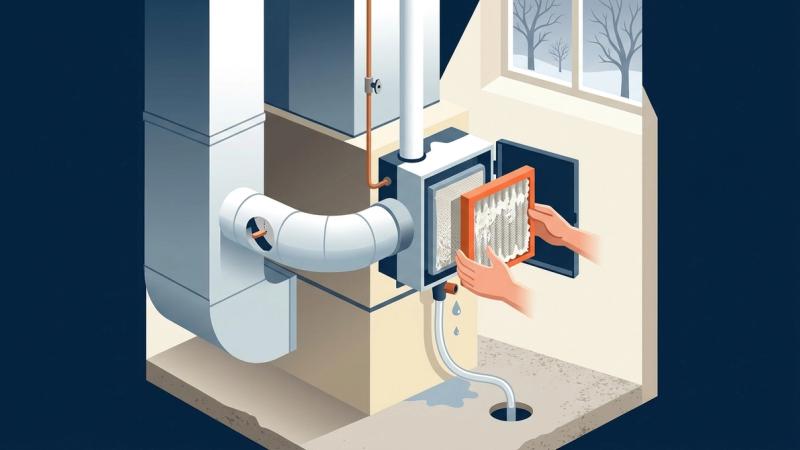
- Filter: Replace it or clean it if it's reusable. A clogged filter strains the furnace.
- Thermostat: Switch it to "heat," replace batteries if it uses them, and set it a few degrees above room temperature to confirm the system starts.
- Vents and registers: Open them and move furniture, rugs and boxes off of them.
Hot-water (hydronic) boiler
- Pressure gauge: Compare the reading to the normal range in your manual or on your last service ticket.
- Bleed radiators or baseboards: Do this with the system off and cool. Open each bleeder until water replaces the hiss of air.
- Relief valve: Look for drips or a wet pipe below it. Note it for your tech, and don't adjust it.
Steam boiler
- Sight glass: Water should be visible at the normal level marked by the manufacturer. An empty or full glass needs a pro.
For uneven radiators, our steam radiator cold spot prevention plan walks through vents and pitch.
Every system
- Clear stored items away from the unit and its venting.
- Test your carbon monoxide alarms. PSE&G recommends CO alarms on every level of the home and outside sleeping areas.
What a professional tune-up should cover
Furnace tune-up checklist
- Inspect and clean burners
- Inspect the heat exchanger for cracks or corrosion
- Clean or test the flame sensor
- Combustion and draft testing
- Electrical checks: connections, controls and safety switches
Boiler maintenance checklist
- Test the low-water cutoff
- Check the expansion tank (hot-water systems)
- Check the circulator pump (hot-water systems)
- Inspect the flue and venting
- Burner, combustion and control checks
Both lists focus on safe combustion and clear venting. A furnace visit centers on airflow and the heat exchanger. A boiler visit adds water-side safety: making sure the boiler can't run dry, that pressure stays controlled and that water circulates. Steam systems skip the expansion tank and circulator but put more weight on the low-water cutoff and water level. Our heater repair and maintenance service covers both. You can also read more about boiler service and furnace repair and maintenance.
Burning smell the first time the heat comes on
A dusty, burning smell on the first run of the season is usually normal. It's dust burning off the burners and heat exchanger, and it should fade quickly. It's a warning sign if it lingers, smells like hot plastic or electrical wiring, or comes with smoke. If that happens, turn the system off and call a technician.
Stop and call now: these can't wait for a tune-up
- Gas smell: Leave the house and call PSE&G or 911 from outside.
- CO alarm going off: Get everyone outside and call 911.
- Pilot light that won't stay lit: PSE&G advises relighting only by following the manufacturer's instructions. If it keeps going out, stop trying.
- Short cycling: The system turns on and off every few minutes.
- Soot around the unit, burner or vent.
- A boiler that has lost water: An empty sight glass or a pressure gauge near zero.
What you should never do yourself
PSE&G warns never to add water to a hot boiler and never to try to cool one down with water. If a boiler is dangerously hot, leave the house and call the fire department and PSE&G at 1-800-880-7734.
When a tune-up becomes a repair-or-replace conversation
A tune-up is also a good time to look at the bigger picture. Three things point toward a replacement conversation: an older system, repairs that keep coming back, and heating bills that climb even though you haven't changed how you use the heat. Your technician can lay out both paths with upfront pricing. If replacement makes sense, see our heating installation and replacement options.
Frequently asked questions
How often should a boiler be serviced?
Once a year, ideally in early fall before heating season. This applies to gas and oil boilers, both hot-water and steam.
What does a furnace tune-up include?
Cleaning and inspecting the burners, checking the heat exchanger and flame sensor, testing combustion and draft, and checking electrical connections and safety controls.
Can I skip a year if my heat works fine?
A system can run and still have a combustion or venting problem. That's why the DOE recommends fall checkups for furnaces even when nothing seems wrong.
Need Heating Service in Fair Lawn, NJ?
Call Heights Plumbing, Heating & Cooling at (201) 245-7772 or schedule online today!
Schedule Service