In this article
Steam radiator cold spots usually come back for four reasons: air that can't escape fast enough, pressure set too high, dirty boiler water, or radiators that trap condensate. Keep those in check and a one-pipe steam system heats evenly all winter. Here is the plan for steam homes in Fair Lawn and across North Jersey.
If your system isn't running yet, see our October setup guide for one-pipe steam. If a radiator is already cold, use our cold radiator diagnosis guide.
Why steam radiators heat only part of their surface
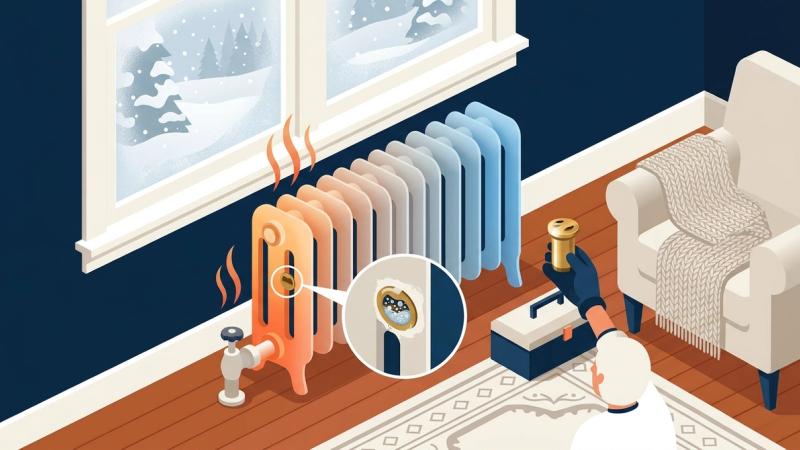
Steam enters a radiator only as fast as air leaves it. A radiator that is only half hot across, or hot on top and cold on the bottom, usually still has air inside, lost steam when the burner shut off early, or has water sitting in its lower sections.
Bleeding is hot-water advice. Steam radiators have an automatic air vent, not a bleed valve, and opening a vent while the system runs releases scalding steam. The fix is a working, correctly sized vent plus main vents that clear the pipes first. On mild days, partial heating can be normal; a section that stays cold on the coldest days is not.
Main vents: the foundation of even steam heat
The steam mains in your basement refill with air every time the system cools. Heating Help's guide to balancing one-pipe steam explains that venting the mains quickly lets steam reach all radiators at about the same time. The usual setup is a high-capacity main vent near the end of each main, with a Y-strainer in front because rust can clog vents. Federal balancing guidance notes that many systems have vents that are too small or missing.
How to tell if main vents are clogged or missing
- Follow each main to its far end. No vent there often means near radiators heat first and far ones lag.
- On a cold start, a working vent hisses, then closes when steam arrives. Silence or spitting water points to a failed vent.
- If the main gets hot to its end before far radiators start heating, it is venting properly.
Size radiator vents by radiator size, not distance
Once the mains vent fast, Heating Help recommends sizing radiator vents to each radiator's size, not oversizing vents on distant radiators. Big radiators get faster vents, small ones slower, so they finish heating closer together.
Pressure: lower is better for one-pipe steam
The U.S. Department of Energy's steam system balancing guide says one-pipe systems typically run at about ½ to 1½ psig, and that wrong pressure settings cause short boiler cycles and uneven steam distribution.
Turning pressure up seems like it should push heat farther, but the burner short-cycles and condensate, which drains back through the same pipe steam travels in, has a harder time getting out of the way. The result is more cold spots. Leave pressuretrol adjustments and pigtail cleaning to a technician.
Water quality, pitch and supply valves
Wet steam and skimming
Oil and debris in boiler water, common after a new boiler or pipe work, make the water line bounce and carry water up with the steam. This wet steam delivers less heat, floods radiators and can cause banging. Skimming draws the oily film off the water surface through a skim port until it runs clean. It's a pro job.
Pitch and the supply valve
In one-pipe steam, condensate drains out the same valve steam enters through. A radiator that has settled level, or tilts away from the valve, holds water and stays cold along the bottom. Set a small level on top: it should slope slightly toward the supply valve. Shims under the far legs often fix it.
The supply valve should be fully open or fully closed. Half-open, it chokes draining condensate against incoming steam, causing cold sections and water hammer. To turn a radiator down, use a slower vent or a thermostatic radiator vent.
Checks to make during the heating season
- Sight glass: PSE&G advises checking the water level in the gauge glass against the manufacturer's recommended level. Glance weekly; murky or rusty water means the boiler needs attention.
- Water line: A line that bounces hard while steaming suggests dirty water.
- Low-water cutoff: For float types with a blowdown valve, follow the manufacturer's flushing schedule. Probe types need a pro.
- Vents and gauge: Listen for vents that hiss nonstop or spit water, and note pressure at shutoff.
What a real annual steam boiler service covers
A proper steam boiler service goes beyond a burner check:
- Burner cleaning, combustion testing and a flue check.
- Cleaning and testing the low-water cutoff.
- Cleaning the pressuretrol pigtail and confirming settings.
- Inspecting the sight glass, gauge and safety valve.
- Checking main vents and strainers, replacing failed vents.
- Assessing water condition and skimming if needed.
- Looking for leaks, near-boiler piping problems and radiators that lost their pitch.
Work on gas, controls, safety devices or near-boiler piping calls for a licensed technician. Our background-checked team, with engineers on staff, services steam systems throughout Fair Lawn; our fall boiler maintenance tips cover timing.
Frequently asked questions
Why is my steam radiator hot on top and cold on the bottom?
Water is likely trapped in the lower sections because the radiator lost its pitch or the valve is partly closed. Check the slope and open the valve fully.
Can I bleed a steam radiator?
No. Steam radiators vent automatically, and opening a vent while the system runs releases scalding steam. Replace a bad vent instead.
Need Heating Service in Fair Lawn, NJ?
Call Heights Plumbing, Heating & Cooling at (201) 245-7772 or schedule online today!
Schedule Service