In this article
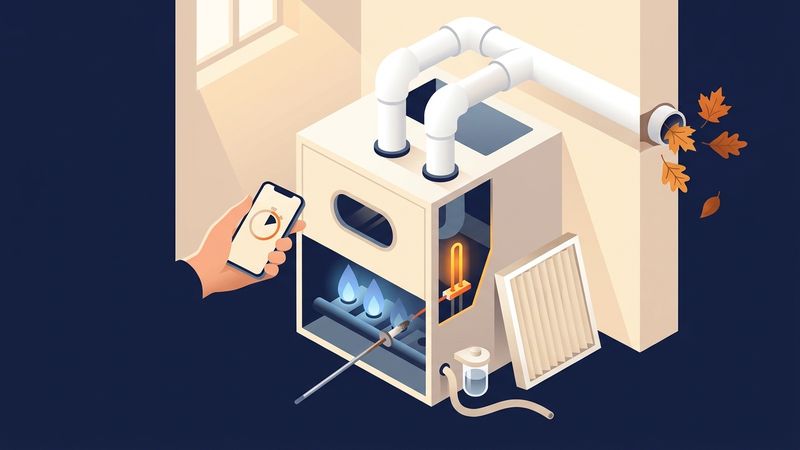
If your furnace ignites then shuts off, the most useful clue is how long the flame stays lit. Off within seconds usually points to a dirty flame sensor. Off after one to three minutes points to venting, condensate or the pressure switch. Off after five to ten minutes usually means the furnace is overheating and the limit switch is doing its job. Time a cycle with your phone, then use the guide below. This is a burner problem, not a fan problem; for fan trouble, see our furnace blower symptom guide.
Why a Furnace Ignites Then Shuts Off: Sort It by Timing
Off within seconds: the flame sensor
After the burners light, a thin metal rod in the flame (the flame sensor) has a few seconds to prove there's a fire. If it's coated with oxidation from a summer of sitting idle, the control board can't read it and closes the gas valve. Most controls retry a few times, then lock out. It's the most common first-cold-morning complaint in fall.
Flame sensor or igniter? Watch through the sight glass. If the igniter glows or sparks and the burners light, then go out within seconds, the sensor is the likely suspect. A glow but no flame, or no glow at all, points to the igniter, gas valve or gas supply instead.
Off after 1 to 3 minutes: venting, condensate or pressure switch
High-efficiency (condensing) furnaces vent through white PVC pipes, and a pressure switch confirms that exhaust is leaving and condensate is draining. It can open mid-cycle if:
- An outdoor intake or exhaust pipe is blocked by leaves, a nest, a dislodged screen, or later, snow and ice.
- The condensate trap or drain line is clogged and water backs up into the inducer housing.
- The small rubber hose to the switch is cracked, kinked or holding water.
Many two-story colonials in Warren have a second furnace in the attic for the upstairs. It's easy to forget at startup, and a clogged trap there can overflow into the ceiling below.
Off after 5 to 10 minutes: the limit switch and airflow
A longer run that ends abruptly usually means the heat exchanger got too hot and the high-limit switch cut the burner. Trane notes that a dirty filter can overheat the heat exchanger and trip the limit switch. Closed registers, a crushed return duct or a weak blower do the same. This is classic furnace short cycling: the furnace starts and stops all day and the house never quite warms up.
What You Can Safely Check Yourself
- Replace the filter and open every supply and return register.
- Check the thermostat: fresh batteries, set to heat, away from heat sources.
- Clear debris from the outdoor PVC pipes by hand. Don't cut or take them apart.
- Look at the condensate line for kinks, standing water or a loose tube.
- Note the blink code through the panel window and compare it to the chart inside the door.
Can you clean a flame sensor yourself? Handy homeowners sometimes do: shut off power and gas, remove the mounting screw and lightly polish the rod with a fine abrasive pad, not steel wool or coarse sandpaper. The risks are real: the porcelain insulator cracks easily, and a bent rod won't sit in the flame. If the sensor dirties up again quickly, something else is wrong, such as poor grounding or dirty burners, and that needs a technician.
Why Pressing Reset Over and Over Is a Bad Idea
Lockout is a safety feature, not a nuisance. Reset once by turning the furnace switch off for a minute and back on. If it locks out again, stop. Repeated ignition attempts and repeated overheating stress parts that are already struggling, and they hide the real cause. A furnace that keeps tripping its safeties is telling you something. Every home with a gas furnace should also have working carbon monoxide detectors.
If you smell gas
Leave the house right away. Don't touch light switches, the thermostat or the furnace. From outside, call the gas utility or 911; PSE&G is Warren Township's gas utility. Call us only after the utility has made the home safe.
Repair Call or Sign of Replacement?
Most cases are straightforward repairs: a dirty flame sensor, clogged condensate trap, cracked pressure-switch hose, blocked vent or neglected filter. Our furnace repair and maintenance visits check combustion, venting and drainage together, so the fix holds.
The picture changes when a technician finds cracked or rusted burners, a failed control board on an older unit, scorch marks, or a heat exchanger that has overheated for years. A cracked heat exchanger is a safety issue, and on an aging furnace that's usually when furnace replacement makes more sense than another repair. Our licensed, background-checked technicians serve homeowners in Warren Township with upfront pricing, and we offer 24/7 emergency HVAC service if the house is losing heat.
Frequently asked questions
How often is too often for a furnace to cycle?
A healthy furnace runs several minutes per cycle. Burner runs that end within seconds or a couple of minutes, over and over, need a diagnosis.
Can a dirty filter make the burner shut off?
Yes. Restricted airflow overheats the heat exchanger and trips the limit switch, usually after several minutes of running. Change the filter first.
What are dirty flame sensor symptoms?
The burners light, then shut off within seconds. After several retries the furnace locks out, often with a flame-related blink code on the control board.
Need Heating Service in Warren Township, NJ?
Call Heights Plumbing, Heating & Cooling at (201) 245-7772 or schedule online today!
Schedule Service