In this article
Furnace blower motor troubleshooting comes down to one question: which part failed? When the fan won't start, hums, runs nonstop or moves too little air, the cause is usually the motor, its capacitor, the relay or control board that switches it, or something simpler like a clogged filter or a thermostat setting. The type of motor your furnace has shapes both the diagnosis and whether repair makes sense.
PSC vs ECM blower motors: why the type matters
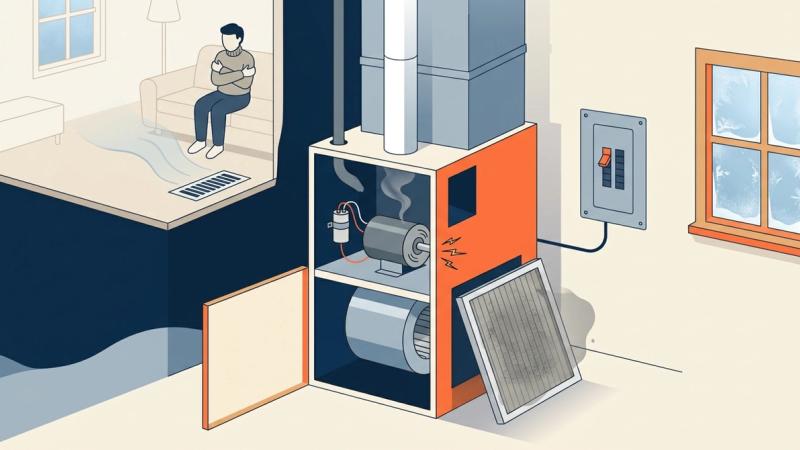
Most older furnaces use a PSC (permanent split capacitor) motor. It runs at fixed speeds and relies on a run capacitor to start and keep turning, so a failed capacitor is one of the most common reasons it stops.
Newer furnaces mostly use an ECM (electronically commutated motor). Since July 3, 2019, new furnaces have had to meet the Department of Energy's Fan Energy Rating minimum efficiency, which pushed manufacturers toward ECMs. An ECM has a built-in electronic control module, adjusts its own speed and usually has no separate capacitor. When it fails, the culprit is often the module rather than the motor.
How to tell which one you have
- PSC: a metal capacitor (a small cylinder or oval can) mounted on or near the blower housing.
- ECM: a bulkier electronic housing on the end of the motor, connected by plug-in harnesses.
- The model label or manual may say "variable speed."
Look only, with the power off. Don't touch the capacitor or wiring.
Bad furnace blower motor symptoms and their likely causes
- Hums but doesn't spin: on a PSC, usually a failed capacitor, otherwise seized bearings. On an ECM, suspect the module, motor or control signal.
- Weak airflow or uneven rooms: a clogged filter first, then a weak capacitor, a wrong speed setting or a worn motor.
- Grinding, squealing or rattling: worn bearings, a loose blower wheel or debris in the housing.
- Breaker trips or fan quits once warm: an overheating motor drawing too much current, or a wiring fault.
- No sound, no movement: lost power, an open blower door switch, a failed relay or control board, or a dead ECM module.
- Burning or acrid smell: an overheating motor or wiring. See the FAQ below.
Why won't the furnace fan turn off?
If the thermostat fan is set to On instead of Auto, it runs constantly by design. If it's on Auto and still won't stop, the usual suspects are the thermostat, the fan limit switch, a relay stuck closed on the control board, or the motor's controls.
What you can safely check yourself
- Thermostat: fan on Auto, heat set a few degrees above room temperature, fresh batteries if it uses them.
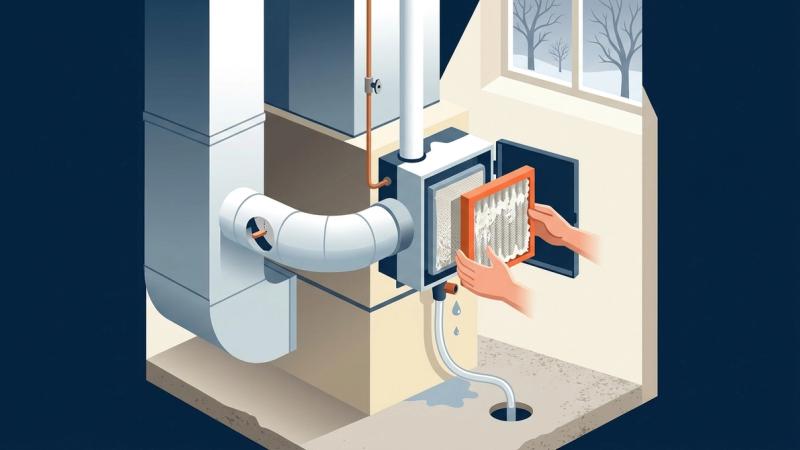
- Filter: a clogged filter starves the blower and can make it overheat. Replace it if dirty.
- Power: check the furnace breaker and the service switch near the furnace.
- Blower door: the panel presses a safety switch. If it isn't seated firmly, the furnace won't run.
- Status light: count the LED flashes, compare them to the chart inside the door panel and write the code down for your technician.
In Fort Lee, October's first heating run is when a weak blower usually shows itself. Our fall-startup furnace blower symptom guide walks through that first run.
Jobs that belong to a licensed technician
- Capacitors: they can hold a dangerous charge after the power is off and must be discharged and tested safely.
- Motor testing: windings, amp draw and bearings take meters and experience.
- Wiring, relays and control boards: live voltage and sensitive electronics.
- ECM modules: isolating module, motor or signal faults and setting up replacements correctly.
If the blower still misbehaves after your checks, our furnace repair and maintenance technicians can pinpoint the failed part and give upfront pricing before work starts. We serve homes throughout Fort Lee, NJ from our Fair Lawn and Hillsdale offices.
Can you swap a PSC for an ECM, or the reverse?
Retrofit ECM motors for PSC furnaces exist and can work well when horsepower, rotation, voltage and airflow are matched. Putting a cheaper PSC into a furnace built around an ECM is something we generally advise against, since the controls and airflow are designed for the ECM. On some ECMs, only the module needs replacing.
Replace the blower motor or the whole furnace?
A motor or capacitor repair often makes sense on an otherwise sound furnace. Lean toward replacement when several of these line up:
- The furnace is near the end of its expected life and has needed other repairs.
- The heat exchanger shows cracks or heavy corrosion, which is a safety issue.
- It's a low-efficiency model, so a new furnace would also cut fuel use.
- An older PSC furnace needs a motor plus other parts at the same visit.
A newer furnace with a failed ECM is usually worth repairing; check whether its parts coverage still applies. If the numbers point the other way, our furnace installation and replacement team can size a new system for your home.
Frequently asked questions
Why does my furnace blower hum but not spin?
On a PSC motor, a failed capacitor is the most common cause, followed by seized bearings. Turn the furnace off so the motor doesn't overheat and have a technician test it.
Is a burning smell from the furnace an emergency?
A dusty smell on the first fall startup is normal and fades quickly. An acrid, electrical or hot-plastic smell is not: shut the furnace off and call for emergency HVAC service. If you smell gas or suspect carbon monoxide, leave the house and call your utility from outside, as PSE&G advises.
Can a bad capacitor ruin the blower motor?
A weak capacitor makes a PSC motor struggle and run hot, which can shorten its life. Replacing it early is far simpler than replacing the motor later.
Need Heating Service in Fort Lee, NJ?
Call Heights Plumbing, Heating & Cooling at (201) 245-7772 or schedule online today!
Schedule Service