In this article
- Bad furnace blower motor symptoms and what they usually mean
- What you can safely check before calling
- ECM vs PSC blower motor: why your motor type changes the answer
- Replace blower motor or new furnace? A decision guide
- Why blower failures show up in the first October cold snap
- Is it safe to keep running a furnace with a weak blower?
- Frequently asked questions
The most common furnace blower motor signs are squealing or grinding, a hum with no airflow, weak air at the registers, a fan that runs in short bursts, a burning smell, and a furnace that shuts itself off mid-cycle. Once a technician confirms the motor is at fault, the real question is whether to replace the motor or the furnace. That depends mostly on your motor type and whether your furnace was built before or after the 2019 federal furnace-fan standard.
Bad furnace blower motor symptoms and what they usually mean
Not every blower symptom means a dead motor:
- Squealing: a worn belt on older belt-drive blowers, or dry motor bearings on direct-drive units.
- Grinding or scraping: worn bearings or a blower wheel rubbing its housing.
- Humming with no airflow: often a weak capacitor on a PSC motor; sometimes a seized motor.
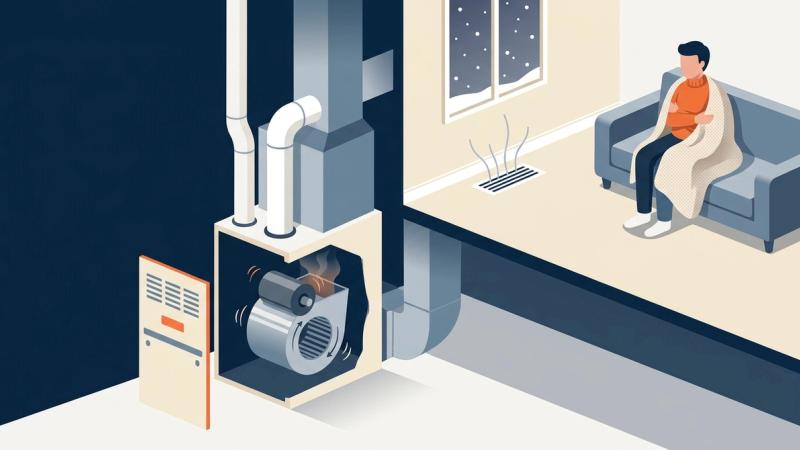
- Weak airflow: a clogged filter, blocked returns, a dirty blower wheel or a motor losing speed.
- Fan runs in short bursts: a motor overheating and tripping its thermal protection, or a control board or ECM module fault.
- Burning smell: an overheating motor or wiring. Shut the furnace off.
- Furnace shuts off before the house is warm: the high-limit switch tripping because too little air crosses the heat exchanger.
For how techs separate a bad motor from a capacitor or control board, see our blower motor, capacitor and board troubleshooting guide.
What you can safely check before calling
- The filter. PSE&G notes that a clogged filter strains your furnace and reduces airflow. Replace it if it's gray or caked.
- The thermostat. Confirm the mode is HEAT, then switch the fan to ON to see whether the blower runs at all.
- The breaker and service switch. Check the furnace breaker and the light-style switch near the unit. Reset a tripped breaker once; if it trips again, leave it off.
- Return vents. Make sure furniture, rugs or storage aren't blocking them.
Stop there. Don't remove the blower panel, touch the capacitor (it can hold a charge with power off), or handle any high-voltage wiring. That's the point to schedule furnace repair and maintenance with a licensed technician.
ECM vs PSC blower motor: why your motor type changes the answer
PSC motors
A permanent split capacitor (PSC) motor runs at fixed speeds and uses a capacitor to start. It's the traditional design in older furnaces, and replacement is usually straightforward: a matching motor and often a new capacitor.
ECM motors
An electronically commutated motor (ECM) has built-in electronics that adjust its speed. It moves air more efficiently but is a more involved part. Sometimes only the control module has failed, which a technician can test.
Why 2019 matters
Federal efficiency standards for consumer furnace fans have been mandatory since July 3, 2019. Many furnaces built since then use ECM-style motors; many earlier ones have PSC motors. The data plate inside the furnace door shows the manufacture date, or your technician can confirm the motor type.
Can I replace an old PSC motor with an ECM?
Not as a simple swap. The frame, shaft, mounting and blower wheel have to match, and ECM control wiring differs from PSC wiring. Retrofit options exist for some furnaces, but compatibility has to be confirmed first.
Replace blower motor or new furnace? A decision guide
Newer furnace (built 2019 or later)
Repair almost always makes sense; the heat exchanger and controls are young. Ask whether the part is still under the manufacturer's warranty and whether the module alone can be replaced.
Older furnace with a PSC motor
A new motor is usually reasonable if the rest of the furnace is sound. Consider replacing the furnace instead if:
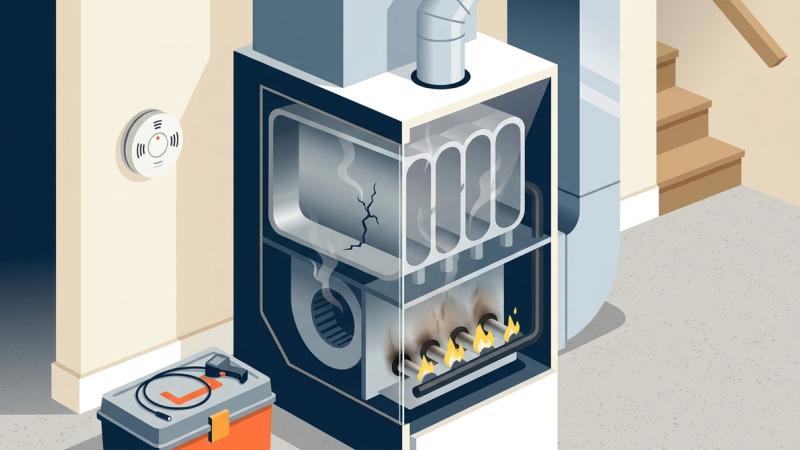
- The heat exchanger shows cracks, rust-through or overheating damage.
- Other repairs are lined up, such as an ignitor, inducer motor, gas valve or control board.
- The furnace is near the end of its service life and has needed repeated calls.
A new motor in a furnace with a compromised heat exchanger fixes airflow but not the bigger safety concern.
Why blower failures show up in the first October cold snap
In Hillsdale and across Bergen County, the first cold nights bring long heating cycles after months of light use. Dry bearings, a weak capacitor or dust on the blower wheel all get pushed hard at once. A fall tune-up catches many of these early. Our Hillsdale heating service team handles both repairs and replacement estimates.
Is it safe to keep running a furnace with a weak blower?
Not for long. With too little airflow, the heat exchanger runs hotter than designed and the high-limit switch cycles the burner off. Repeated overheating stresses the heat exchanger, and a cracked heat exchanger is a carbon monoxide concern. If you smell burning, hear grinding or the furnace keeps shutting off, turn it off and call. For no heat at night, use our emergency HVAC service. Keep working CO detectors on every level.
Frequently asked questions
Why is my furnace blowing weak air?
Start with the filter and blocked returns. If those are clear, the cause is often a dirty blower wheel, a failing capacitor or a motor losing speed, which a technician should diagnose.
Does a humming blower always mean the motor is bad?
No. On PSC motors a hum with no spin is often a failed capacitor, a smaller repair, but a seized motor can hum too, so it needs testing.
Should I replace the furnace just because the blower motor failed?
Not usually on its own. It becomes a replacement conversation when the furnace is older and the heat exchanger is in poor shape or other major repairs are coming.
Need Heating Service in Hillsdale, NJ?
Call Heights Plumbing, Heating & Cooling at (201) 245-7772 or schedule online today!
Schedule Service