In this article
Most homes are comfortable with indoor humidity in winter somewhere between 30% and 40%. American Standard, citing EPA guidance, puts the winter range at 30–45%. The catch is that the colder it gets outside, the lower you need to go, or moisture ends up on your windows. Below is how to check your level, adjust it for cold nights, and figure out why a humidifier isn't keeping up.
Why the air in your house gets so dry when the heat is on
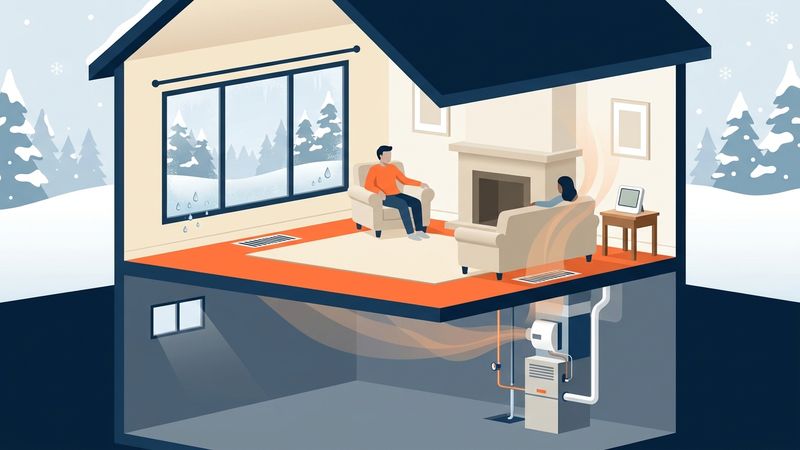
Cold outdoor air holds very little moisture. When that air leaks into your house and warms to 68 or 70°F, it can hold far more water than it actually has, so its relative humidity drops sharply. The furnace or boiler isn't removing moisture; it's warming dry air that came in from outside. Older, draftier homes trade indoor and outdoor air all winter, which is why they often feel the driest.
Signs your air is too dry
- Static shocks from door handles, blankets and the cat
- Dry skin, cracked lips, itchy eyes, and dry or bloody noses
- Gaps opening between wood floorboards, loose chair joints, or small cracks in trim
- More dust and static cling on screens and furniture
- Wooden instruments drifting out of tune
Ideal humidity for your house in winter, and how to check it
Aim for the low 30s to around 40% on typical winter days, and let it drift lower when it's bitterly cold. You can't judge this by feel, so measure it.
Use a $10–15 hygrometer
A small digital hygrometer from a hardware store is enough. Set it in a main living area, away from the kitchen, bathrooms, exterior doors and any humidifier outlet, and give it an hour to settle. Check a couple of rooms, including a bedroom. Inexpensive meters can be off by a few points, so treat the number as approximate, and compare it with your thermostat if it shows humidity too.
Humidifier setting by outdoor temperature
Windows are the coldest surfaces in the house. When air touching the glass cools below its dew point, water collects, and on very cold nights it freezes into frost. GreenBuildingAdvisor explains that the fix is lowering indoor humidity as outdoor temperatures fall, and that some humidifier controls do this automatically with an outdoor sensor.
A common starting point, similar to the charts printed on many humidistats:
- Above 40°F outside: up to 45%
- 20 to 40°F: up to 40%
- 10 to 20°F: up to 35%
- 0 to 10°F: up to 30%
- Below 0°F: 25% or less
Homes in Newton and across Sussex County see plenty of cold nights, so expect to adjust often. Your windows are the final test: if you see water at the bottom of the panes or frost in the morning, turn the setting down about 5 points. Repeated condensation stains sills and can lead to mold.
Is a portable humidifier enough?
A portable unit works well for one bedroom. It struggles with a whole house, needs daily refills, and has to be cleaned regularly to keep mineral dust and growth out of the tank. If you're running several units and the hygrometer still reads in the 20s, or you're tired of hauling water, a whole-home system is the next step.
Adding a humidifier to your furnace
A whole-home humidifier mounts on the furnace ductwork and connects to a water line, a humidistat and, for most types, a drain. It adds moisture to the air every time the blower runs, so every ducted room benefits. Our earlier post compares bypass, fan-powered and steam humidifiers.
Homes with boilers or no ductwork
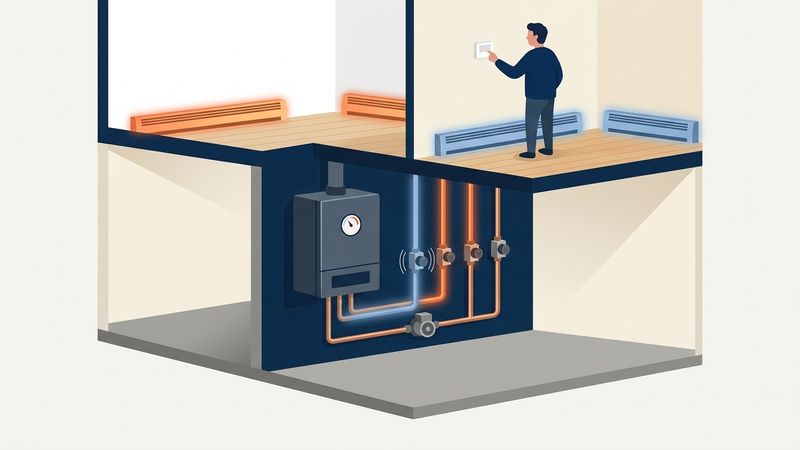
Radiators, baseboard heat and ductless mini-splits have no ducts to carry moisture, so a furnace-mounted unit isn't an option. Larger console-style portables in the main living areas are the usual answer. If the house has a ducted central air system, a humidifier can sometimes be added to that air handler; a technician can confirm whether your ductwork and controls allow it.
Whole-house humidifier on but humidity won't rise
Before calling, check these. Turn off power to the furnace and close the water valve before opening the humidifier cover.
- The setting. Confirm the humidistat is set high enough. If it has an automatic or outdoor-temperature mode, it may be holding humidity low on purpose during a cold snap.
- The water valve. The small valve on the supply line is often shut off for summer and forgotten in fall.
- The pad. A water panel crusted with scale can't evaporate much. Many manufacturers call for a new one each heating season.
- The damper. Bypass units have a damper on the connecting duct with summer and winter positions. It should be open for winter.
- Run time. The humidifier only works while the blower runs, so on mild days it adds less moisture.
When you need a licensed pro
- No water reaches the pad with the valve open, or there's a leak or clogged drain
- Wiring the humidistat, transformer or blower connection
- Installing or replacing an outdoor-temperature sensor or automatic control
- Stains, peeling paint, musty smells or mold on walls and ceilings, which can mean moisture inside the walls
- A new installation, which involves water, drain and electrical connections
Our background-checked, licensed technicians handle these across Sussex County. You can see everything we do on our indoor air quality services page.
Frequently asked questions
What humidity should my house be in winter?
Around 30–40% on most winter days, with American Standard citing EPA guidance of 30–45%. Lower it when it gets very cold outside.
How far should I turn it down on very cold nights?
Follow the outdoor-temperature guide above, and drop about 5 more points whenever windows sweat or frost.
Why is my house so dusty and static in winter?
Dry air lets static build up, which makes dust cling to surfaces and gives you shocks. Bringing humidity back into the 30s usually helps.
Need Indoor Air Quality Service in Newton, NJ?
Call Heights Plumbing, Heating & Cooling at (201) 245-7772 or schedule online today!
Schedule Service