In this article
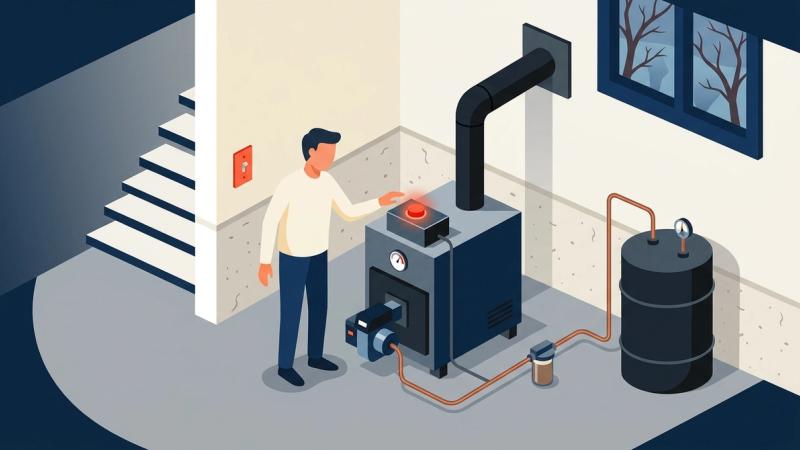
If your oil boiler won't start and the red button on the burner is lit or blinking, the burner control has gone into lockout. It tried to light, didn't detect a flame in time, and shut the oil off for safety. Check the simple things first, press the reset once, and if it locks out again, stop and call for service. Pressing it over and over is how small problems become puffbacks.
What the reset button on an oil burner means
Most US oil boilers use a gun-style burner from Beckett, Riello or a similar maker, with an electronic control mounted on top. When the thermostat calls for heat, the control starts the motor, sprays atomized oil through a nozzle and sparks it. A flame sensor, usually a cad cell, confirms the fire. If it doesn't see flame within a few seconds, the control shuts down and lights the reset button. That's a lockout.
On many modern controls, a blinking light is a diagnostic code rather than just a warning. Beckett's GeniSys 7505 control manual explains how lockout and reset work and how the light patterns report what the control saw. A technician can read that pattern to narrow down the cause.
Hard lockout: why your control won't reset
Some controls count failed attempts. After repeated lockouts without a successful heating cycle, they enter a restricted or "hard" lockout, and the normal button press won't clear it. That's deliberate: the control is telling you the burner needs a technician.
How many times can you press the reset?
The safe rule: press it once. If the burner lights and runs, watch it through a full cycle. If it locks out again, leave it alone.
Every failed start sprays oil into the combustion chamber that never burns. Press reset several times and that unburned oil collects in a hot chamber. When it finally ignites, it can go off all at once, a puffback, blowing soot through the basement and sometimes the whole house.
Safe checks when your oil boiler won't start
Before touching the reset:
- Thermostat: set to heat and a few degrees above room temperature. Replace batteries if the display is blank.
- Burner emergency switch and breaker: the red-plate switch at the top of the basement stairs or near the boiler is easy to flip by mistake. Confirm it's on and the breaker hasn't tripped.
- Tank gauge: check the float gauge on top of the tank. Gauges can stick, so if it reads low, call your fuel supplier.
- Oil valve: the valve at the tank or filter should be fully open.
- Pressure and temperature gauge: on a hot-water boiler, note the reading in psi. Low pressure or an already-high temperature can explain why it isn't firing.
If heat comes on but only some rooms warm up, the burner probably isn't the issue; see our guide on one zone not heating.
Ran out of oil? Don't just restart it
Once the tank runs dry, the burner pulls air into the line and often sediment from the tank bottom. Even after a delivery, it usually won't light until the line and pump are bled of air, and the filter may need changing. Bleeding is done at the fuel pump with the burner running, around oil and ignition, so it's a job for a technician.
What causes an oil burner to keep locking out
When the burner locks out again and again, the cause is usually one of these:
- Clogged oil filter or nozzle
- Sludge or water in the tank
- Air leaks in the oil line
- Weak or failing fuel pump
- Worn or misadjusted electrodes, or a failing ignition transformer
- Dirty or failing cad cell, so the control can't see a flame that is there
- Blocked flue, chimney or barometric damper problem
If water, sludge or a leak in the tank is behind repeat lockouts, the tank itself needs attention. NJDEP's residential heating oil tank FAQs explain homeowner responsibilities for leaking tanks.
Shut it off and call right away if you notice
- Smoke coming from the boiler or flue pipe
- Soot around the burner, registers or chimney
- A bang, rumble or "whoomp" when the burner starts
- A strong oil smell or oil pooled under the burner
Turn the emergency switch off and use our emergency HVAC service; we answer live 24/7.
Repair or replace an aging oil boiler
Most lockouts are fixed with a filter, nozzle, electrode adjustment, cad cell or pump. But if the same boiler keeps locking out after those parts have been replaced, has soot buildup that returns quickly, or shows leaks or corrosion on the boiler itself, it may be time to talk about heating replacement. Our engineers on staff can lay out both options with upfront pricing.
Annual service prevents most lockouts
A pre-winter tune-up replaces the filter and nozzle, cleans and sets the electrodes, checks the cad cell and pump pressure, cleans the combustion chamber and tests the draft. Those are the same parts behind most lockouts. Many homes in Lebanon Township are off the gas mains and heat with oil, so getting this done before the first November cold snap matters. Our boiler services cover tune-ups, repairs and replacements.
Frequently asked questions
Why is the reset button on my oil burner blinking?
A blinking light on many electronic controls is a diagnostic code showing why the burner locked out or what state it's in. Note the pattern and share it with your technician.
Can I keep pressing reset until it lights?
No. Press it once; repeated presses pump unburned oil into the chamber and can cause a puffback.
Will my boiler restart on its own after an oil delivery?
Usually not. Running out lets air into the line, which typically needs to be bled at the pump before the burner will fire reliably.
Need Heating Service in Lebanon Township, NJ?
Call Heights Plumbing, Heating & Cooling at (201) 245-7772 or schedule online today!
Schedule Service