In this article
- Why one zone stays cold while the others heat
- Step-by-step: diagnosing one zone not heating
- How to bleed air from baseboard heat (and when to stop)
- Zone valve repair: motor head or the whole valve?
- Why it shows up at the first cold snap
- The opposite problem: a zone that won't stop heating
- Frequently asked questions
If you have one zone not heating while the rest of the house is warm, the boiler itself is usually fine. Something specific to that zone is failing: its thermostat, its zone valve, the circulator that moves water through it, or air trapped in its piping. Check them in that order. The first two checks are safe for a homeowner. The rest often involves boiler pressure and draining, and that work belongs to a technician.
Why one zone stays cold while the others heat
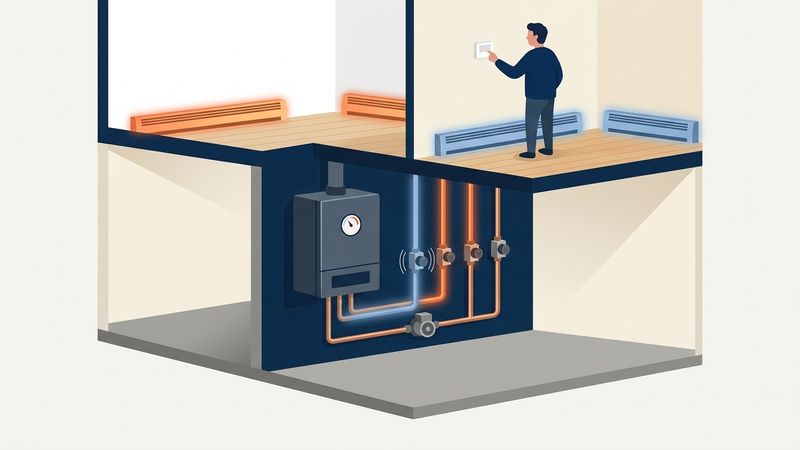
In a multi-zone hot-water baseboard system, each zone has its own thermostat. When a thermostat calls for heat, it either opens a motorized zone valve or starts a dedicated circulator pump. On valve systems, a small end switch inside the valve closes once the valve is open. That switch tells the boiler to fire and the circulator to run. If any link in that chain breaks, only that zone goes cold.
Step-by-step: diagnosing one zone not heating
1. Thermostat
- Make sure it is set to Heat and replace the batteries if it uses them.
- Raise the setpoint several degrees above room temperature, then go to the boiler and listen.
- If nothing happens at that zone's valve or pump, the problem may be the thermostat, its wiring, or the control transformer. Testing those low-voltage circuits is a job for a technician.
2. Zone valve
Honeywell's V8043 zone valve instructions describe the basic check: turn the thermostat up, and the valve should open. Once it does, its end switch should start the circulator.
- Buzzing or humming, but the valve never opens: the motor has power but can't turn, because it is failing or the valve inside is stuck.
- A stiff manual lever: the valve stem or internals are seized or fouled. Taco's Zone Sentry instructions note that a blockage or buildup inside the valve can keep it from opening, with fixes ranging from cleaning the valve or system to replacing the valve.
- The zone only heats when another zone is also calling: the valve opens, but its end switch has failed, so the boiler only fires when another zone's switch calls for it.
3. Circulator pump
Some homes use one circulator with zone valves; others use a separate pump for each zone. If the cold zone has its own pump and it is silent, or it hums but the pipe beside it stays cold, the pump or its relay may have failed. Leave the pump body alone. Opening it means isolating and partly draining the system.
4. Trapped air
Gurgling or trickling sounds, a zone that heats only partway, or trouble after recent system work all point to air. Air tends to collect in upper-floor zones, so it is a common cause of hot water baseboard not heating upstairs.
How to bleed air from baseboard heat (and when to stop)
Some baseboard units have small bleeder valves under the end covers. If yours do:
- Let the zone call for heat so water is moving.
- Hold a cup under the bleeder and open it slowly with a radiator key or screwdriver.
- Close it as soon as a steady stream of water comes out with no sputtering.
- Watch the boiler pressure gauge; if it drops noticeably, stop.
Many baseboard systems have no bleeders and are purged from valves near the boiler. Purging a zone means refilling through the fill valve while keeping boiler pressure in the right range. Too little pressure leaves air behind; too much can open the pressure relief valve. That is where a homeowner should hand the job to a boiler service technician.
Zone valve repair: motor head or the whole valve?
On most residential zone valves, the motor head (actuator) comes off the valve body separately, as Taco's instructions show. If the motor hums without turning, or the end switch has failed, the head can usually be replaced without draining the system. If the valve body is seized, blocked or leaking, the whole valve has to be replaced. That means draining at least part of the system, sweating in a new valve, then refilling and purging. Honeywell's manual states the valve should be serviced by a trained technician, and wiring a new head correctly to the boiler controls is part of that job.
Why it shows up at the first cold snap
Zone valves and circulators that sat idle all summer can stick when they first run in November. This is common in large multi-zone homes like many in Upper Saddle River, where guest rooms or additions may sit on zones that rarely call. Exercising each zone in early fall and scheduling a fall boiler maintenance check can catch a sticking valve before the cold arrives.
The opposite problem: a zone that won't stop heating
If one zone keeps heating with its thermostat turned down, the valve may be stuck open, or its manual lever may have been left in the open position. A shorted thermostat wire or a stuck end switch can also keep the zone calling. If the lever is latched open, return it to automatic; otherwise have the valve and wiring checked.
Frequently asked questions
Why won't my boiler fire for one zone when it runs fine for the others?
Most often the zone valve's end switch has failed. The valve opens, but the boiler never gets the signal to fire. Replacing the valve's motor head usually fixes it.
Can I replace a zone valve motor head myself?
The head comes off without draining, but it connects to low-voltage boiler controls, and manufacturers call for a trained technician.
When is a cold zone an emergency?
Call for emergency HVAC service if water is leaking, the relief valve is discharging, or a cold zone serves pipes at risk of freezing during a deep cold snap.
Need Heating Service in Upper Saddle River, NJ?
Call Heights Plumbing, Heating & Cooling at (201) 245-7772 or schedule online today!
Schedule Service