In this article
The most common water line repiping signs are low pressure throughout the house, rusty or discolored water and repeated pinhole leaks. First, though, figure out where the problem lives: the service line from the street to your meter, or the pipes inside your home. In Hackensack that matters, because the street-side line may fall under Veolia's lead replacement program, while the plumbing inside your walls is your responsibility.
Why the street line and the inside pipes are separate problems
Hackensack's water comes from Veolia Water New Jersey's Hackensack system. Veolia's water quality report notes that lead can enter tap water from service lines and household plumbing. So a new service line doesn't guarantee clean, full-pressure water at every faucet. Old galvanized steel inside can keep corroding, and Veolia advises checking New Jersey homes built before 1991 for lead solder or lead pipe inside.
Step-by-step: reading the water line repiping signs
1. Is it one fixture or the whole house?
If only one faucet or shower is weak, the cause is usually local: a clogged aerator, worn cartridge or corroded section on that branch. That's a repair, not a repipe. If every fixture is weak, look at the service line, main shutoff valve or main supply pipes.
2. Compare the hot and cold sides
- Hot only is weak: the water heater or its connections are the likely suspect.
- Cold only, everywhere: points toward the service line, the meter area or the main cold supply.
- Both hot and cold, everywhere: often corroded galvanized supply pipes inside, or a restricted service line feeding everything.
3. Watch the first draw
Run a cold tap first thing in the morning into a white cup. Brown water that clears after a few seconds usually means corrosion in your own pipes, where it sat overnight. Sudden, lasting discoloration at every tap, especially if neighbors see it too, more likely comes from work on the mains. Call Veolia about that first.
4. Check the pipe at the meter
NJDEP explains how to find and identify your service line: look where the pipe enters the house near an indoor meter, or where it comes through the wall closest to an outdoor meter. Gently scratch the surface with a coin or key and hold a magnet to it:
- Lead: dull gray, scratches to a shiny silver, and a magnet won't stick.
- Galvanized steel: dull gray, and a magnet sticks.
- Copper: penny-colored where scratched, and a magnet won't stick.
- Plastic: usually white, black or blue, with no metal.
Scratch lightly, and don't force or turn old valves while you're there.
Looking up your Hackensack service line and understanding a notice
Veolia's Lead Service Program map lets you search your address for the recorded service line material. Compare it with what you see at the meter, since records and reality don't always match.
New Jersey's Lead Service Line Replacement Law, passed in July 2021, requires water systems to identify and replace all lead service lines within 10 years. Systems must also send notices to properties whose lines are lead or of unknown material. If you get a "lead or unknown" notice:
- Do the scratch and magnet test and photograph the pipe.
- Contact Veolia to report what you found and ask about replacement timing and any costs to you.
- Until you know, consider a drinking water filter certified to reduce lead.
- Have the inside plumbing checked, especially if your home was built before 1991.
If your service line turns out to be old galvanized or failing copper rather than lead, the portion you're responsible for may need water line repair or replacement rather than waiting on a utility program.
Repipe or repair: your options for inside pipes
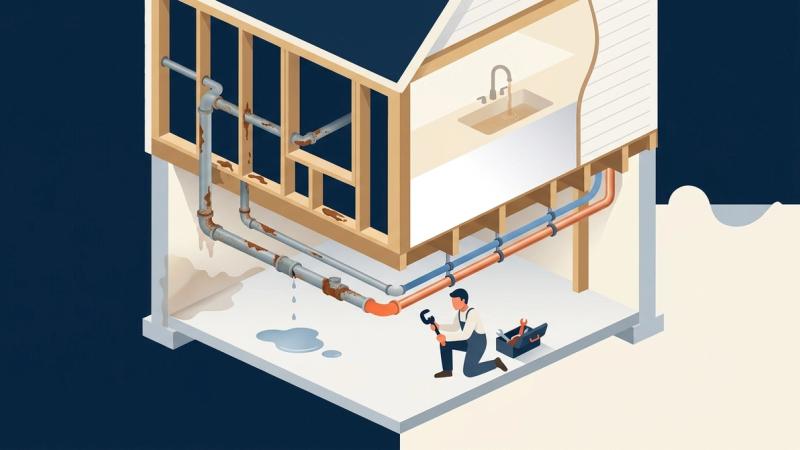
One leak on otherwise sound copper is usually a spot repair, and leak detection and pipe repair can pinpoint hidden leaks. Repiping makes sense when the pattern points to the whole system.
- Spot repair: fixes one failed section on otherwise sound pipe.
- Partial repipe: replaces main trunk lines or one problem area, such as galvanized runs to an older bathroom.
- Whole-house repipe: replaces all supply lines; worth it with galvanized throughout, repeated copper pinholes or lead solder concerns.
New supply lines are typically copper or PEX. The job usually means openings in some walls and ceilings, with water shut off in stages rather than for the whole project. Our guide to whole-house repiping vs. spot repairs goes deeper on that choice, and our repiping services page explains how we plan the work.
When to call a licensed plumber
- You find galvanized pipe inside, or lead anywhere.
- Pressure is low on both hot and cold throughout the house.
- You've had more than one pinhole leak, or see stains on ceilings or walls.
- The meter area, main valve or pipe entry is leaking or heavily corroded.
Our background-checked, licensed technicians work throughout Hackensack and nearby Bergen County towns, and we give upfront pricing before work starts.
Why October is the time to check
Freezing weather adds stress to pipes already thinned by corrosion, and a weak section is more likely to fail in a cold snap. Basements and crawl spaces are also easier to work in before winter. Pair this check with our tips on protecting pipes from freezing.
Frequently asked questions
If Veolia replaces my lead service line, do I still need to repipe?
Not necessarily, but the inside pipes should be checked. Galvanized pipe or lead solder inside the house stays in place after a service line replacement.
How do I tell if low pressure is from the street or my pipes?
Check whether it affects one fixture or all of them, and hot, cold or both. Whole-house, cold-side problems point toward the service line or main, while first-draw rust that clears points to your own pipes.
Is the scratch and magnet test safe to do myself?
Yes, if you scratch lightly with a coin or key and don't force valves. Leave any repair or valve work to a licensed plumber.
Need Plumbing Service in Hackensack, NJ?
Call Heights Plumbing, Heating & Cooling at (201) 245-7772 or schedule online today!
Schedule Service