In this article
If your central air runs on R-410A, the short answer to "R-410A repair or replace?" is that you don't have to replace a working system. The EPA says existing equipment can keep running and be repaired, so the decision depends on your system's condition, not on a federal deadline. November, with the cooling season over, is a good time to make that call.
Is R-410A banned? What changed in 2026
No. R-410A is being phased down under federal rules, but existing systems are not outlawed. The EPA's frequently asked questions on the HFC phasedown says it plainly: "you can continue to repair your existing refrigeration, air conditioning, and heat pump system."
The bigger change this year was about new installations. The EPA removed the January 1, 2026, installation deadline for residential and light commercial AC and heat pump systems using refrigerants with a GWP above 700, as long as the equipment was manufactured or imported before January 1, 2025.
Can I still get R-410A parts?
Yes. R-410A components made after January 1, 2025 must be labeled "for servicing existing equipment only." They can be used to repair an existing R-410A system. They cannot be used to install a new one.
Check which refrigerant your system uses
You can answer this yourself without opening any panels:
- Condenser nameplate. The metal label on the outdoor unit lists the refrigerant type and the factory charge.
- Age. The manufacture date is often on the nameplate or built into the serial number. Very old systems may use R-22, which is a different repair-or-replace situation.
- Paperwork. Install invoices, permits and warranty registrations usually list model numbers and the refrigerant.
Signs of a refrigerant leak, and why topping off is a bad bet
Watch for these:
- Air from the vents that is cool but not cold, or warm
- The system running much longer to reach the set temperature
- Ice on the copper suction line or the indoor coil
- Hissing or bubbling near the refrigerant lines
- Oily residue at fittings or on the coil
Refrigerant moves through a sealed loop and isn't used up. If the charge is low, it leaked somewhere, and topping off without finding the leak means paying for refrigerant that will escape again, at prices that tend to follow tighter supply as the phasedown continues. A proper AC refrigerant leak repair means finding the leak, fixing it, confirming the system holds pressure, then charging it to spec.
What you can safely do yourself: replace a dirty filter, clear debris from around the condenser, and check the breaker. If you see ice, shut the system off so it can thaw. Don't handle refrigerant; working with it requires federal certification, and the system runs under high pressure.
R-410A repair or replace: how to decide
Repair usually makes sense when
- The system is fairly young and has been reliable.
- The leak is at an accessible spot, such as a service valve, flare fitting or access port.
- The failure is a replaceable part, such as a capacitor, contactor or fan motor.
- This is the first significant problem in years.
Replacement deserves a hard look when
- The compressor has failed on an older system.
- The indoor coil is leaking, especially for a second time. Our guide to evaporator coil leaks covers that choice in detail.
- The system has needed refrigerant more than once.
- Repairs keep stacking up on equipment near the end of its service life.
There's no one-size dollar rule; the answer depends on what the diagnosis finds. With upfront pricing on both paths, you can compare a repair against an evaporator coil replacement or a full system replacement before you commit.
Why R-454B isn't a drop-in for R-410A
You can't add R-454B to an R-410A system, and the two should never be mixed. Carrier's R-454B FAQ says directly: "Puron Advance is not a drop-in replacement." Puron Advance is Carrier's name for R-454B.
The mismatched-coil problem
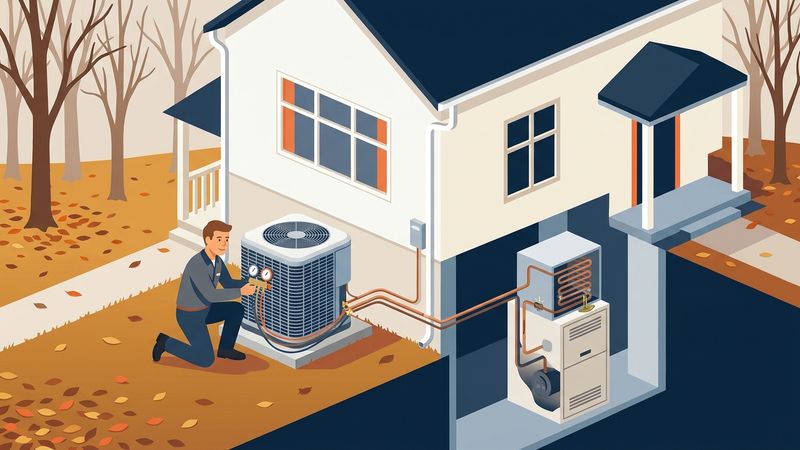
Central AC has two halves: the condenser outside and the evaporator coil indoors, usually on top of the furnace or inside an air handler. They are designed and rated as a matched pair for one refrigerant, including the metering device that controls flow into the coil. Connect a new R-454B condenser to an old R-410A coil and capacity, efficiency and reliability can all suffer, and you keep the oldest, most leak-prone part of the system. A proper replacement evaluates the condenser, coil and line set together.
A2L refrigerant calls for a licensed installer
R-454B is classified as an A2L refrigerant, meaning it is mildly flammable. Equipment built for it includes safety features, and installation has to follow the manufacturer's instructions and applicable codes. Our background-checked, licensed technicians, backed by engineers on staff, handle R-454B system installation as a matched system, not a part swap.
Why plan this in November
In July, a failed compressor forces a fast decision in a hot house. In November the AC is off, so you can get a diagnosis, compare options, check equipment availability and schedule the work on a mild day. For many Nutley homeowners, a fall inspection also shows whether the system lost charge over the summer, which is useful to know before next season.
Frequently asked questions
Do I have to replace my R-410A air conditioner?
No. The EPA says you can keep running and repairing existing systems. Replace when the system's condition makes repair a poor investment, not because of a deadline.
Can I put R-454B in my R-410A system?
No. R-454B is not a drop-in replacement. Switching refrigerants means installing equipment designed for R-454B, including a matched indoor coil.
Can I still repair my R-410A AC after 2025?
Yes. R-410A parts made after January 1, 2025 are labeled for servicing existing equipment and can be used to repair your current system.
How do I know if my AC uses R-410A?
Check the nameplate on the outdoor condenser, which lists the refrigerant type. Your install paperwork or model number can confirm it.
Need Air Conditioning Service in Nutley, NJ?
Call Heights Plumbing, Heating & Cooling at (201) 245-7772 or schedule online today!
Schedule Service