In this article
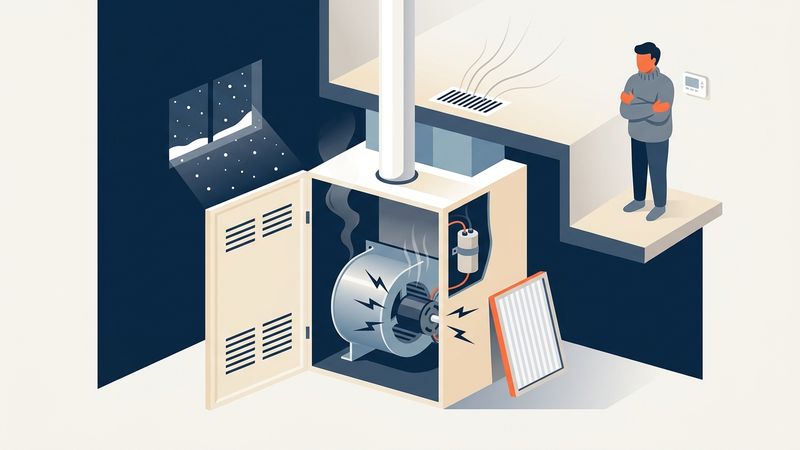
Furnace blower motor noise usually tells you where the problem is. A soft, steady hum is normal. A squeal points to worn bearings. Grinding means metal on metal, so shut the furnace off. A fan that won't stop is often just a thermostat setting. This guide covers a blower that runs but sounds, smells or behaves wrong, what you can safely check, and when it's time to call for furnace repair and maintenance.
If your blower won't start at all, see our guide to a furnace blower that's not working at fall startup. Weighing a new motor against a new furnace? Read repair the motor or replace the furnace.
Furnace blower motor noise, smells and behavior: what to do about each
Sort what you're noticing into one of three groups.
Check it yourself first
- Soft, steady hum: Normal. Trane notes that a humming sound from a furnace is normal.
- Rattle or vibration: Often a loose blower door or panel. Make sure it's seated and latched.
- Fan runs nonstop: Check that the thermostat fan is on Auto, not On.
- Dusty smell on the first cold night: Dust burning off the heat exchanger. It fades after a few cycles.
- Weak airflow and more noise: Check the filter and look for blocked vents.
Call for a repair visit
- High-pitched squeal or screech: Trane links this to blower motor trouble, often worn ball bearings in an older motor. On belt-drive units, it can also be a worn belt.
- Loud buzz, motor slow to reach speed: Likely a weak capacitor or failing motor.
- Rattle with the panel secure: A loose or unbalanced blower wheel, or debris in the housing.
- Fan runs constantly on Auto: Needs a diagnosis (see below).
- Blower starts, stops, then restarts: The motor may be tripping its internal overheat protection.
Shut it off now
- Grinding or scraping: Failing bearings or a wheel hitting the housing.
- Hot-plastic or electrical burning smell that doesn't fade.
- Smoke from the furnace or vents, or a breaker that keeps tripping.
To shut down, turn the thermostat off, then switch off the furnace's service switch. If you see smoke or flames, leave and call 911. If you smell gas, leave first and call your gas utility from outside.
Dust smell or an overheating blower motor?
In October, Hackensack homeowners switch on the heat for the first cold nights after months of AC. A faint, dusty smell that fades within a few cycles is normal. An overheating motor smells sharp, like hot plastic or wiring, and returns each time the blower runs. You may also notice the blower shutting off on its own. Treat that as a shut-off sign, not a wait-and-see sign.
Why the furnace fan won't turn off
The blower normally runs a few minutes after the burners stop to pull leftover heat out, then stops. If it never stops, Trane says to check the thermostat first: a fan set to On runs continuously. If it's on Auto and the fan keeps running with the thermostat off, the cause may be thermostat wiring, the fan limit switch, the blower motor or the control board. A limit switch holding the fan on can also mean the furnace is running too hot, so don't ignore it.
What you can check and what to leave alone
Safe homeowner checks
- Filter: Many homes still have the filter from AC season, since central air uses the same blower. PSE&G notes that a clogged filter strains the furnace and reduces airflow, and that replacing it improves efficiency and helps prevent breakdowns.
- Thermostat: Fan on Auto, mode on Heat, fresh batteries if it uses them.
- Returns and registers: Clear furniture, rugs and storage away from grilles and vents.
- Blower door: The door switch cuts power when the panel is off. Make sure it's pressed in, and never tape or bypass it.
Leave these to a licensed technician
- The capacitor: It can hold a dangerous charge even with the power off.
- Wiring and the control board
- The motor and blower wheel: Don't oil sealed motors or pull the blower assembly.
Why ECM motors fail, and why new ones can fail again
Variable-speed (ECM) blower motors adjust their speed to deliver a set airflow. When a clogged filter, closed registers or undersized ducts restrict that airflow, the motor ramps up and runs hotter, which wears on both the motor and its electronic control module. Power surges and moisture can also damage the electronics.
That's why a replacement motor can fail early: swapping it fixes the part that died, not the restriction that wore it out. A proper repair includes an airflow check. Our engineers and licensed technicians look for that cause, and we quote the repair upfront.
Frequently asked questions
Can I keep running the furnace if the blower sounds bad?
A mild squeal can usually wait briefly for a scheduled repair. Grinding, an electrical burning smell, smoke or repeated breaker trips mean shut it off now, before a failing motor damages other parts.
How long do blower motors usually last?
There's no fixed number; it depends on run hours, filter upkeep and duct resistance. Squealing, overheating or cycling off on its own signal a motor nearing the end, whatever its age.
Is it an emergency if the blower stops during a cold snap?
It can be, especially with signs of overheating or pipes at risk of freezing. We answer phones live 24/7, and our emergency HVAC service covers homes in Hackensack and across Bergen County.
Need Heating Service in Hackensack, NJ?
Call Heights Plumbing, Heating & Cooling at (201) 245-7772 or schedule online today!
Schedule Service