In this article
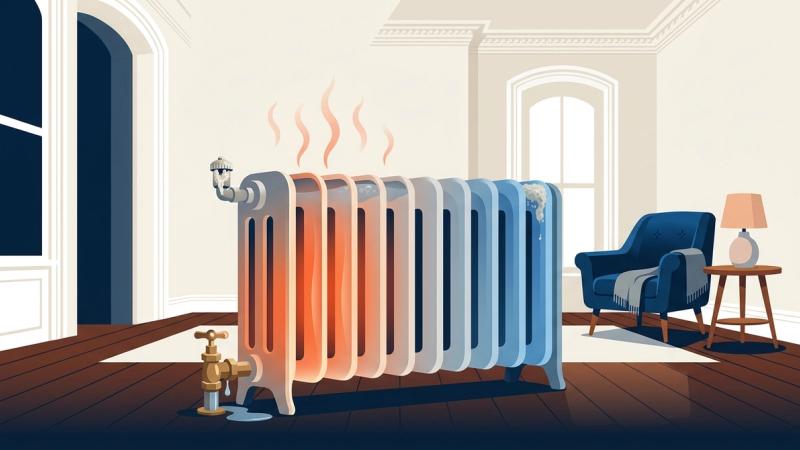
Steam radiator cold spots in a rowhouse usually follow a pattern. The radiator nearest the boiler heats first, while the far and top-floor radiators lag behind or warm only partway across. In a one-pipe steam system, that is almost always an air problem, not a boiler-size problem. Steam can only fill pipes and radiators as fast as air gets out of them. The fix is better venting, correct pitch and a boiler that runs low and steady, and October is the time to set it up.
Why the far and top-floor radiators heat last
When a steam boiler fires, its pipes and radiators are full of air that steam has to push out through vents. That means the small vent on each radiator and, ideally, larger main vents at the ends of the steam mains and the tops of the risers. Most steam systems have vents that are too small, and many have no main vents at all. Then all the air in the basement piping has to escape through the radiator vents, and the radiators closest to the boiler win the race.
The DOE Building America guide to steam system balancing recommends high-capacity vents at the ends of the mains and the tops of the risers. With slow vents on the radiators, steam flows first toward the fast vents at the ends of the mains, then reaches each riser at close to the same time. That is what gets the top floor heating on the same cycle as the first.
An October checklist for steam radiator cold spots
Work from the radiator back to the boiler, with the system off and cool unless noted.
At each radiator
- Valve fully open. A one-pipe radiator valve should be all the way open or all the way closed. Left half-open, it traps condensate instead of controlling heat.
- Air vent not painted over or clogged. If air can't get out, steam can't get in. That is the usual reason a one-pipe steam radiator is half cold, and paint is a common culprit. With the heat on, a working vent hisses briefly, then shuts when steam reaches it. A silent vent on a cold radiator, or one that spits water, likely needs replacing.
- Slope toward the valve. A level on top should show the radiator tipping slightly back toward the valve so condensate drains out. Trapped water causes banging (water hammer) and squirting vents. Cast iron is very heavy, so get help before you try shimming one.
In the basement
- Find the main vents. Near the far end of each steam main you should see a vent noticeably larger than a radiator vent. If it's missing, painted, crusted or silent at startup, note it for your technician.
- Look for sagging pipe. A loose hanger or a visibly sagging run can hold water and block steam.
At the boiler
- Check the steam boiler sight glass. PSE&G advises homeowners to check the water in the sight glass. You should see a visible water line, not an empty glass and not a full one. If you're adding water often, have it looked at, since rising water use at the boiler can mean a leak.
For the rest of a startup routine, see our fall boiler and furnace maintenance tips.
Why turning up the boiler pressure won't fix it
Raising the pressure feels like it should push steam farther, but the obstacle is air, and more pressure doesn't get it out any faster. The DOE guidance points the other way: install a low-range pressure control and make less steam, not more. Higher pressure tends to bring noise, spitting vents and wasted fuel without curing the cold rooms.
Balancing steam radiators across floors and units
Once the mains vent quickly, balancing comes down to the radiator vents: slower vents near the boiler, faster vents on the far and top-floor radiators, so each fills with steam at about the same time. In older Hoboken rowhouses and small multi-family buildings, uneven heat often means the lower unit overheats with windows open while the top unit runs cold.
Matching vents across several units takes adjustment over a few heating cycles in real weather. That is why starting in October beats chasing complaints in January.
When to stop and call a licensed pro
The radiator checks above are fair game for a homeowner. These are not:
- Adding, resizing or replacing main vents
- Correcting pipe pitch or rehanging sagging mains
- A boiler that keeps losing water or needs frequent refills
- Balancing vents across several floors or apartments
- Water hammer that continues after the radiators are sloped correctly
Our background-checked, licensed technicians handle steam boiler service and repair, including main venting, pressure controls and multi-unit balancing. If you're dealing with one stubborn radiator rather than a whole-building pattern, our guide to fixing cold steam radiators covers that case.
Frequently asked questions
Should a steam radiator get hot all the way across?
Not always. If the room reaches the thermostat setting, the burner shuts off, and without more steam the radiator can't get any hotter. Partial heat on a cold day while the boiler runs long cycles is a different story.
Can I bleed a steam radiator like a hot-water one?
No. Bleeding advice is meant for hot-water systems. Steam radiator vents release air automatically, so a vent that isn't working should be replaced.
Will bigger radiator vents alone fix the top floor?
Usually not. Without fast main vents, the air in the basement piping still has to escape through the radiators. Venting the mains first is what lets steam reach every riser at once.
Need Heating Service in Hoboken, NJ?
Call Heights Plumbing, Heating & Cooling at (201) 245-7772 or schedule online today!
Schedule Service