In this article
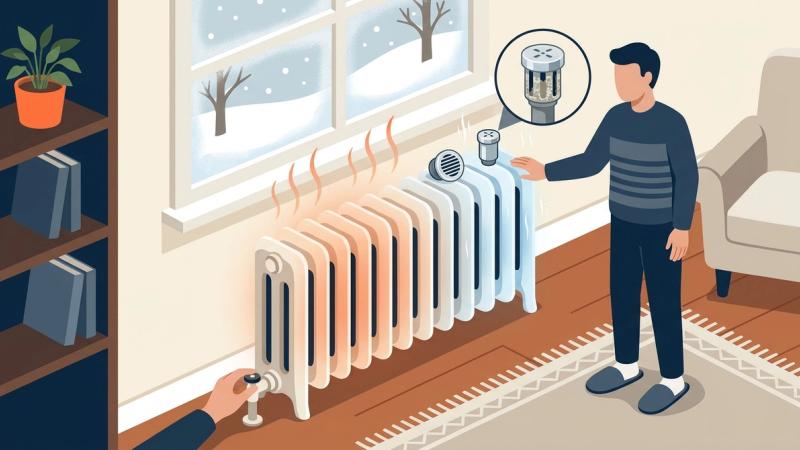
A steam radiator not heating at all usually means air can't get out or steam can't get in. Steam fills a radiator only after the air inside escapes through the vent, so a stuck vent, a half-closed valve or trapped water keeps it cold. Before touching the boiler, note which radiators are cold. The pattern tells you where to look.
Start with the pattern: which radiators are cold?
- One radiator cold, the rest hot: that radiator's air vent, supply valve or pitch.
- Only the farthest radiators or the top floor: main venting or system balance.
- A whole floor or one side of the house: the main or riser feeding that section.
- Every radiator cold: the boiler isn't making steam.
If your radiators heat partway instead, see our posts on steam radiator cold spots in one-pipe rowhouses and preventing cold spots in steam radiators.
One steam radiator cold: check the radiator first
Open the supply valve fully
On a one-pipe system, the radiator valve must be fully open or fully closed, never in between. The same pipe carries steam up and condensate back down. A half-open valve chokes that flow, so water backs up, steam can't get in and you often hear banging.
Test the air vent
The side vent should release air while the radiator is cold and close when steam arrives. As the boiler starts a cycle, hold a tissue near it: you should feel air or hear a soft hiss. If nothing comes out, the vent is likely clogged or painted shut, and as InspectAPedia notes, a vent that won't vent leaves the radiator cold. A vent that hisses steam nonstop has failed the other way.
Many homeowners can replace a vent themselves: turn the boiler off, let the system cool completely, unscrew the old vent and thread on a new one-pipe vent of a suitable size. Never remove a vent from a hot system.
Check the pitch
A one-pipe radiator should tilt slightly toward its valve so condensate drains out. If it sags the other way, water pools inside, blocks steam and bangs. Floors settle in older homes, and a small shim under the far feet often fixes it.
Don't bleed it like a hot-water radiator
Bleed-key advice is for hot-water systems. Steam radiators vent automatically, and opening fittings on a running steam system releases scalding steam.
Why the farthest radiators or top floor stay cold
Air in the steam mains must escape through main vents near the ends of those pipes before steam reaches the radiators. If main vents are clogged, missing or undersized, the nearest rooms heat first, the thermostat is satisfied and the boiler shuts off before steam reaches the far rooms. A whole cold floor usually points to a failed vent or a sagging pipe on the main or riser that feeds it. Replacing main vents, balancing the system and re-pitching piping are technician jobs.
Don't raise the boiler pressure to push steam farther. Residential steam is designed to run at low pressure, and higher pressure doesn't clear air from the pipes any faster. It burns more fuel and can worsen banging and venting problems; InspectAPedia also warns against fixing cold far-end radiators this way. The pressure control is a safety device, so leave it to a licensed pro.
When a steam radiator not heating is a boiler problem
Read the sight glass
The sight glass is the small glass tube on the boiler that shows the water level, and it's safe to look at. Water should sit near the normal water line. If the glass is empty or very low, don't add cold water to a hot boiler; shut it off and call for service. Rusty water or a level that bounces wildly while firing suggests sludge.
Know what the low-water cutoff does
The low-water cutoff shuts the burner off when water drops too low, protecting the boiler. If it keeps tripping, the system is losing water somewhere, such as a leaking return line.
Short-cycling, sludge and near-boiler piping
A boiler that fires in quick bursts may be short-cycling from a control problem, dirty water or clogged main vents. Sludge makes water surge up the mains instead of producing dry steam, and incorrect near-boiler piping after a boiler swap can do the same. Many older homes in Hillsdale still have original steam piping with several boiler replacements behind them, so these issues are common. Our boiler services cover cleaning, controls, vents and piping corrections.
If the boiler is worn out, weigh a replacement. ENERGY STAR certifies boilers at 90% AFUE or higher for gas and 87% or higher for oil. See our heating installation and replacement options.
What you can check vs. what needs a licensed technician
Safe for homeowners:
- Open the supply valve fully
- Confirm the vent releases air at startup
- Swap a vent with the system off and cool
- Shim a radiator toward its valve
- Look at the sight glass
Call a licensed pro for:
- Pressure control adjustments
- Main vents and system balancing
- Re-pitching mains and risers
- Low water, repeated cutoff trips or leaks
- Short-cycling, surging, sludge and near-boiler piping
Our fall boiler and furnace maintenance tips cover what to do before the season.
Frequently asked questions
Why is one steam radiator cold when the others get hot?
Usually a clogged air vent, a partly closed supply valve or a radiator pitched away from its valve. Check those three first.
Should I raise the boiler pressure to heat cold radiators?
No. Higher pressure doesn't clear air faster and can make banging worse. The fix is usually venting or pitch.
Need Heating Service in Hillsdale, NJ?
Call Heights Plumbing, Heating & Cooling at (201) 245-7772 or schedule online today!
Schedule Service